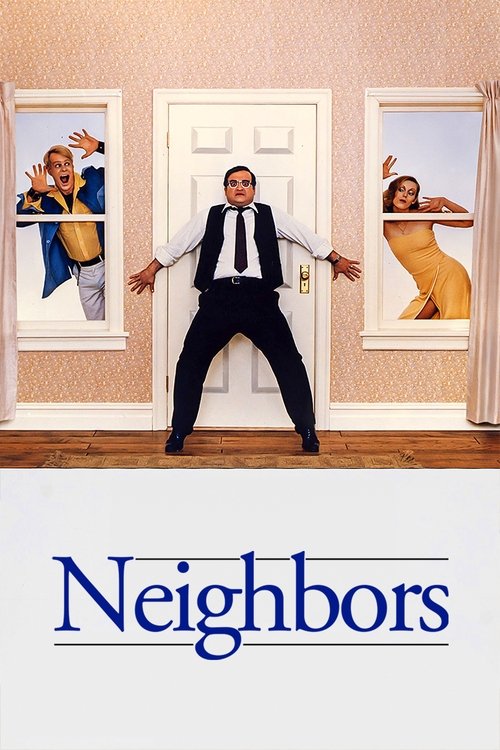
Neighbors
One man's quiet suburban life takes a sickening lurch for the worse when a young couple move into the deserted house next door. From the word go it is obvious these are not the quiet professional types who *should* be living in such a nice street. As more and more unbelievable events unfold, our hero starts to question his own sanity... and those of his family.
Despite its limited budget of $8.5M, Neighbors became a solid performer, earning $29.9M worldwide—a 252% return. The film's fresh perspective connected with viewers, proving that strong storytelling can transcend budget limitations.


Plot Structure
Story beats plotted across runtime


Narrative Arc
Emotional journey through the story's key moments
Story Circle
Blueprint 15-beat structure
Arcplot Score Breakdown
Weighted: Precision (70%) + Arc (15%) + Theme (15%)
Neighbors (1981) exemplifies strategically placed plot construction, characteristic of John G. Avildsen's storytelling approach. This structural analysis examines how the film's 15-point plot structure maps to proven narrative frameworks across 1 hour and 35 minutes. With an Arcplot score of 7.1, the film balances conventional beats with creative variation.
Characters
Cast & narrative archetypes

Earl Keese
Vic
Enid Keese
Ramona
Main Cast & Characters
Earl Keese
Played by John Belushi
A mild-mannered suburban man whose ordered life is disrupted when eccentric neighbors move in next door.
Vic
Played by Dan Aykroyd
The wild, unpredictable new neighbor who aggressively infiltrates Earl's life with bizarre behavior.
Enid Keese
Played by Kathryn Walker
Earl's wife who becomes increasingly drawn to the chaos and freedom the neighbors represent.
Ramona
Played by Cathy Moriarty
Vic's seductive and free-spirited wife who tempts Earl and disrupts his conventional marriage.
Structural Analysis
The Status Quo at 1 minutes (1% through the runtime) establishes Earl Keese arrives home from work to his quiet suburban house, greeting his wife Enid in their orderly, predictable middle-class existence.. Notably, this early placement immediately immerses viewers in the story world.
The inciting incident occurs at 11 minutes when Vic and Ramona move in next door with loud music, chaos, and immediate boundary violations, disrupting Earl's peaceful existence.. At 12% through the film, this Disruption aligns precisely with traditional story structure. This beat shifts the emotional landscape, launching the protagonist into the central conflict.
The First Threshold at 23 minutes marks the transition into Act II, occurring at 24% of the runtime. This shows the protagonist's commitment to Earl actively chooses to go to Vic and Ramona's house for dinner despite his reservations, crossing into their world of chaos and sexual tension., moving from reaction to action.
At 47 minutes, the Midpoint arrives at 49% of the runtime—precisely centered, creating perfect narrative symmetry. Significantly, this crucial beat False defeat: Earl's attempts to restore order completely fail. His marriage deteriorates, his home is invaded, and he realizes he cannot return to his old life., fundamentally raising what's at risk. The emotional intensity shifts, dividing the narrative into clear before-and-after phases.
The Collapse moment at 71 minutes (75% through) represents the emotional nadir. Here, Earl's old self dies metaphorically as his marriage ends, his dignity is destroyed, and he reaches his darkest moment of total psychological breakdown., indicates the protagonist at their lowest point. This beat's placement in the final quarter sets up the climactic reversal.
The Second Threshold at 75 minutes initiates the final act resolution at 79% of the runtime. Earl synthesizes chaos and order, embracing his transformation and deciding to fully enter the anarchic world his neighbors represent., demonstrating the transformation achieved throughout the journey.
Emotional Journey
Neighbors's emotional architecture traces a deliberate progression across 15 carefully calibrated beats.
Narrative Framework
This structural analysis employs systematic plot point analysis that identifies crucial turning points. By mapping Neighbors against these established plot points, we can identify how John G. Avildsen utilizes or subverts traditional narrative conventions. The plot point approach reveals not only adherence to structural principles but also creative choices that distinguish Neighbors within the comedy genre.
John G. Avildsen's Structural Approach
Among the 10 John G. Avildsen films analyzed on Arcplot, the average structural score is 7.0, reflecting strong command of classical structure. Neighbors represents one of the director's most structurally precise works. For comparative analysis, explore the complete John G. Avildsen filmography.
Comparative Analysis
Additional comedy films include The Bad Guys, Ella Enchanted and The Evening Star. For more John G. Avildsen analyses, see For Keeps, Rocky and 8 Seconds.
Plot Points by Act
Act I
SetupStatus Quo
Earl Keese arrives home from work to his quiet suburban house, greeting his wife Enid in their orderly, predictable middle-class existence.
Theme
Enid comments on the emptiness of their routine life and mentions the vacant house next door, foreshadowing the question: what happens when chaos disrupts order?
Worldbuilding
Establishment of Earl's mundane suburban life: his comfortable home, his relationship with wife Enid, his daughter, and his desire for peace and normalcy.
Disruption
Vic and Ramona move in next door with loud music, chaos, and immediate boundary violations, disrupting Earl's peaceful existence.
Resistance
Earl debates how to handle his bizarre new neighbors. He attempts polite confrontation but is repeatedly drawn into their strange world through dinner invitations and escalating provocations.
Act II
ConfrontationFirst Threshold
Earl actively chooses to go to Vic and Ramona's house for dinner despite his reservations, crossing into their world of chaos and sexual tension.
Mirror World
Ramona becomes the thematic mirror, representing the uninhibited sexuality and freedom that contrasts with Earl's repressed suburban conformity.
Premise
The promise of the premise: Earl's life descends into surreal chaos as Vic and Ramona manipulate him, blur boundaries, and expose the hollowness of his orderly existence.
Midpoint
False defeat: Earl's attempts to restore order completely fail. His marriage deteriorates, his home is invaded, and he realizes he cannot return to his old life.
Opposition
Pressure intensifies as Earl's relationships collapse, Vic's manipulations become more aggressive, and Earl's grip on reality and civility deteriorates.
Collapse
Earl's old self dies metaphorically as his marriage ends, his dignity is destroyed, and he reaches his darkest moment of total psychological breakdown.
Crisis
Earl processes his complete loss and transformation, sitting in darkness as he contemplates what he has become and what remains of his former life.
Act III
ResolutionSecond Threshold
Earl synthesizes chaos and order, embracing his transformation and deciding to fully enter the anarchic world his neighbors represent.
Synthesis
The finale plays out with surreal violence and role reversal. Earl confronts what he has become, and the boundaries between all characters blur completely.
Transformation
Final image shows Earl transformed from suburban conformist to something unrecognizable, having completely abandoned his old identity in a darkly comic corruption arc.