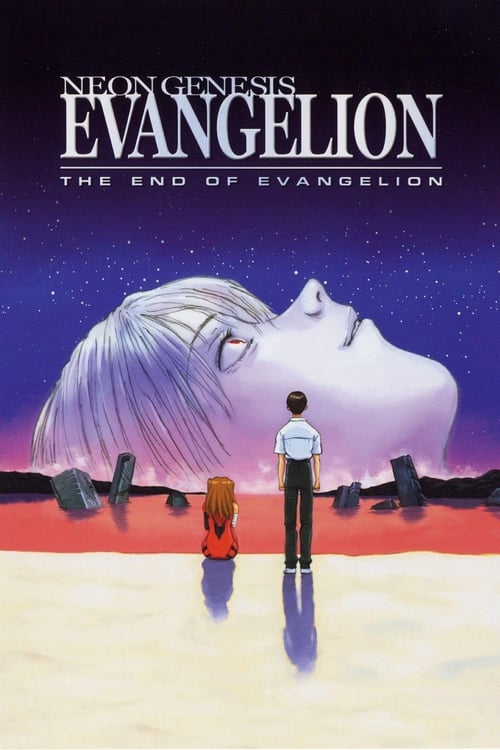
Neon Genesis Evangelion: The End of Evangelion
SEELE orders an all-out attack on NERV, aiming to destroy the Evas before Gendo can advance his own plans for the Human Instrumentality Project. Shinji is pushed to the limits of his sanity as he is forced to decide the fate of humanity.
The film earned $20.6M at the global box office.


Plot Structure
Story beats plotted across runtime


Narrative Arc
Emotional journey through the story's key moments
Story Circle
Blueprint 15-beat structure
Arcplot Score Breakdown
Weighted: Precision (70%) + Arc (15%) + Theme (15%)
Neon Genesis Evangelion: The End of Evangelion (1997) exhibits meticulously timed narrative architecture, characteristic of Kazuya Tsurumaki's storytelling approach. This structural analysis examines how the film's 15-point plot structure maps to proven narrative frameworks across 1 hour and 27 minutes. With an Arcplot score of 7.0, the film balances conventional beats with creative variation.
Structural Analysis
The Status Quo at 1 minutes (1% through the runtime) establishes Shinji stands over Asuka's comatose body in the hospital, begging her to help him. His desperate plea for validation culminates in a shameful act, establishing his complete psychological collapse and inability to connect with others.. The analysis reveals that this early placement immediately immerses viewers in the story world.
The inciting incident occurs at 11 minutes when SEELE launches a full military assault on NERV headquarters. The JSSDF forces breach the Geofront with orders to kill all personnel and seize the Evangelion units, shattering any illusion of safety and forcing immediate crisis.. At 12% through the film, this Disruption aligns precisely with traditional story structure. This beat shifts the emotional landscape, launching the protagonist into the central conflict.
The First Threshold at 22 minutes marks the transition into Act II, occurring at 26% of the runtime. This demonstrates the protagonist's commitment to Asuka awakens in Unit-02, realizing her mother's soul has always been with her in the Eva. This psychological breakthrough transforms her from comatose victim to fierce warrior, choosing to fight the Mass Production Evangelions., moving from reaction to action.
At 42 minutes, the Midpoint arrives at 49% of the runtime—precisely centered, creating perfect narrative symmetry. Of particular interest, this crucial beat The Mass Production Evas resurrect and brutally destroy Unit-02, impaling and dismembering Asuka as Shinji watches helplessly from above. This false defeat—the death of the one person who chose to fight—marks the point of no return., fundamentally raising what's at risk. The emotional intensity shifts, dividing the narrative into clear before-and-after phases.
The Collapse moment at 64 minutes (73% through) represents the emotional nadir. Here, Giant Rei appears as humanity dissolves into LCL. All AT Fields collapse—the barriers between souls—and individual existence ends. This is absolute death: not just of people, but of the concept of personhood itself. Shinji witnesses the extinction of humanity., demonstrates the protagonist at their lowest point. This beat's placement in the final quarter sets up the climactic reversal.
The Second Threshold at 69 minutes initiates the final act resolution at 79% of the runtime. Rei/Lilith offers Shinji the choice: remain in comfortable nothingness or return to painful individual existence. Shinji realizes that even if others hurt him, the possibility of connection makes life worthwhile. He chooses to reject Instrumentality., demonstrating the transformation achieved throughout the journey.
Emotional Journey
Neon Genesis Evangelion: The End of Evangelion's emotional architecture traces a deliberate progression across 15 carefully calibrated beats.
Narrative Framework
This structural analysis employs a 15-point narrative structure framework that maps key story moments. By mapping Neon Genesis Evangelion: The End of Evangelion against these established plot points, we can identify how Kazuya Tsurumaki utilizes or subverts traditional narrative conventions. The plot point approach reveals not only adherence to structural principles but also creative choices that distinguish Neon Genesis Evangelion: The End of Evangelion within the animation genre.
Kazuya Tsurumaki's Structural Approach
Among the 2 Kazuya Tsurumaki films analyzed on Arcplot, the average structural score is 6.7, demonstrating varied approaches to story architecture. Neon Genesis Evangelion: The End of Evangelion represents one of the director's most structurally precise works. For comparative analysis, explore the complete Kazuya Tsurumaki filmography.
Comparative Analysis
Additional animation films include The Bad Guys, Puss in Boots and Violet Evergarden: Eternity and the Auto Memory Doll. For more Kazuya Tsurumaki analyses, see Evangelion: 3.0+1.0 Thrice Upon a Time.
Plot Points by Act
Act I
SetupStatus Quo
Shinji stands over Asuka's comatose body in the hospital, begging her to help him. His desperate plea for validation culminates in a shameful act, establishing his complete psychological collapse and inability to connect with others.
Theme
Misato confronts Shinji about his refusal to pilot, stating that no one can understand another person completely. This articulates the film's central theme: the impossibility and necessity of human connection despite the pain it causes.
Worldbuilding
NERV prepares for the inevitable confrontation as SEELE's true intentions become clear. Shinji remains paralyzed by despair, Asuka lies comatose, and Rei silently awaits her role in Instrumentality. The fragile status quo of humanity's last defense crumbles.
Disruption
SEELE launches a full military assault on NERV headquarters. The JSSDF forces breach the Geofront with orders to kill all personnel and seize the Evangelion units, shattering any illusion of safety and forcing immediate crisis.
Resistance
As NERV personnel are slaughtered, Misato desperately searches for Shinji while Asuka is placed in Unit-02 underwater. The debate manifests as survival versus surrender—characters must choose whether to fight or accept annihilation as soldiers systematically execute staff.
Act II
ConfrontationFirst Threshold
Asuka awakens in Unit-02, realizing her mother's soul has always been with her in the Eva. This psychological breakthrough transforms her from comatose victim to fierce warrior, choosing to fight the Mass Production Evangelions.
Mirror World
Asuka's battle represents the Mirror World—the possibility of choosing connection and fighting for existence. Her ferocious defense of NERV embodies the thematic alternative to Shinji's withdrawal, showing what engagement with life looks like.
Premise
The promise of the premise delivers apocalyptic mecha warfare. Asuka demolishes the Mass Production Evas in spectacular combat while Misato guides Shinji through NERV's corridors. Gendo initiates his version of Instrumentality with Rei, revealing competing apocalyptic agendas.
Midpoint
The Mass Production Evas resurrect and brutally destroy Unit-02, impaling and dismembering Asuka as Shinji watches helplessly from above. This false defeat—the death of the one person who chose to fight—marks the point of no return.
Opposition
Third Impact begins as Rei merges with Lilith, rejecting Gendo's selfish plan. The Mass Production Evas crucify Unit-01 to form the Tree of Life. Reality dissolves as Instrumentality commences, reducing all human souls to primordial LCL soup.
Collapse
Giant Rei appears as humanity dissolves into LCL. All AT Fields collapse—the barriers between souls—and individual existence ends. This is absolute death: not just of people, but of the concept of personhood itself. Shinji witnesses the extinction of humanity.
Crisis
Within Instrumentality, Shinji experiences a surreal psychological journey. He confronts his fears of rejection, his self-loathing, and his relationships through abstract imagery. The dark night of the soul manifests as literal ego death and dissolution.
Act III
ResolutionSecond Threshold
Rei/Lilith offers Shinji the choice: remain in comfortable nothingness or return to painful individual existence. Shinji realizes that even if others hurt him, the possibility of connection makes life worthwhile. He chooses to reject Instrumentality.
Synthesis
Shinji's rejection of Instrumentality allows anyone who wishes to return to individual form. Giant Rei crumbles, Third Impact ends, and the world is left devastated but recoverable. Shinji emerges on the shore of the LCL sea beside Asuka.
Transformation
Shinji strangles Asuka on the beach, then stops when she touches his face. Her whispered "How disgusting" and his tears complete the transformation—two broken people, choosing painful existence over comfortable oblivion, together in a ruined world.