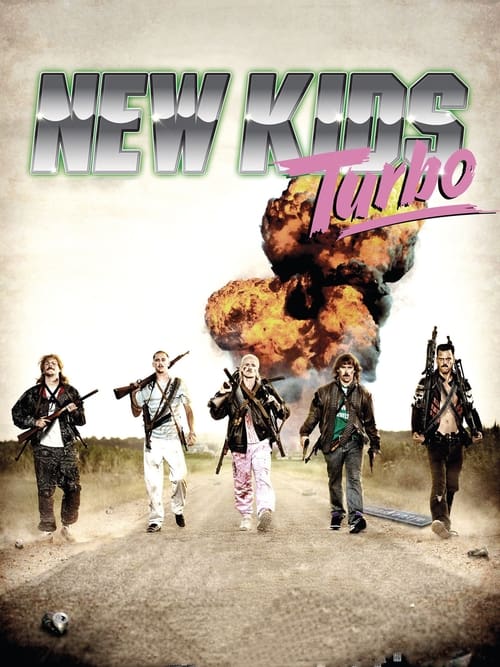
New Kids Turbo
Five friends from 'Maaskantje' are getting fired because of the economic crisis. They decide that they won't pay for anything anymore.
Despite its small-scale budget of $1.5M, New Kids Turbo became a box office success, earning $8.8M worldwide—a 486% return. The film's distinctive approach attracted moviegoers, proving that strong storytelling can transcend budget limitations.
Plot Structure
Story beats plotted across runtime


Narrative Arc
Emotional journey through the story's key moments
Story Circle
Blueprint 15-beat structure
Arcplot Score Breakdown
Weighted: Precision (70%) + Arc (15%) + Theme (15%)
New Kids Turbo (2010) demonstrates meticulously timed narrative design, characteristic of Steffen Haars's storytelling approach. This structural analysis examines how the film's 15-point plot structure maps to proven narrative frameworks across 1 hour and 24 minutes. With an Arcplot score of 7.1, the film balances conventional beats with creative variation.
Structural Analysis
The Status Quo at 1 minutes (1% through the runtime) establishes The New Kids hang out in their typical Maaskantje lifestyle: unemployed, drinking beer, causing chaos, and living without responsibility or ambition.. Of particular interest, this early placement immediately immerses viewers in the story world.
The inciting incident occurs at 10 minutes when The economic crisis hits: the boys lose their unemployment benefits and are forced to find jobs or face financial ruin, disrupting their carefree existence.. At 12% through the film, this Disruption aligns precisely with traditional story structure. This beat shifts the emotional landscape, launching the protagonist into the central conflict.
The First Threshold at 21 minutes marks the transition into Act II, occurring at 25% of the runtime. This reveals the protagonist's commitment to The boys actively choose to reject conventional employment and instead decide to start their own business: selling energy drinks called "Turbo" to maintain their lifestyle without conforming., moving from reaction to action.
At 42 minutes, the Midpoint arrives at 50% of the runtime—precisely centered, creating perfect narrative symmetry. Notably, this crucial beat False victory: the Turbo business reaches peak success, the boys are making money and living the dream, but their methods attract unwanted attention from authorities and rivals., fundamentally raising what's at risk. The emotional intensity shifts, dividing the narrative into clear before-and-after phases.
The Collapse moment at 63 minutes (75% through) represents the emotional nadir. Here, The boys' business collapses completely, they face serious legal trouble, their friendship fractures, and they lose everything they built, facing the possibility of prison or exile from Maaskantje., reveals the protagonist at their lowest point. This beat's placement in the final quarter sets up the climactic reversal.
The Second Threshold at 67 minutes initiates the final act resolution at 80% of the runtime. The boys realize they don't need to change who they are, but they must unite and fight back against the system on their own terms. They commit to one final, outrageous plan., demonstrating the transformation achieved throughout the journey.
Emotional Journey
New Kids Turbo's emotional architecture traces a deliberate progression across 15 carefully calibrated beats.
Narrative Framework
This structural analysis employs structural analysis methodology used to understand storytelling architecture. By mapping New Kids Turbo against these established plot points, we can identify how Steffen Haars utilizes or subverts traditional narrative conventions. The plot point approach reveals not only adherence to structural principles but also creative choices that distinguish New Kids Turbo within the action genre.
Comparative Analysis
Additional action films include The Ministry of Ungentlemanly Warfare, The Bad Guys and Lake Placid.
Plot Points by Act
Act I
SetupStatus Quo
The New Kids hang out in their typical Maaskantje lifestyle: unemployed, drinking beer, causing chaos, and living without responsibility or ambition.
Theme
A character comments on the boys' refusal to adapt or change, foreshadowing that their stubborn resistance to societal expectations will drive the story.
Worldbuilding
Introduction to the New Kids crew (Gerrie, Barrie, Richard, Rikkert, and Robbie), their small village of Maaskantje, their daily routines of drinking, fighting, and rejecting work and authority.
Disruption
The economic crisis hits: the boys lose their unemployment benefits and are forced to find jobs or face financial ruin, disrupting their carefree existence.
Resistance
The boys reluctantly attempt to find legitimate work but sabotage every opportunity. They debate whether to conform to society or find another way to survive on their own terms.
Act II
ConfrontationFirst Threshold
The boys actively choose to reject conventional employment and instead decide to start their own business: selling energy drinks called "Turbo" to maintain their lifestyle without conforming.
Mirror World
The boys encounter characters who represent alternative ways of living (legitimate businesspeople, authority figures), creating thematic contrast with their own anti-establishment philosophy.
Premise
The "fun and games" of the Turbo energy drink business: the boys create outrageous marketing schemes, engage in escalating hijinks, and enjoy temporary success selling their product through increasingly absurd methods.
Midpoint
False victory: the Turbo business reaches peak success, the boys are making money and living the dream, but their methods attract unwanted attention from authorities and rivals.
Opposition
Authorities crack down on the boys' illegal business operations. Rivals emerge. Internal conflicts arise within the group. The escalation of their antics brings increasing consequences and danger.
Collapse
The boys' business collapses completely, they face serious legal trouble, their friendship fractures, and they lose everything they built, facing the possibility of prison or exile from Maaskantje.
Crisis
The boys sit in despair, facing the consequences of their actions. They process whether their lifestyle is sustainable or if they've pushed too far. The dark night before the final stand.
Act III
ResolutionSecond Threshold
The boys realize they don't need to change who they are, but they must unite and fight back against the system on their own terms. They commit to one final, outrageous plan.
Synthesis
The finale: the boys execute their most extreme scheme yet, combining all their chaotic energy and friendship into a spectacular confrontation with authority, leading to explosive resolution.
Transformation
The boys remain unchanged in their core identity but have proven their loyalty to each other and their way of life. They're still in Maaskantje, still drinking, but victorious on their own terms.