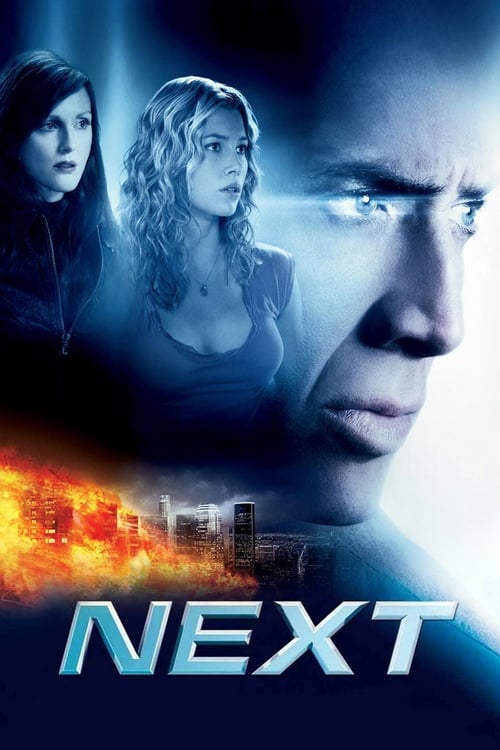
Next
Las Vegas showroom magician Cris Johnson has a secret which torments him: he can see a few minutes into the future. Sick of the examinations he underwent as a child and the interest of the government and medical establishment in his power, he lies low under an assumed name in Vegas, performing cheap tricks and living off small-time gambling "winnings." But when a terrorist group threatens to detonate a nuclear device in Los Angeles, government agent Callie Ferris must use all her wiles to capture Cris and convince him to help her stop the cataclysm.
Working with a moderate budget of $70.0M, the film achieved a steady performer with $76.1M in global revenue (+9% profit margin).
2 wins & 3 nominations


Plot Structure
Story beats plotted across runtime


Narrative Arc
Emotional journey through the story's key moments
Story Circle
Blueprint 15-beat structure
Arcplot Score Breakdown
Weighted: Precision (70%) + Arc (15%) + Theme (15%)
Next (2007) showcases carefully calibrated plot construction, characteristic of Lee Tamahori's storytelling approach. This structural analysis examines how the film's 15-point plot structure maps to proven narrative frameworks across 1 hour and 36 minutes. With an Arcplot score of 7.2, the film balances conventional beats with creative variation.
Characters
Cast & narrative archetypes

Cris Johnson
Callie Ferris
Liz Cooper
Mr. Smith
Main Cast & Characters
Cris Johnson
Played by Nicolas Cage
A Las Vegas magician with the ability to see two minutes into his own future. He uses his gift for small-scale performances while hiding from government attention.
Callie Ferris
Played by Julianne Moore
An FBI agent determined to recruit Cris to help prevent a nuclear terrorist attack. She pursues him relentlessly despite his resistance.
Liz Cooper
Played by Jessica Biel
A schoolteacher who becomes Cris's love interest. She is the only element of his future he can see beyond two minutes.
Mr. Smith
Played by Thomas Kretschmann
The lead terrorist planning to detonate a nuclear weapon in Los Angeles. He is ruthless and methodical in his mission.
Structural Analysis
The Status Quo at 1 minutes (1% through the runtime) establishes Cris Johnson performs as a low-rent Las Vegas magician, using his precognition ability (limited to 2 minutes) for small-time shows while hiding his true gift from the world.. Notably, this early placement immediately immerses viewers in the story world.
The inciting incident occurs at 11 minutes when Agent Ferris aggressively pursues Cris, revealing that terrorists have smuggled a nuclear weapon into Los Angeles. She needs his precognition to stop it, but Cris refuses and flees.. At 12% through the film, this Disruption aligns precisely with traditional story structure. This beat shifts the emotional landscape, launching the protagonist into the central conflict.
The First Threshold at 23 minutes marks the transition into Act II, occurring at 24% of the runtime. This illustrates the protagonist's commitment to Cris chooses to pursue his vision of Liz at Flagstaff diner instead of continuing to hide. This active choice to follow the one vision that extends beyond 2 minutes changes everything., moving from reaction to action.
At 49 minutes, the Midpoint arrives at 51% of the runtime—precisely centered, creating perfect narrative symmetry. Structural examination shows that this crucial beat The FBI captures Cris and Liz. Terrorists become aware of Cris's ability. Stakes raise dramatically - it's no longer about hiding, but about the nuclear bomb that will kill millions. False defeat: Cris is forced into service., fundamentally raising what's at risk. The emotional intensity shifts, dividing the narrative into clear before-and-after phases.
The Collapse moment at 72 minutes (75% through) represents the emotional nadir. Here, Liz is killed by the terrorists. Cris arrives too late to save her despite his precognition. His one reason for caring about the future dies, and his unique extended visions die with her., illustrates the protagonist at their lowest point. This beat's placement in the final quarter sets up the climactic reversal.
The Second Threshold at 77 minutes initiates the final act resolution at 80% of the runtime. Cris synthesizes everything: his love for Liz, his gift, and his responsibility. He realizes he can use his extended visions (which he still has in memory) to locate the bomb and rewrite this timeline., demonstrating the transformation achieved throughout the journey.
Emotional Journey
Next's emotional architecture traces a deliberate progression across 15 carefully calibrated beats.
Narrative Framework
This structural analysis employs a 15-point narrative structure framework that maps key story moments. By mapping Next against these established plot points, we can identify how Lee Tamahori utilizes or subverts traditional narrative conventions. The plot point approach reveals not only adherence to structural principles but also creative choices that distinguish Next within the action genre.
Lee Tamahori's Structural Approach
Among the 9 Lee Tamahori films analyzed on Arcplot, the average structural score is 7.2, reflecting strong command of classical structure. Next takes a more unconventional approach compared to the director's typical style. For comparative analysis, explore the complete Lee Tamahori filmography.
Comparative Analysis
Additional action films include The Bad Guys, Puss in Boots and Venom: The Last Dance. For more Lee Tamahori analyses, see The Devil's Double, Once Were Warriors and The Convert.
Plot Points by Act
Act I
SetupStatus Quo
Cris Johnson performs as a low-rent Las Vegas magician, using his precognition ability (limited to 2 minutes) for small-time shows while hiding his true gift from the world.
Theme
FBI Agent Callie Ferris tells her superior: "Every time you look into the future, it changes" - establishing the film's exploration of free will versus determinism.
Worldbuilding
We see Cris's routine: performing magic shows, using his ability to win at casinos (while staying under the radar), and evading FBI surveillance. He has recurring visions of a mysterious woman (Liz) at a diner.
Disruption
Agent Ferris aggressively pursues Cris, revealing that terrorists have smuggled a nuclear weapon into Los Angeles. She needs his precognition to stop it, but Cris refuses and flees.
Resistance
Cris debates whether to get involved while evading the FBI. He uses his ability to escape pursuit multiple times. He's torn between self-preservation and using his gift for something meaningful.
Act II
ConfrontationFirst Threshold
Cris chooses to pursue his vision of Liz at Flagstaff diner instead of continuing to hide. This active choice to follow the one vision that extends beyond 2 minutes changes everything.
Mirror World
Cris meets Liz Cooper at the diner. She represents normalcy, human connection, and the future beyond his gift - the life he could have if he chooses differently. She embodies the theme of choice and free will.
Premise
Cris explores multiple timeline possibilities with Liz, testing different approaches to win her over. He also discovers that around Liz, his visions extend far into the future, making her unique and essential.
Midpoint
The FBI captures Cris and Liz. Terrorists become aware of Cris's ability. Stakes raise dramatically - it's no longer about hiding, but about the nuclear bomb that will kill millions. False defeat: Cris is forced into service.
Opposition
Cris reluctantly works with the FBI to track the nuclear device. Terrorists kidnap Liz to control him. His visions become unreliable under stress. Every attempt to locate the bomb fails as the terrorists stay ahead.
Collapse
Liz is killed by the terrorists. Cris arrives too late to save her despite his precognition. His one reason for caring about the future dies, and his unique extended visions die with her.
Crisis
Devastated, Cris shuts down emotionally. Without Liz, he questions why he should care about saving anyone. The FBI pushes him to continue, but he's lost his anchor to humanity and the future.
Act III
ResolutionSecond Threshold
Cris synthesizes everything: his love for Liz, his gift, and his responsibility. He realizes he can use his extended visions (which he still has in memory) to locate the bomb and rewrite this timeline.
Synthesis
Cris leads the final assault on the terrorist compound, using his precognition to navigate the attack perfectly. The nuclear bomb is located and neutralized. The mission succeeds.
Transformation
REVEAL: Everything from the diner meeting forward was a vision. Cris wakes on his couch - none of it happened yet. Now knowing the future, he chooses to find Agent Ferris and help, accepting his gift's true purpose. Liz is still alive to find.