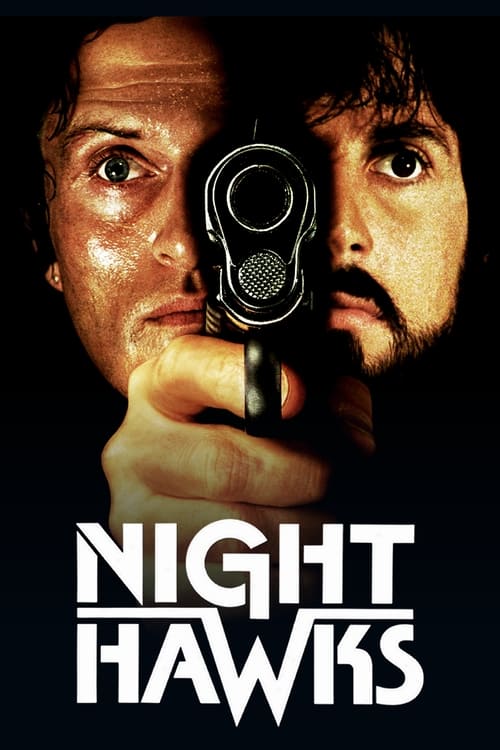
Nighthawks
When one of Europe's most lethal terrorists shows up in New York, an elite undercover cop is assigned to take him down by any means necessary.
Despite its modest budget of $5.0M, Nighthawks became a commercial success, earning $19.9M worldwide—a 298% return. The film's compelling narrative found its audience, confirming that strong storytelling can transcend budget limitations.


Plot Structure
Story beats plotted across runtime


Narrative Arc
Emotional journey through the story's key moments
Story Circle
Blueprint 15-beat structure
Arcplot Score Breakdown
Weighted: Precision (70%) + Arc (15%) + Theme (15%)
Nighthawks (1981) exhibits precise dramatic framework, characteristic of Bruce Malmuth's storytelling approach. This structural analysis examines how the film's 15-point plot structure maps to proven narrative frameworks across 1 hour and 39 minutes. With an Arcplot score of 7.6, the film showcases strong structural fundamentals.
Characters
Cast & narrative archetypes

Deke DaSilva
Wulfgar
Matthew Fox
Irene
Lt. Munafo
Main Cast & Characters
Deke DaSilva
Played by Sylvester Stallone
A tough NYPD detective who must stop an international terrorist in New York City.
Wulfgar
Played by Rutger Hauer
A ruthless international terrorist who brings his campaign of violence to New York.
Matthew Fox
Played by Billy Dee Williams
DaSilva's experienced partner in the NYPD, loyal and dedicated.
Irene
Played by Persis Khambatta
Wulfgar's girlfriend and accomplice in his terrorist activities.
Lt. Munafo
Played by Nigel Davenport
NYPD Lieutenant who oversees the anti-terrorism operation.
Structural Analysis
The Status Quo at 1 minutes (1% through the runtime) establishes DaSilva and Fox conduct undercover street work in drag, establishing their world as streetwise NYPD detectives comfortable in their routine beat cop roles.. Structural examination shows that this early placement immediately immerses viewers in the story world.
The inciting incident occurs at 11 minutes when Wulfgar arrives in New York City. The international terrorist threat comes to their doorstep, making their street cop skills suddenly inadequate for what's coming.. At 11% through the film, this Disruption aligns precisely with traditional story structure. This beat shifts the emotional landscape, launching the protagonist into the central conflict.
The First Threshold at 24 minutes marks the transition into Act II, occurring at 24% of the runtime. This indicates the protagonist's commitment to DaSilva and Fox officially join ATAC and begin counter-terrorism training under Hartman, actively choosing to enter the unfamiliar world of international terrorism despite their reluctance., moving from reaction to action.
At 49 minutes, the Midpoint arrives at 49% of the runtime—precisely centered, creating perfect narrative symmetry. The analysis reveals that this crucial beat Wulfgar bombs a department store. Stakes raise dramatically - false defeat as civilian casualties mount and Wulfgar proves more dangerous than anticipated. The game becomes deadly serious., fundamentally raising what's at risk. The emotional intensity shifts, dividing the narrative into clear before-and-after phases.
The Collapse moment at 73 minutes (74% through) represents the emotional nadir. Here, Wulfgar takes hostages on the Roosevelt Island tram. Fox is seriously wounded during the confrontation. Whiff of death as DaSilva's partner nearly dies and the operation falls apart., demonstrates the protagonist at their lowest point. This beat's placement in the final quarter sets up the climactic reversal.
The Second Threshold at 78 minutes initiates the final act resolution at 79% of the runtime. DaSilva synthesizes Hartman's methodical approach with his own street instincts. Breakthrough intelligence reveals Wulfgar's next target. He's ready to face the terrorist on his own terms., demonstrating the transformation achieved throughout the journey.
Emotional Journey
Nighthawks's emotional architecture traces a deliberate progression across 15 carefully calibrated beats.
Narrative Framework
This structural analysis employs proven narrative structure principles that track dramatic progression. By mapping Nighthawks against these established plot points, we can identify how Bruce Malmuth utilizes or subverts traditional narrative conventions. The plot point approach reveals not only adherence to structural principles but also creative choices that distinguish Nighthawks within the action genre.
Bruce Malmuth's Structural Approach
Among the 2 Bruce Malmuth films analyzed on Arcplot, the average structural score is 7.5, reflecting strong command of classical structure. Nighthawks represents one of the director's most structurally precise works. For comparative analysis, explore the complete Bruce Malmuth filmography.
Comparative Analysis
Additional action films include The Bad Guys, Puss in Boots and Venom: The Last Dance. For more Bruce Malmuth analyses, see Hard to Kill.
Plot Points by Act
Act I
SetupStatus Quo
DaSilva and Fox conduct undercover street work in drag, establishing their world as streetwise NYPD detectives comfortable in their routine beat cop roles.
Theme
Discussion about the changing nature of police work and terrorism: "This is a new kind of war" - foreshadowing the theme of adaptation and evolution required to face modern threats.
Worldbuilding
Establish DaSilva's personal life, partnership with Fox, their street cop methods, and the routine dangers of their beat. Parallel introduction of Wulfgar conducting terrorism in Europe.
Disruption
Wulfgar arrives in New York City. The international terrorist threat comes to their doorstep, making their street cop skills suddenly inadequate for what's coming.
Resistance
DaSilva and Fox resist reassignment to ATAC (Anti-Terrorism Action Command). Introduction of Interpol agent Peter Hartman who will train them. They debate whether to accept this new world.
Act II
ConfrontationFirst Threshold
DaSilva and Fox officially join ATAC and begin counter-terrorism training under Hartman, actively choosing to enter the unfamiliar world of international terrorism despite their reluctance.
Mirror World
Peter Hartman becomes the thematic mirror - a European specialist who represents the sophisticated, methodical approach to terrorism that contrasts with DaSilva's street instincts.
Premise
The fun and games of cat-and-mouse: DaSilva and Fox learn counter-terrorism tactics while tracking Wulfgar through NYC. Multiple near-misses and surveillance operations as they adapt their street skills to this new hunt.
Midpoint
Wulfgar bombs a department store. Stakes raise dramatically - false defeat as civilian casualties mount and Wulfgar proves more dangerous than anticipated. The game becomes deadly serious.
Opposition
Wulfgar stays ahead, using plastic surgery to change appearance. DaSilva's personal life deteriorates. The terrorist outsmarts them repeatedly, taking hostages and creating chaos. Pressure intensifies from media and department.
Collapse
Wulfgar takes hostages on the Roosevelt Island tram. Fox is seriously wounded during the confrontation. Whiff of death as DaSilva's partner nearly dies and the operation falls apart.
Crisis
DaSilva processes Fox's injury and his own failure. Dark reflection on whether his street cop instincts are enough, whether he can truly adapt to this new kind of warfare.
Act III
ResolutionSecond Threshold
DaSilva synthesizes Hartman's methodical approach with his own street instincts. Breakthrough intelligence reveals Wulfgar's next target. He's ready to face the terrorist on his own terms.
Synthesis
Final confrontation at a nightclub. DaSilva uses both his evolved counter-terrorism skills and street cop instincts to corner and kill Wulfgar, ending the terrorist threat.
Transformation
DaSilva visits recovering Fox in hospital. No longer just street cops - they've evolved into something new, transformed by their encounter with modern terrorism. Quiet moment of reflection on what they've become.