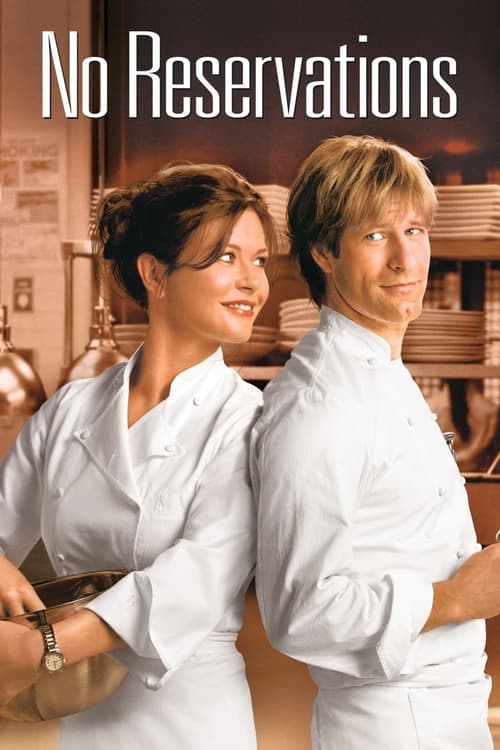
No Reservations
Master chef Kate Armstrong runs her life and her kitchen with intimidating intensity. However, a recipe for disaster may be in the works when she becomes the guardian of her young niece while crossing forks with the brash sous-chef who just joined her staff. Though romance blooms in the face of rivalry, Kate needs to look outside the kitchen to find true happiness.
Despite a mid-range budget of $28.0M, No Reservations became a box office success, earning $92.6M worldwide—a 231% return.


Plot Structure
Story beats plotted across runtime


Narrative Arc
Emotional journey through the story's key moments
Story Circle
Blueprint 15-beat structure
Arcplot Score Breakdown
Weighted: Precision (70%) + Arc (15%) + Theme (15%)
No Reservations (2007) demonstrates deliberately positioned dramatic framework, characteristic of Scott Hicks's storytelling approach. This structural analysis examines how the film's 15-point plot structure maps to proven narrative frameworks across 1 hour and 44 minutes. With an Arcplot score of 7.1, the film balances conventional beats with creative variation.
Characters
Cast & narrative archetypes

Kate Armstrong
Nick Palmer
Zoe
Paula
Main Cast & Characters
Kate Armstrong
Played by Catherine Zeta-Jones
A perfectionist head chef whose controlled life is disrupted when she must care for her young niece after a family tragedy.
Nick Palmer
Played by Aaron Eckhart
A spontaneous, opera-loving sous chef who brings warmth and chaos to Kate's structured kitchen and life.
Zoe
Played by Abigail Breslin
Kate's nine-year-old niece who struggles with grief after losing her mother and must adjust to living with her aunt.
Paula
Played by Patricia Clarkson
Kate's restaurant owner who hires Nick and tries to help Kate find balance between work and personal life.
Structural Analysis
The Status Quo at 1 minutes (1% through the runtime) establishes Kate is a perfectionist chef running her kitchen with absolute control, demanding excellence but isolated emotionally. She attends court-ordered therapy sessions but remains guarded and resistant.. Of particular interest, this early placement immediately immerses viewers in the story world.
The inciting incident occurs at 13 minutes when Kate's sister dies in a car accident, leaving nine-year-old Zoe orphaned. Kate's entire controlled existence is shattered by sudden responsibility and grief.. At 12% through the film, this Disruption aligns precisely with traditional story structure. This beat shifts the emotional landscape, launching the protagonist into the central conflict.
The First Threshold at 26 minutes marks the transition into Act II, occurring at 25% of the runtime. This reveals the protagonist's commitment to Kate makes the active choice to become Zoe's guardian and bring her home permanently, committing to this new life and responsibility despite having no idea how to be a parent., moving from reaction to action.
At 53 minutes, the Midpoint arrives at 51% of the runtime—precisely centered, creating perfect narrative symmetry. Notably, this crucial beat Kate and Nick kiss and begin a romantic relationship. Everything seems to be coming together - Zoe is healing, Kate is opening up, and love is blossoming. A false victory as Kate hasn't truly dealt with her control issues., fundamentally raising what's at risk. The emotional intensity shifts, dividing the narrative into clear before-and-after phases.
The Collapse moment at 78 minutes (75% through) represents the emotional nadir. Here, Kate's control issues explode in a confrontation with Nick. He leaves to take the other job, and Kate is alone again. Her dream of having both career and family dies as she reverts to her isolated, controlled existence., indicates the protagonist at their lowest point. This beat's placement in the final quarter sets up the climactic reversal.
The Second Threshold at 84 minutes initiates the final act resolution at 80% of the runtime. Kate has the realization that she must let go of control and choose love over perfection. She synthesizes what Nick taught her about spontaneity with her own strengths, understanding that true mastery includes vulnerability., demonstrating the transformation achieved throughout the journey.
Emotional Journey
No Reservations's emotional architecture traces a deliberate progression across 15 carefully calibrated beats.
Narrative Framework
This structural analysis employs proven narrative structure principles that track dramatic progression. By mapping No Reservations against these established plot points, we can identify how Scott Hicks utilizes or subverts traditional narrative conventions. The plot point approach reveals not only adherence to structural principles but also creative choices that distinguish No Reservations within the comedy genre.
Scott Hicks's Structural Approach
Among the 4 Scott Hicks films analyzed on Arcplot, the average structural score is 7.0, reflecting strong command of classical structure. No Reservations represents one of the director's most structurally precise works. For comparative analysis, explore the complete Scott Hicks filmography.
Comparative Analysis
Additional comedy films include The Bad Guys, Ella Enchanted and The Evening Star. For more Scott Hicks analyses, see The Lucky One, Hearts in Atlantis and Shine.
Plot Points by Act
Act I
SetupStatus Quo
Kate is a perfectionist chef running her kitchen with absolute control, demanding excellence but isolated emotionally. She attends court-ordered therapy sessions but remains guarded and resistant.
Theme
The therapist suggests that Kate needs to "let someone in" and that life is about more than control and perfection - it's about connection and spontaneity.
Worldbuilding
Establishment of Kate's controlled world: her demanding restaurant kitchen, her relationship with her sister and niece Zoe, her perfectionism that alienates customers, and her inability to relax or connect emotionally.
Disruption
Kate's sister dies in a car accident, leaving nine-year-old Zoe orphaned. Kate's entire controlled existence is shattered by sudden responsibility and grief.
Resistance
Kate struggles to balance her demanding career with caring for the traumatized Zoe, who won't eat and withdraws emotionally. Kate's boss hires Nick, a sub-chef, to help in the kitchen while Kate deals with her new life, but this threatens Kate's control.
Act II
ConfrontationFirst Threshold
Kate makes the active choice to become Zoe's guardian and bring her home permanently, committing to this new life and responsibility despite having no idea how to be a parent.
Mirror World
Nick becomes the thematic counterpoint - spontaneous, warm, playful in the kitchen, playing opera and making staff laugh. He connects with Zoe through food when Kate cannot, showing an alternative way to live.
Premise
Kate navigates her new world: learning to parent Zoe, clashing with Nick's relaxed style, slowly opening up as Nick helps her connect with Zoe through cooking. Romance begins to develop as Kate's walls start to crack.
Midpoint
Kate and Nick kiss and begin a romantic relationship. Everything seems to be coming together - Zoe is healing, Kate is opening up, and love is blossoming. A false victory as Kate hasn't truly dealt with her control issues.
Opposition
Kate's inability to surrender control creates mounting tension. She struggles to balance work and family, becomes jealous of Nick's bond with Zoe, and her old patterns of pushing people away resurface. Nick is offered a head chef position elsewhere.
Collapse
Kate's control issues explode in a confrontation with Nick. He leaves to take the other job, and Kate is alone again. Her dream of having both career and family dies as she reverts to her isolated, controlled existence.
Crisis
Kate continues working but is hollow and miserable. Zoe misses Nick. Kate realizes that her need for control has cost her everything that matters - love, connection, and family. She processes what she has lost.
Act III
ResolutionSecond Threshold
Kate has the realization that she must let go of control and choose love over perfection. She synthesizes what Nick taught her about spontaneity with her own strengths, understanding that true mastery includes vulnerability.
Synthesis
Kate quits her job to prioritize Zoe and pursue what truly matters. She finds Nick and fights for their relationship, demonstrating her transformation by being vulnerable and spontaneous. She opens her own bistro with Nick as partner.
Transformation
Kate, Nick, and Zoe work together in their new restaurant, a family united. Kate is relaxed, playful, and open - the opposite of the controlled, isolated perfectionist from the opening. She has learned to balance excellence with love.