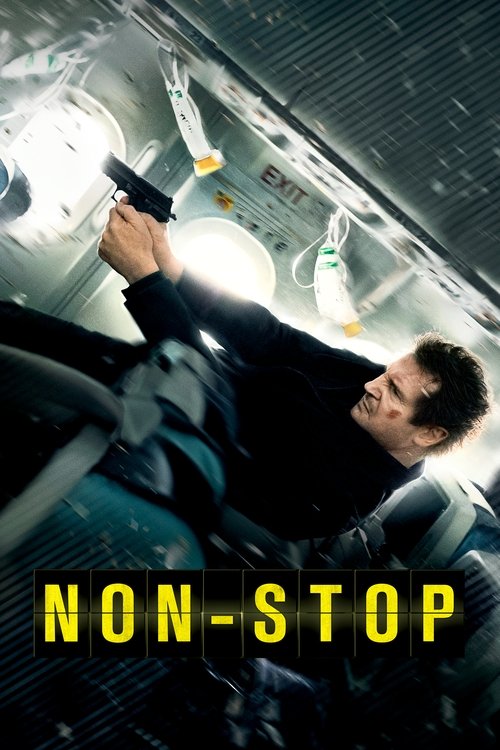
Non-Stop
Bill Marks is a Federal Air Marshall for whom every day is the same until this one. On this plane ride, he starts receiving text messages from someone claiming to be on the flight and threatening to kill passengers. In a race against the clock, he must identify and stop the killer to save everyone on board.
Despite a mid-range budget of $50.0M, Non-Stop became a box office success, earning $222.8M worldwide—a 346% return.


Plot Structure
Story beats plotted across runtime


Narrative Arc
Emotional journey through the story's key moments
Story Circle
Blueprint 15-beat structure
Arcplot Score Breakdown
Weighted: Precision (70%) + Arc (15%) + Theme (15%)
Non-Stop (2014) demonstrates meticulously timed plot construction, characteristic of Jaume Collet-Serra's storytelling approach. This structural analysis examines how the film's 15-point plot structure maps to proven narrative frameworks across 1 hour and 47 minutes. With an Arcplot score of 6.7, the film balances conventional beats with creative variation.
Characters
Cast & narrative archetypes

Bill Marks
Jen Summers
Tom Bowen
David McMillan
Nancy Hoffman
Hammond
Biscuit
Main Cast & Characters
Bill Marks
Played by Liam Neeson
An alcoholic air marshal dealing with PTSD who must stop a hijacker on a transatlantic flight while being framed for the crime.
Jen Summers
Played by Julianne Moore
A kind-hearted passenger who befriends Bill and helps him investigate the hijacking.
Tom Bowen
Played by Scoot McNairy
An NYPD officer traveling as a passenger who becomes a suspect in the hijacking plot.
David McMillan
Played by Corey Stoll
A programmer and passenger who initially helps Bill but is revealed to be part of the hijacking conspiracy.
Nancy Hoffman
Played by Michelle Dockery
The head flight attendant who tries to maintain order and assist Bill during the crisis.
Hammond
Played by Linus Roache
A Homeland Security agent who initially supports Bill but later believes he has gone rogue.
Biscuit
Played by Lupita Nyong'o
A flight attendant who assists Nancy and helps manage the panicking passengers.
Structural Analysis
The Status Quo at 1 minutes (1% through the runtime) establishes Bill Marks sits alone in his car at the airport, drinking from a flask, isolated and broken. A troubled air marshal drowning his demons before another flight.. Of particular interest, this early placement immediately immerses viewers in the story world.
The inciting incident occurs at 13 minutes when Bill receives the first anonymous text message: "There will be a death every 20 minutes unless $150 million is transferred to this account." The game begins.. At 13% through the film, this Disruption is delayed, allowing extended setup of the story world. This beat shifts the emotional landscape, launching the protagonist into the central conflict.
The First Threshold at 27 minutes marks the transition into Act II, occurring at 25% of the runtime. This reveals the protagonist's commitment to Hammond is found dead in the lavatory at exactly the 20-minute mark. Bill realizes this is real and commits fully to finding the killer, crossing into a deadly game with no way back., moving from reaction to action.
At 54 minutes, the Midpoint arrives at 50% of the runtime—precisely centered, creating perfect narrative symmetry. Of particular interest, this crucial beat Bill is framed as the hijacker on global news. His own government turns against him, F-16s are scrambled, and passengers see him as the terrorist. False defeat—the hunter becomes the hunted., fundamentally raising what's at risk. The emotional intensity shifts, dividing the narrative into clear before-and-after phases.
The Collapse moment at 80 minutes (75% through) represents the emotional nadir. Here, Bill discovers the bomb is in the cocaine-filled package planted in his luggage. He realizes he's been perfectly framed, his daughter's death exploited, everything he tried to protect is being used against him. His lowest moment of betrayal and despair., reveals the protagonist at their lowest point. This beat's placement in the final quarter sets up the climactic reversal.
The Second Threshold at 86 minutes initiates the final act resolution at 81% of the runtime. Bill identifies the real killers—Bowen and Zack White. He realizes their plan and motivation: to expose TSA security failures. Armed with the truth and renewed purpose, he chooses to act, trusting Jen and fighting for redemption., demonstrating the transformation achieved throughout the journey.
Emotional Journey
Non-Stop's emotional architecture traces a deliberate progression across 15 carefully calibrated beats.
Narrative Framework
This structural analysis employs a 15-point narrative structure framework that maps key story moments. By mapping Non-Stop against these established plot points, we can identify how Jaume Collet-Serra utilizes or subverts traditional narrative conventions. The plot point approach reveals not only adherence to structural principles but also creative choices that distinguish Non-Stop within the action genre.
Jaume Collet-Serra's Structural Approach
Among the 10 Jaume Collet-Serra films analyzed on Arcplot, the average structural score is 7.0, reflecting strong command of classical structure. Non-Stop takes a more unconventional approach compared to the director's typical style. For comparative analysis, explore the complete Jaume Collet-Serra filmography.
Comparative Analysis
Additional action films include The Bad Guys, Puss in Boots and Venom: The Last Dance. For more Jaume Collet-Serra analyses, see Black Adam, House of Wax and Jungle Cruise.
Plot Points by Act
Act I
SetupStatus Quo
Bill Marks sits alone in his car at the airport, drinking from a flask, isolated and broken. A troubled air marshal drowning his demons before another flight.
Theme
Jen Summers tells Bill, "I always thought it was about the journey, not the destination." The film's theme about trust, redemption, and what we're really protecting.
Worldbuilding
Bill boards the transatlantic flight to London, going through security with his gun. We meet passengers including Jen Summers, the flight crew, and see Bill's routine as an air marshal. His alcoholism, paranoia, and isolation are established.
Disruption
Bill receives the first anonymous text message: "There will be a death every 20 minutes unless $150 million is transferred to this account." The game begins.
Resistance
Bill debates whether the threat is real, investigates passengers, contacts TSA and his captain. He searches for the texter, questions fellow air marshal Hammond. Bill resists believing this is happening but knows he must act.
Act II
ConfrontationFirst Threshold
Hammond is found dead in the lavatory at exactly the 20-minute mark. Bill realizes this is real and commits fully to finding the killer, crossing into a deadly game with no way back.
Mirror World
Bill's deepening connection with Jen Summers, who represents trust and humanity. She becomes his ally and mirror, showing him the person he could be versus the paranoid wreck he's become.
Premise
Bill hunts for the killer among the passengers. Action and suspense as he investigates everyone, finds the bomb components, tries to maintain control. The $150 million account is in his name, making him look like the hijacker. Cat-and-mouse thriller premise delivers.
Midpoint
Bill is framed as the hijacker on global news. His own government turns against him, F-16s are scrambled, and passengers see him as the terrorist. False defeat—the hunter becomes the hunted.
Opposition
Passengers turn on Bill. He's restrained, loses control of the plane. The real conspirators tighten their grip. Bill must fight both the killers and the suspicious passengers while racing against time to find the bomb.
Collapse
Bill discovers the bomb is in the cocaine-filled package planted in his luggage. He realizes he's been perfectly framed, his daughter's death exploited, everything he tried to protect is being used against him. His lowest moment of betrayal and despair.
Crisis
Bill processes the manipulation and his complete isolation. In his darkest hour, he must decide whether to give up or find a way to save everyone despite being branded a terrorist and facing certain death.
Act III
ResolutionSecond Threshold
Bill identifies the real killers—Bowen and Zack White. He realizes their plan and motivation: to expose TSA security failures. Armed with the truth and renewed purpose, he chooses to act, trusting Jen and fighting for redemption.
Synthesis
Bill confronts the killers, fights Bowen, must get the bomb to the reinforced cockpit area. He saves the passengers by directing the explosion, crash-lands the plane, and proves his innocence. Combines his air marshal skills with his relearned trust in others.
Transformation
Bill walks away from the crashed plane with Jen and the little girl he protected. No longer isolated and broken, he's redeemed, trusted, and connected to others. A hero who found his purpose again.