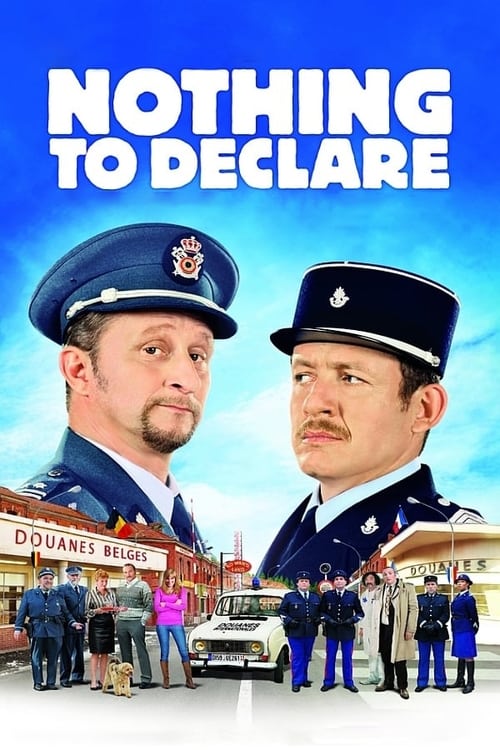
Nothing to Declare
During the elimination of the Belgian/French border in the 90s, a Belgian customs officer is forced to team up with one of his French counterparts.
Despite a respectable budget of $28.0M, Nothing to Declare became a financial success, earning $93.8M worldwide—a 235% return.


Plot Structure
Story beats plotted across runtime


Narrative Arc
Emotional journey through the story's key moments
Story Circle
Blueprint 15-beat structure
Arcplot Score Breakdown
Weighted: Precision (70%) + Arc (15%) + Theme (15%)
Nothing to Declare (2010) exhibits meticulously timed plot construction, characteristic of Dany Boon's storytelling approach. This structural analysis examines how the film's 15-point plot structure maps to proven narrative frameworks across 1 hour and 48 minutes. With an Arcplot score of 7.4, the film balances conventional beats with creative variation.
Characters
Cast & narrative archetypes

Ruben Vandevoorde
Mathias Ducatel
Louise Vandevoorde
Jacques Ducatel
Irene Ducatel
Chief Lambique
Main Cast & Characters
Ruben Vandevoorde
Played by Benoit Poelvoorde
A fanatically anti-French Belgian customs officer whose xenophobic worldview is shattered when he discovers his sister married a Frenchman. His rigid nationalism masks deep insecurities about identity and belonging.
Mathias Ducatel
Played by Dany Boon
A mild-mannered French customs officer forced to work with his Belgian counterpart Ruben after the borders open. He secretly married Ruben's sister and must navigate his hostile brother-in-law's prejudices.
Louise Vandevoorde
Played by Julie Bernard
Ruben's sister who secretly married Mathias, the French customs officer. She is caught between her loyalty to her brother and her love for her husband, eventually becoming pregnant with their child.
Jacques Ducatel
Played by François Damiens
Mathias's father who harbors his own prejudices against Belgians, mirroring Ruben's anti-French sentiments. He represents the older generation's ingrained nationalism.
Irene Ducatel
Played by Bouli Lanners
Mathias's mother who is more accepting than her husband but still carries cultural biases. She provides warmth and comic relief in family scenes.
Chief Lambique
Played by Bruno Bentot
The Belgian customs chief who oversees the border station and must manage the chaos when borders open. He is pragmatic and tries to maintain order amid the cultural clashes.
Structural Analysis
The Status Quo at 1 minutes (1% through the runtime) establishes Mathias Ducatel proudly patrols the Franco-Belgian border as a zealous French customs officer, inspecting Belgian vehicles with patriotic fervor and suspicion.. The analysis reveals that this early placement immediately immerses viewers in the story world.
The inciting incident occurs at 13 minutes when The announcement of the Schengen Agreement eliminating border controls between European nations, threatening to eliminate both customs posts and leaving all officers facing unemployment.. At 12% through the film, this Disruption aligns precisely with traditional story structure. This beat shifts the emotional landscape, launching the protagonist into the central conflict.
The First Threshold at 26 minutes marks the transition into Act II, occurring at 25% of the runtime. This illustrates the protagonist's commitment to Mathias reluctantly accepts the position in the new mobile customs unit, forcing himself to work alongside Belgian officers including Ruben, whom he considers his natural enemy., moving from reaction to action.
At 53 minutes, the Midpoint arrives at 50% of the runtime—precisely centered, creating perfect narrative symmetry. Structural examination shows that this crucial beat Mathias and Louise begin a romantic relationship, and the customs team successfully works together on a major operation, suggesting that cooperation across the border can work. False victory - built on Mathias's lie about his identity., fundamentally raising what's at risk. The emotional intensity shifts, dividing the narrative into clear before-and-after phases.
The Collapse moment at 80 minutes (74% through) represents the emotional nadir. Here, Mathias's true identity as a Frenchman is exposed to Louise and Ruben. Louise feels betrayed, Ruben is furious, and the fragile unity of the customs team collapses. Mathias loses everything he has built., reveals the protagonist at their lowest point. This beat's placement in the final quarter sets up the climactic reversal.
The Second Threshold at 86 minutes initiates the final act resolution at 79% of the runtime. Mathias realizes that the arbitrary border between France and Belgium is meaningless compared to genuine human connection. He decides to fight for Louise and prove his transformation is real, not just convenient., demonstrating the transformation achieved throughout the journey.
Emotional Journey
Nothing to Declare's emotional architecture traces a deliberate progression across 15 carefully calibrated beats.
Narrative Framework
This structural analysis employs systematic plot point analysis that identifies crucial turning points. By mapping Nothing to Declare against these established plot points, we can identify how Dany Boon utilizes or subverts traditional narrative conventions. The plot point approach reveals not only adherence to structural principles but also creative choices that distinguish Nothing to Declare within the comedy genre.
Dany Boon's Structural Approach
Among the 2 Dany Boon films analyzed on Arcplot, the average structural score is 7.1, reflecting strong command of classical structure. Nothing to Declare represents one of the director's most structurally precise works. For comparative analysis, explore the complete Dany Boon filmography.
Comparative Analysis
Additional comedy films include The Bad Guys, Ella Enchanted and The Evening Star. For more Dany Boon analyses, see Welcome to the Sticks.
Plot Points by Act
Act I
SetupStatus Quo
Mathias Ducatel proudly patrols the Franco-Belgian border as a zealous French customs officer, inspecting Belgian vehicles with patriotic fervor and suspicion.
Theme
A senior officer remarks that "borders exist for a reason" - foreshadowing the film's exploration of artificial divisions between people who share more similarities than differences.
Worldbuilding
Introduction to both French and Belgian customs posts in 1993, establishing Mathias's anti-Belgian prejudice, his family background, and the parallel world of Belgian customs officer Ruben Vandevoorde who is equally dedicated to his job.
Disruption
The announcement of the Schengen Agreement eliminating border controls between European nations, threatening to eliminate both customs posts and leaving all officers facing unemployment.
Resistance
The customs officers from both sides resist and debate the changes, with management proposing a joint Franco-Belgian mobile unit. Mathias struggles with the idea of working alongside Belgians he has disdained his entire career.
Act II
ConfrontationFirst Threshold
Mathias reluctantly accepts the position in the new mobile customs unit, forcing himself to work alongside Belgian officers including Ruben, whom he considers his natural enemy.
Mirror World
Mathias meets Ruben's sister Louise and is immediately attracted to her, creating a relationship that will force him to confront his prejudices about Belgian people on a personal level.
Premise
The Franco-Belgian mobile unit works together with comedic friction as French and Belgian officers clash over methods, culture, and mutual stereotypes while conducting joint operations. Mathias secretly pursues Louise while hiding his nationality.
Midpoint
Mathias and Louise begin a romantic relationship, and the customs team successfully works together on a major operation, suggesting that cooperation across the border can work. False victory - built on Mathias's lie about his identity.
Opposition
Maintaining his French identity becomes increasingly difficult as Mathias integrates deeper into Louise's Belgian family and community. Tension builds as near-discoveries threaten his deception, and his growing genuine affection for Louise conflicts with his lies.
Collapse
Mathias's true identity as a Frenchman is exposed to Louise and Ruben. Louise feels betrayed, Ruben is furious, and the fragile unity of the customs team collapses. Mathias loses everything he has built.
Crisis
Mathias faces rejection from both sides - the Belgian community who feel deceived and his French colleagues who see him as a traitor for falling for a Belgian woman. He confronts the emptiness of his lifelong prejudices.
Act III
ResolutionSecond Threshold
Mathias realizes that the arbitrary border between France and Belgium is meaningless compared to genuine human connection. He decides to fight for Louise and prove his transformation is real, not just convenient.
Synthesis
Mathias publicly renounces his prejudices and works to reunite the mobile customs unit. He demonstrates through action that he has changed, helping resolve a final crisis that requires French and Belgian cooperation, earning back trust.
Transformation
Mathias and Louise reconcile at the now-defunct border crossing, surrounded by their unified Franco-Belgian customs family. The physical border is gone, and so is the border in Mathias's heart.