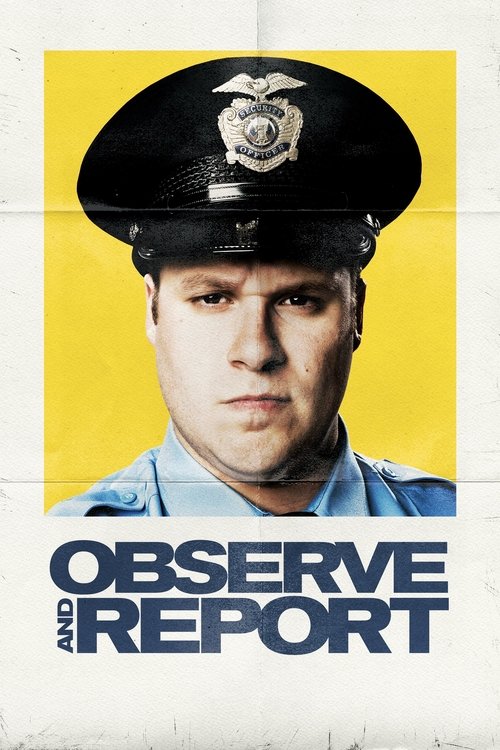
Observe and Report
Mall security guard Ronnie Barnhardt is called into action to stop a flasher from turning shopper's paradise into his personal peep show. But when Barnhardt can't bring the culprit to justice, a surly police detective is recruited to close the case.
Working with a moderate budget of $18.0M, the film achieved a steady performer with $24.0M in global revenue (+33% profit margin).
1 win & 4 nominations


Plot Structure
Story beats plotted across runtime


Narrative Arc
Emotional journey through the story's key moments
Story Circle
Blueprint 15-beat structure
Arcplot Score Breakdown
Weighted: Precision (70%) + Arc (15%) + Theme (15%)
Observe and Report (2009) demonstrates deliberately positioned story structure, characteristic of Jody Hill's storytelling approach. This structural analysis examines how the film's 15-point plot structure maps to proven narrative frameworks across 1 hour and 26 minutes. With an Arcplot score of 6.8, the film balances conventional beats with creative variation.
Characters
Cast & narrative archetypes

Ronnie Barnhardt
Brandi
Detective Harrison
Nell
Dennis
Mom
Charles
Saddamn
Main Cast & Characters
Ronnie Barnhardt
Played by Seth Rogen
A delusional, bipolar mall security guard who takes his job far too seriously and dreams of becoming a real police officer while pursuing a flasher terrorizing the mall.
Brandi
Played by Anna Faris
A shallow, self-absorbed cosmetics counter employee whom Ronnie obsessively pursues despite her clear disinterest and cruel treatment of him.
Detective Harrison
Played by Ray Liotta
A cynical police detective investigating the mall flasher case who initially humors Ronnie but eventually becomes his antagonist.
Nell
Played by Collette Wolfe
A sweet, kind-hearted food court employee with a leg brace who genuinely cares for Ronnie despite his blindness to her affection.
Dennis
Played by Michael Pena
Ronnie's loyal but dim-witted mall security partner who follows Ronnie's lead unquestioningly and aspires to be taken seriously.
Mom
Played by Celia Weston
Ronnie's alcoholic mother who enables his delusions while struggling with her own dependency issues.
Charles
Played by Jesse Plemons
A flamboyant mall employee and member of Ronnie's security team who provides comic relief and surprising competence.
Saddamn
Played by Aziz Ansari
An aggressive mall kiosk vendor of Middle Eastern descent whom Ronnie racially profiles and harasses.
Structural Analysis
The Status Quo at 1 minutes (1% through the runtime) establishes Ronnie Barnhardt patrols the mall with delusional self-importance, believing himself a real authority figure while his alcoholic mother and dead-end security job reveal his actual pathetic status.. Significantly, this early placement immediately immerses viewers in the story world.
The inciting incident occurs at 10 minutes when A flasher exposes himself to Brandi in the parking lot, traumatizing her. This crime on "his" territory becomes Ronnie's obsession and justification for escalating his delusions of police work.. At 12% through the film, this Disruption aligns precisely with traditional story structure. This beat shifts the emotional landscape, launching the protagonist into the central conflict.
The First Threshold at 22 minutes marks the transition into Act II, occurring at 25% of the runtime. This demonstrates the protagonist's commitment to Ronnie decides to apply to the police academy, actively choosing to pursue his delusion of becoming a real authority figure despite everyone telling him he's unqualified., moving from reaction to action.
At 43 minutes, the Midpoint arrives at 50% of the runtime—precisely centered, creating perfect narrative symmetry. Of particular interest, this crucial beat Ronnie fails the police psychological evaluation due to his obvious mental instability and narcissistic personality disorder. This should be a wake-up call but instead he refuses to accept reality., fundamentally raising what's at risk. The emotional intensity shifts, dividing the narrative into clear before-and-after phases.
The Collapse moment at 65 minutes (75% through) represents the emotional nadir. Here, Ronnie is brutally beaten by Detective Harrison and other officers after a violent confrontation. Hospitalized and humiliated, he's fired from his security job. His entire identity and purpose collapse., reveals the protagonist at their lowest point. This beat's placement in the final quarter sets up the climactic reversal.
The Second Threshold at 69 minutes initiates the final act resolution at 80% of the runtime. Ronnie gets a lead on the flasher's identity. Rather than learn humility, he doubles down on his delusion, choosing violent revenge over growth. This is a dark "realization" that enables his worst instincts., demonstrating the transformation achieved throughout the journey.
Emotional Journey
Observe and Report's emotional architecture traces a deliberate progression across 15 carefully calibrated beats.
Narrative Framework
This structural analysis employs proven narrative structure principles that track dramatic progression. By mapping Observe and Report against these established plot points, we can identify how Jody Hill utilizes or subverts traditional narrative conventions. The plot point approach reveals not only adherence to structural principles but also creative choices that distinguish Observe and Report within the comedy genre.
Comparative Analysis
Additional comedy films include The Bad Guys, Ella Enchanted and The Evening Star.
Plot Points by Act
Act I
SetupStatus Quo
Ronnie Barnhardt patrols the mall with delusional self-importance, believing himself a real authority figure while his alcoholic mother and dead-end security job reveal his actual pathetic status.
Theme
Dennis tells Ronnie, "You're not a real cop," establishing the central theme about delusion versus reality and the danger of power fantasies unmoored from self-awareness.
Worldbuilding
Introduction to the mall ecosystem: Ronnie's delusional authority over his security team, his obsession with cosmetics counter girl Brandi, his dysfunctional home life with his alcoholic mother, and the petty dramas of mall life.
Disruption
A flasher exposes himself to Brandi in the parking lot, traumatizing her. This crime on "his" territory becomes Ronnie's obsession and justification for escalating his delusions of police work.
Resistance
Ronnie investigates the flasher with increasing aggression, begins "comforting" Brandi, and debates whether to pursue his dream of becoming a real police officer. Detective Harrison arrives and undermines Ronnie's authority.
Act II
ConfrontationFirst Threshold
Ronnie decides to apply to the police academy, actively choosing to pursue his delusion of becoming a real authority figure despite everyone telling him he's unqualified.
Mirror World
Ronnie meets Nell, a sweet coffee stand employee who genuinely likes him. She represents authentic connection and reality, contrasting with his fantasy obsession with Brandi.
Premise
Ronnie pursues both his police application and the flasher case with increasing violence and instability. He has a disturbing "date" with the passed-out Brandi, trains obsessively, and his mental health deteriorates while he ignores Nell's kindness.
Midpoint
Ronnie fails the police psychological evaluation due to his obvious mental instability and narcissistic personality disorder. This should be a wake-up call but instead he refuses to accept reality.
Opposition
Ronnie spirals: he goes off his psychiatric medication, becomes increasingly violent with suspects, alienates his security team, ruins his relationship with Nell by choosing Brandi, and his vigilante behavior intensifies as reality closes in.
Collapse
Ronnie is brutally beaten by Detective Harrison and other officers after a violent confrontation. Hospitalized and humiliated, he's fired from his security job. His entire identity and purpose collapse.
Crisis
Ronnie lies broken in the hospital, his mother visits revealing more dysfunction, and he processes the total destruction of his delusions. But rather than accept reality, he prepares for one final stand.
Act III
ResolutionSecond Threshold
Ronnie gets a lead on the flasher's identity. Rather than learn humility, he doubles down on his delusion, choosing violent revenge over growth. This is a dark "realization" that enables his worst instincts.
Synthesis
Ronnie confronts and brutally murders the flasher in an extended, disturbing sequence. He hallucinates heroic validation and is briefly rehired. The film presents his violent delusion as his "victory."
Transformation
Ronnie returns to patrolling the mall, having learned nothing. He's more delusional than ever, validated by murder. The closing image mirrors the opening but shows he's become something darker: a monster enabled by his fantasies.