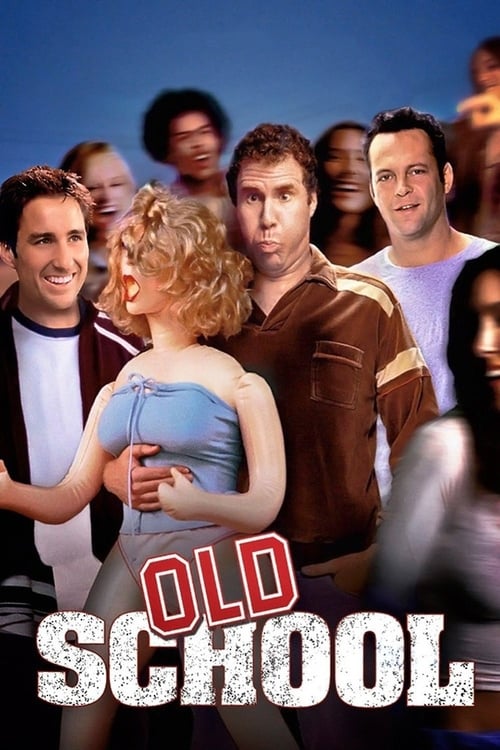
Old School
Three friends attempt to recapture their glory days by opening up a fraternity near their alma mater.
Despite a mid-range budget of $24.0M, Old School became a solid performer, earning $87.1M worldwide—a 263% return.


Plot Structure
Story beats plotted across runtime


Narrative Arc
Emotional journey through the story's key moments
Story Circle
Blueprint 15-beat structure
Arcplot Score Breakdown
Weighted: Precision (70%) + Arc (15%) + Theme (15%)
Old School (2003) demonstrates deliberately positioned narrative design, characteristic of Todd Phillips's storytelling approach. This structural analysis examines how the film's 15-point plot structure maps to proven narrative frameworks across 1 hour and 32 minutes. With an Arcplot score of 7.1, the film balances conventional beats with creative variation.
Characters
Cast & narrative archetypes

Mitch Martin
Frank Ricard
Bernard Campbell
Gordon Pritchard
Nicole
Marissa
Heidi
Blue
Main Cast & Characters
Mitch Martin
Played by Luke Wilson
A straight-laced lawyer whose life unravels after discovering his girlfriend's infidelity, leading him to start a fraternity with his friends.
Frank Ricard
Played by Will Ferrell
An impulsive, wild man-child recently married who desperately misses his bachelor days and becomes the fraternity's most enthusiastic member.
Bernard Campbell
Played by Vince Vaughn
A fast-talking entrepreneur and devoted family man who helps found the fraternity as an escape from domestic responsibilities.
Gordon Pritchard
Played by Jeremy Piven
The vindictive dean of students at Harrison University who has a personal vendetta against Mitch and seeks to shut down the fraternity.
Nicole
Played by Ellen Pompeo
Mitch's love interest, a kind and grounded woman who works at the university and represents a chance at a healthier relationship.
Marissa
Played by Juliette Lewis
Mitch's unfaithful girlfriend whose sexual adventurousness and betrayal catalyzes the entire story.
Heidi
Played by Perrey Reeves
Frank's wife who grows increasingly frustrated with his irresponsible behavior and fraternity activities.
Blue
Played by Patrick Cranshaw
An elderly man who pledges the fraternity and dies during a wrestling match with two female performers, becoming a martyr for the house.
Structural Analysis
The Status Quo at 1 minutes (1% through the runtime) establishes Mitch returns home to find his girlfriend in a bizarre group situation, revealing his settled but unfulfilling adult life is about to collapse.. Structural examination shows that this early placement immediately immerses viewers in the story world.
The inciting incident occurs at 10 minutes when Dean Pritchard informs Mitch his new house is on campus property, and the dean plans to use his position to destroy any fun, setting up the central conflict.. At 11% through the film, this Disruption aligns precisely with traditional story structure. This beat shifts the emotional landscape, launching the protagonist into the central conflict.
The First Threshold at 23 minutes marks the transition into Act II, occurring at 25% of the runtime. This shows the protagonist's commitment to The trio decides to start a fraternity to keep the house and legally continue partying, actively choosing to relive their college days despite being in their thirties., moving from reaction to action.
At 47 minutes, the Midpoint arrives at 51% of the runtime—precisely centered, creating perfect narrative symmetry. The analysis reveals that this crucial beat The fraternity successfully holds rush and gains official recognition. Everything seems perfect as they've achieved their goal, but Dean Pritchard begins plotting their downfall., fundamentally raising what's at risk. The emotional intensity shifts, dividing the narrative into clear before-and-after phases.
The Collapse moment at 68 minutes (74% through) represents the emotional nadir. Here, Frank has a breakdown and streaks through town, ending up tranquilized. The fraternity faces expulsion hearings, and Mitch loses Nicole due to his immaturity., illustrates the protagonist at their lowest point. This beat's placement in the final quarter sets up the climactic reversal.
The Second Threshold at 73 minutes initiates the final act resolution at 80% of the runtime. Mitch realizes they can save the fraternity through academic competition, combining their adult skills with their fraternity spirit. They prepare for the debate challenge., demonstrating the transformation achieved throughout the journey.
Emotional Journey
Old School's emotional architecture traces a deliberate progression across 15 carefully calibrated beats.
Narrative Framework
This structural analysis employs a 15-point narrative structure framework that maps key story moments. By mapping Old School against these established plot points, we can identify how Todd Phillips utilizes or subverts traditional narrative conventions. The plot point approach reveals not only adherence to structural principles but also creative choices that distinguish Old School within the comedy genre.
Todd Phillips's Structural Approach
Among the 11 Todd Phillips films analyzed on Arcplot, the average structural score is 6.9, demonstrating varied approaches to story architecture. Old School represents one of the director's most structurally precise works. For comparative analysis, explore the complete Todd Phillips filmography.
Comparative Analysis
Additional comedy films include The Bad Guys, Ella Enchanted and The Evening Star. For more Todd Phillips analyses, see School for Scoundrels, The Hangover Part III and The Hangover Part II.
Plot Points by Act
Act I
SetupStatus Quo
Mitch returns home to find his girlfriend in a bizarre group situation, revealing his settled but unfulfilling adult life is about to collapse.
Theme
Frank discusses feeling trapped by domesticity and marriage, establishing the theme: growing old versus staying true to yourself.
Worldbuilding
Introducing the three friends: Mitch (newly single), Frank (unhappily married), and Beanie (married with kids). Mitch moves near campus into a new house.
Disruption
Dean Pritchard informs Mitch his new house is on campus property, and the dean plans to use his position to destroy any fun, setting up the central conflict.
Resistance
Frank convinces Mitch to throw a housewarming party. The party spirals into a massive rager, showing the appeal of recapturing youth but also the consequences.
Act II
ConfrontationFirst Threshold
The trio decides to start a fraternity to keep the house and legally continue partying, actively choosing to relive their college days despite being in their thirties.
Mirror World
Mitch meets Nicole, a genuine romantic interest who represents mature adult connection versus juvenile escapism.
Premise
The fraternity comes to life with pledges, parties, and adventures. Frank embraces freedom, Beanie balances family and fun, and Mitch pursues Nicole while running the house.
Midpoint
The fraternity successfully holds rush and gains official recognition. Everything seems perfect as they've achieved their goal, but Dean Pritchard begins plotting their downfall.
Opposition
Dean Pritchard intensifies efforts to shut down the fraternity. Frank's marriage dissolves, Beanie's wife discovers his involvement, and the consequences of their choices mount.
Collapse
Frank has a breakdown and streaks through town, ending up tranquilized. The fraternity faces expulsion hearings, and Mitch loses Nicole due to his immaturity.
Crisis
The friends face the reality that their attempt to relive youth has destroyed their adult lives. They must decide whether to grow up or double down.
Act III
ResolutionSecond Threshold
Mitch realizes they can save the fraternity through academic competition, combining their adult skills with their fraternity spirit. They prepare for the debate challenge.
Synthesis
The climactic academic debate and challenges against Dean Pritchard. The friends use their unique talents, proving they can be both youthful and responsible. They win and save the fraternity.
Transformation
Mitch reconciles with Nicole, showing he's found balance between fun and maturity. The fraternity continues but with healthier boundaries, proving you don't have to abandon youth to be an adult.