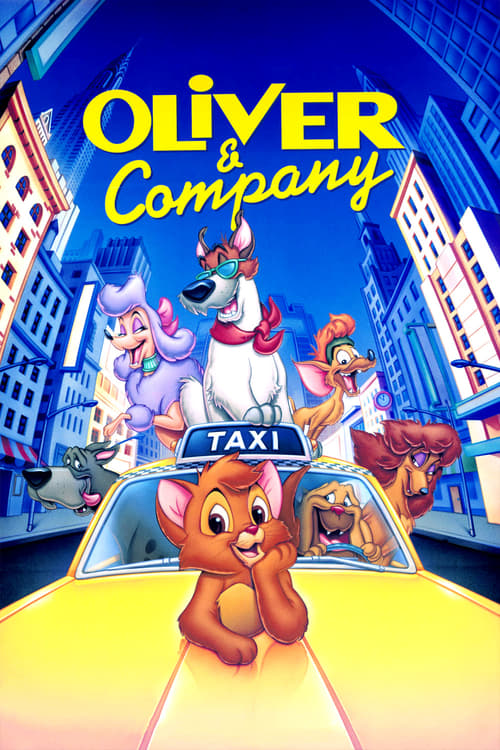
Oliver & Company
A young cat named Oliver is left alone in a kitten box, while all the other young cats have new owners. A big dog named Dodger shows him how to get food and later Oliver lives with him, his owner Fagin and Fagin's other dogs Tito, Rita, Einstein, and Francis. Fagin has one problem besides being broke he owes a nasty man named Sykes a lot of money. If he can't pay it back he's in big trouble. While Oliver runs into a little girl named Jenny who becomes his new owner which he is happy with and later Sykes sees Jenny as the key for him to get his money.
Despite a moderate budget of $31.0M, Oliver & Company became a financial success, earning $121.0M worldwide—a 290% return.
1 win & 2 nominations


Plot Structure
Story beats plotted across runtime


Narrative Arc
Emotional journey through the story's key moments
Story Circle
Blueprint 15-beat structure
Arcplot Score Breakdown
Weighted: Precision (70%) + Arc (15%) + Theme (15%)
Oliver & Company (1988) exhibits carefully calibrated story structure, characteristic of George Scribner's storytelling approach. This structural analysis examines how the film's 15-point plot structure maps to proven narrative frameworks across 1 hour and 14 minutes. With an Arcplot score of 7.7, the film showcases strong structural fundamentals.
Characters
Cast & narrative archetypes

Oliver
Dodger
Fagin
Jenny Foxworth
Bill Sykes
Georgette
Tito
Rita
Einstein
Francis
Main Cast & Characters
Oliver
Played by Joey Lawrence
An orphaned orange tabby kitten who gets separated from his litter and must survive on the streets of New York City before finding a home.
Dodger
Played by Billy Joel
A streetwise Jack Russell Terrier and leader of Fagin's dog gang who befriends Oliver and teaches him to survive on the streets.
Fagin
Played by Dom DeLuise
A kind-hearted but down-on-his-luck petty thief who cares for a gang of dogs and owes money to the villainous Sykes.
Jenny Foxworth
Played by Natalie Gregory
A wealthy but lonely young girl who adopts Oliver and gives him a loving home, becoming his devoted owner.
Bill Sykes
Played by Robert Loggia
A ruthless loan shark and crime boss who terrorizes Fagin and ultimately kidnaps Jenny for ransom.
Georgette
Played by Bette Midler
Jenny's pampered, vain prize-winning poodle who is initially jealous of Oliver but eventually helps rescue Jenny.
Tito
Played by Cheech Marin
A tiny but feisty Chihuahua in Fagin's gang who has a Napoleon complex and develops a crush on Georgette.
Rita
Played by Sheryl Lee Ralph
A streetwise female Saluki in Fagin's gang who serves as the maternal figure and voice of reason among the dogs.
Einstein
Played by Richard Mulligan
A dim-witted but lovable Great Dane in Fagin's gang who provides comic relief with his slow-thinking nature.
Francis
Played by Roscoe Lee Browne
A cultured English Bulldog in Fagin's gang who has refined tastes and gets annoyed when called "Frankie."
Structural Analysis
The Status Quo at 1 minutes (1% through the runtime) establishes Oliver, an orphaned orange kitten, watches as the other kittens are adopted while he remains alone in a cardboard box on a rainy New York street, establishing his status as abandoned and unwanted.. Significantly, this early placement immediately immerses viewers in the story world.
The inciting incident occurs at 8 minutes when Fagin returns to the barge desperate because he owes money to the dangerous loan shark Sykes by midnight in three days, or "it's gonna be curtains!" This external threat disrupts the gang's world and sets the plot in motion.. At 11% through the film, this Disruption aligns precisely with traditional story structure. This beat shifts the emotional landscape, launching the protagonist into the central conflict.
The First Threshold at 17 minutes marks the transition into Act II, occurring at 24% of the runtime. This shows the protagonist's commitment to Oliver actively chooses to stay with Jenny when he could escape back to the streets. He experiences his first real home—a warm bed, good food, love, and belonging with a family. This is his choice to enter the "uptown" world., moving from reaction to action.
At 36 minutes, the Midpoint arrives at 49% of the runtime—precisely centered, creating perfect narrative symmetry. Notably, this crucial beat Fagin sends the ransom note to Jenny for Oliver. This raises the stakes enormously—what seemed like a harmless scheme now puts an innocent child in danger. Sykes discovers Fagin's plan and takes over, transforming this from a false victory (easy money) into real danger., fundamentally raising what's at risk. The emotional intensity shifts, dividing the narrative into clear before-and-after phases.
The Collapse moment at 54 minutes (74% through) represents the emotional nadir. Here, Jenny is kidnapped by Sykes and held captive in his warehouse with his vicious Dobermans. Oliver and the gang witness this but are powerless to stop it. The innocent child's life is now at stake—the "whiff of death" is literal. Fagin is devastated by what his desperation has caused., reveals the protagonist at their lowest point. This beat's placement in the final quarter sets up the climactic reversal.
The Second Threshold at 59 minutes initiates the final act resolution at 79% of the runtime. Fagin arrives with his scooter to help rescue Jenny, and Oliver realizes that his street family and his new family must work together. The synthesis: both worlds have value, and family isn't about wealth or species—it's about loyalty and love. They storm the warehouse together., demonstrating the transformation achieved throughout the journey.
Emotional Journey
Oliver & Company's emotional architecture traces a deliberate progression across 15 carefully calibrated beats.
Narrative Framework
This structural analysis employs structural analysis methodology used to understand storytelling architecture. By mapping Oliver & Company against these established plot points, we can identify how George Scribner utilizes or subverts traditional narrative conventions. The plot point approach reveals not only adherence to structural principles but also creative choices that distinguish Oliver & Company within the animation genre.
Comparative Analysis
Additional animation films include The Bad Guys, Puss in Boots and Violet Evergarden: Eternity and the Auto Memory Doll.
Plot Points by Act
Act I
SetupStatus Quo
Oliver, an orphaned orange kitten, watches as the other kittens are adopted while he remains alone in a cardboard box on a rainy New York street, establishing his status as abandoned and unwanted.
Theme
Dodger tells Oliver "This is a great city—if you know how to work it" and later "You got to consider our position... you ain't got a home." The theme of belonging and found family vs. survival on the streets is introduced.
Worldbuilding
Oliver tries to survive on the streets, attempts to partner with streetwise dog Dodger to steal hot dogs, gets double-crossed, and follows Dodger through the city to an abandoned barge where he meets Fagin's gang of dogs (Tito, Einstein, Rita, Francis) who work as pickpockets for their poor owner Fagin, who owes money to the villainous Sykes.
Disruption
Fagin returns to the barge desperate because he owes money to the dangerous loan shark Sykes by midnight in three days, or "it's gonna be curtains!" This external threat disrupts the gang's world and sets the plot in motion.
Resistance
The gang debates whether to keep Oliver. Fagin reluctantly accepts him. The dogs teach Oliver how to steal and work as a team. They plan and execute a theft operation in a fancy neighborhood, where Oliver ends up inside a limousine and is taken home by a lonely rich girl, Jenny, who adopts him and names him Oliver.
Act II
ConfrontationFirst Threshold
Oliver actively chooses to stay with Jenny when he could escape back to the streets. He experiences his first real home—a warm bed, good food, love, and belonging with a family. This is his choice to enter the "uptown" world.
Mirror World
Jenny and Oliver's relationship deepens as she cares for him, gives him a collar, and makes him part of her life. Jenny represents the family and unconditional love Oliver has always needed—she is the thematic mirror showing what "home" truly means.
Premise
Oliver enjoys his new life of luxury with Jenny while Fagin desperately searches for him to help with the debt. Dodger and the gang infiltrate Jenny's house to "rescue" Oliver. Fagin sees Jenny's wealth and gets the idea to ransom Oliver. Meanwhile, Sykes' deadline approaches and the tension between Oliver's two worlds—street and uptown—builds.
Midpoint
Fagin sends the ransom note to Jenny for Oliver. This raises the stakes enormously—what seemed like a harmless scheme now puts an innocent child in danger. Sykes discovers Fagin's plan and takes over, transforming this from a false victory (easy money) into real danger.
Opposition
Fagin struggles with guilt over involving Jenny. Jenny goes alone to the ransom meeting with her piggy bank savings. Sykes reveals himself as the true villain, kidnapping Jenny when he sees her wealthy family as a bigger score. The dogs realize Fagin's mistake. Everything spirals out of control as the bad guys close in and Jenny is in mortal danger.
Collapse
Jenny is kidnapped by Sykes and held captive in his warehouse with his vicious Dobermans. Oliver and the gang witness this but are powerless to stop it. The innocent child's life is now at stake—the "whiff of death" is literal. Fagin is devastated by what his desperation has caused.
Crisis
Fagin mourns and processes his guilt, realizes he must make things right. Oliver and the dogs refuse to give up on Jenny. They track Sykes to his warehouse and formulate a desperate rescue plan. This is their dark night—facing their fear and inadequacy.
Act III
ResolutionSecond Threshold
Fagin arrives with his scooter to help rescue Jenny, and Oliver realizes that his street family and his new family must work together. The synthesis: both worlds have value, and family isn't about wealth or species—it's about loyalty and love. They storm the warehouse together.
Synthesis
The gang fights Sykes' Dobermans and rescues Jenny. A climactic chase through the city streets and into the subway ensues. Sykes pursues them with murderous intent. The dogs use teamwork and street smarts. Sykes is defeated when his car collides with a train. Jenny is saved, Oliver proves his bravery, and the found family triumphs together.
Transformation
Jenny's birthday party includes both her wealthy world and Fagin's street gang as honored guests. Oliver has found his place with Jenny, but maintains his bond with Dodger and the gang. The closing image shows Oliver has both families now—he belongs, and everyone celebrates together in harmony.