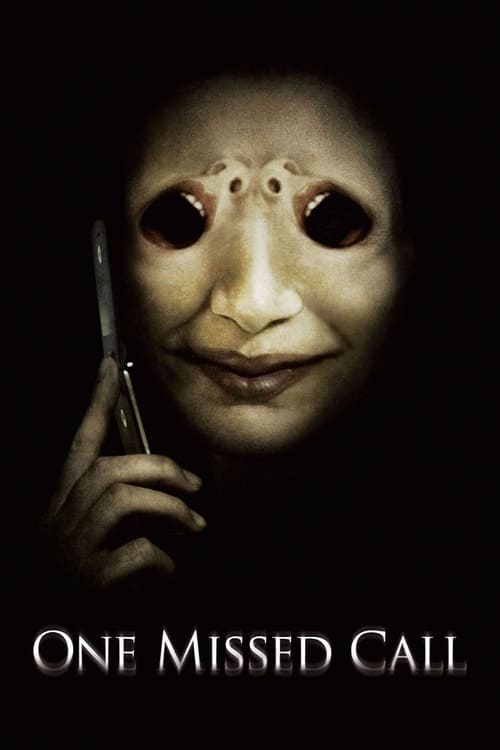
One Missed Call
Several people start receiving voice-mails from their future selves -- messages which include the date, time, and some of the details of their deaths.
Despite a mid-range budget of $20.0M, One Missed Call became a commercial success, earning $45.8M worldwide—a 129% return.


Plot Structure
Story beats plotted across runtime


Narrative Arc
Emotional journey through the story's key moments
Story Circle
Blueprint 15-beat structure
Arcplot Score Breakdown
Weighted: Precision (70%) + Arc (15%) + Theme (15%)
One Missed Call (2008) demonstrates carefully calibrated narrative design, characteristic of Eric Valette's storytelling approach. This structural analysis examines how the film's 15-point plot structure maps to proven narrative frameworks across 1 hour and 27 minutes. With an Arcplot score of 7.5, the film showcases strong structural fundamentals.
Characters
Cast & narrative archetypes

Beth Raymond
Detective Jack Andrews
Leann Cole
Taylor Anthony
Brian Sousa
Shelley Baum
Ted Summers
Marie Layton
Main Cast & Characters
Beth Raymond
Played by Shannyn Sossamon
A psychology student who becomes the target of a deadly phone curse after her friends begin dying in the order they receive mysterious voicemails predicting their deaths.
Detective Jack Andrews
Played by Edward Burns
A determined detective investigating the mysterious phone-related deaths, whose personal connection to the case drives him to help Beth uncover the truth.
Leann Cole
Played by Azura Skye
Beth's close friend and one of the first victims of the phone curse, whose death sets the terrifying chain of events in motion.
Taylor Anthony
Played by Ana Claudia Talancon
One of Beth's friends who receives the cursed call and desperately tries to escape her predicted fate through a televised exorcism.
Brian Sousa
Played by Johnny Lewis
Beth's friend who becomes entangled in the deadly phone chain and tries to understand the supernatural phenomenon.
Shelley Baum
Played by Meagan Good
Another victim in the friend group who receives the ominous voicemail foretelling her death.
Ted Summers
Played by Ray Wise
A sensationalist TV host who attempts to exorcise the curse on live television for ratings, with disastrous results.
Marie Layton
Played by Rhoda Griffis
The abusive mother at the center of the curse's origin, whose horrific treatment of her children created the vengeful spirit.
Structural Analysis
The Status Quo at 1 minutes (1% through the runtime) establishes College students Beth and Leann at a cafe. Beth receives a mysterious voicemail from her own number dated two days in the future, playing her own screaming voice and death sounds. Establishes the normal world before supernatural terror begins.. Of particular interest, this early placement immediately immerses viewers in the story world.
The inciting incident occurs at 9 minutes when Leann dies exactly as her voicemail predicted - drowning in the koi pond at the exact time and manner prophesied. The curse is real. Beth witnesses the aftermath and realizes this is not a prank but genuine supernatural danger.. At 11% through the film, this Disruption aligns precisely with traditional story structure. This beat shifts the emotional landscape, launching the protagonist into the central conflict.
The First Threshold at 21 minutes marks the transition into Act II, occurring at 24% of the runtime. This shows the protagonist's commitment to Another friend Shelley dies as predicted despite their attempts to prevent it. Beth makes the active choice to fully investigate the curse's origin with Jack, committing to stop it. They cross into the world of supernatural investigation, accepting this is real., moving from reaction to action.
At 43 minutes, the Midpoint arrives at 49% of the runtime—precisely centered, creating perfect narrative symmetry. Structural examination shows that this crucial beat They discover the source: Marie Layton, an abusive mother who killed her children. They believe finding her body will break the curse - a false victory. Stakes raise when Beth herself receives the cursed call, making it deeply personal. The clock is now ticking on her life., fundamentally raising what's at risk. The emotional intensity shifts, dividing the narrative into clear before-and-after phases.
The Collapse moment at 63 minutes (72% through) represents the emotional nadir. Here, Jack is killed by the curse while trying to protect Beth. The one person who understood and helped her is gone. Beth is now alone, her time running out, with no clear solution. The whiff of death - her protector and potential love interest dies., illustrates the protagonist at their lowest point. This beat's placement in the final quarter sets up the climactic reversal.
The Second Threshold at 68 minutes initiates the final act resolution at 78% of the runtime. Beth realizes the true nature of the curse - it's not Marie but her daughter Laurel, the real victim seeking help. The answer isn't destruction but compassion. She must confront the spirit not with violence but by acknowledging the pain and offering help - the opposite of emotional distance., demonstrating the transformation achieved throughout the journey.
Emotional Journey
One Missed Call's emotional architecture traces a deliberate progression across 15 carefully calibrated beats.
Narrative Framework
This structural analysis employs structural analysis methodology used to understand storytelling architecture. By mapping One Missed Call against these established plot points, we can identify how Eric Valette utilizes or subverts traditional narrative conventions. The plot point approach reveals not only adherence to structural principles but also creative choices that distinguish One Missed Call within the horror genre.
Comparative Analysis
Additional horror films include Thinner, A Nightmare on Elm Street and Mary Reilly.
Plot Points by Act
Act I
SetupStatus Quo
College students Beth and Leann at a cafe. Beth receives a mysterious voicemail from her own number dated two days in the future, playing her own screaming voice and death sounds. Establishes the normal world before supernatural terror begins.
Theme
Leann discusses the guilt of not being there for people who need you. Theme: the cost of ignoring calls for help and the consequences of emotional distance from those who need us.
Worldbuilding
Introduction to Beth Raymond and her college friends. Beth is shown as emotionally guarded. The group dynamics established, college life shown, relationships between characters developed before the supernatural curse begins its work.
Disruption
Leann dies exactly as her voicemail predicted - drowning in the koi pond at the exact time and manner prophesied. The curse is real. Beth witnesses the aftermath and realizes this is not a prank but genuine supernatural danger.
Resistance
Beth investigates the pattern of deaths. She meets Detective Jack Andrews whose sister died similarly. They debate whether to believe the supernatural explanation. Beth resists accepting the reality while trying to rationalize the deaths. Jack becomes her reluctant ally.
Act II
ConfrontationFirst Threshold
Another friend Shelley dies as predicted despite their attempts to prevent it. Beth makes the active choice to fully investigate the curse's origin with Jack, committing to stop it. They cross into the world of supernatural investigation, accepting this is real.
Mirror World
Beth and Jack's partnership deepens. Jack represents the thematic mirror - someone who failed to save his sister and carries guilt. Their developing relationship shows Beth what opening up emotionally looks like, contrasting her closed-off nature.
Premise
Beth and Jack trace the curse backward through victims. They investigate the supernatural mythology, interview witnesses, explore abandoned locations. The promise of a supernatural detective thriller plays out as they uncover the curse's origin in child abuse and a vengeful spirit.
Midpoint
They discover the source: Marie Layton, an abusive mother who killed her children. They believe finding her body will break the curse - a false victory. Stakes raise when Beth herself receives the cursed call, making it deeply personal. The clock is now ticking on her life.
Opposition
Their attempts to break the curse fail. The spirit grows stronger and more aggressive. Media circus surrounds the case. Ted, a TV producer, tries to exploit the curse on live television and dies horrifically. The opposition intensifies as the entity proves unstoppable by conventional means.
Collapse
Jack is killed by the curse while trying to protect Beth. The one person who understood and helped her is gone. Beth is now alone, her time running out, with no clear solution. The whiff of death - her protector and potential love interest dies.
Crisis
Beth processes Jack's death and her impending doom. She sits in darkness, facing her own mortality and isolation. The dark night of the soul where she must find strength within herself, something she's avoided by keeping emotional distance from others.
Act III
ResolutionSecond Threshold
Beth realizes the true nature of the curse - it's not Marie but her daughter Laurel, the real victim seeking help. The answer isn't destruction but compassion. She must confront the spirit not with violence but by acknowledging the pain and offering help - the opposite of emotional distance.
Synthesis
Beth confronts the spirit at the abandoned hospital. She finds Laurel's body and tries to give her peace. The finale plays out as Beth faces her death time, attempting to break the cycle through empathy rather than force. Final confrontation with the supernatural entity.
Transformation
Ambiguous ending: Beth may have survived but the curse continues spreading. Unlike the opening where she was emotionally closed off, she's now someone who faced her fears and tried to help. However, the cycle of ignored suffering continues - a dark transformation showing some horrors can't be overcome.