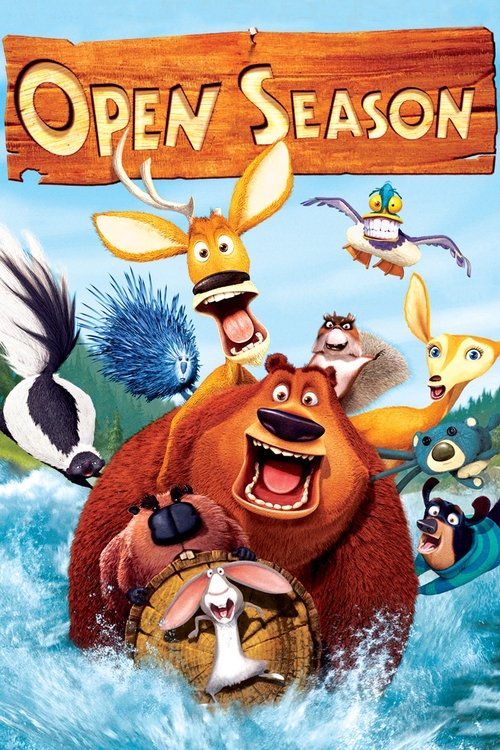
Open Season
Boog, a domesticated 900lb. Grizzly bear, finds himself stranded in the woods 3 days before Open Season. Forced to rely on Elliot, a fast-talking mule deer, the two form an unlikely friendship and must quickly rally other forest a...
Despite a considerable budget of $85.0M, Open Season became a financial success, earning $197.3M worldwide—a 132% return.
1 win & 10 nominations


Plot Structure
Story beats plotted across runtime


Narrative Arc
Emotional journey through the story's key moments
Story Circle
Blueprint 15-beat structure
Characters
Cast & narrative archetypes

Boog
Elliot
Beth
Shaw
McSquizzy
Mr. Weenie
Giselle
Ian
Main Cast & Characters
Boog
Played by Martin Lawrence
A domesticated grizzly bear raised by ranger Beth who must learn to survive in the wild after being released into the forest.
Elliot
Played by Ashton Kutcher
A fast-talking, one-antlered mule deer who befriends Boog and helps him navigate the wilderness while seeking acceptance from his former herd.
Beth
Played by Debra Messing
A kind-hearted forest ranger who raised Boog from a cub and struggles with releasing him into the wild.
Shaw
Played by Gary Sinise
An obsessive, trigger-happy hunter determined to hunt down Boog, viewing the bear as his ultimate trophy.
McSquizzy
Played by Billy Connolly
A feisty Scottish squirrel who leads a militant group of forest creatures and initially distrusts Boog.
Mr. Weenie
Played by Cody Cameron
A dachshund who escapes from his owners to join the wild animals, despite being a domesticated pet.
Giselle
Played by Jane Krakowski
A beautiful doe and leader of the deer herd who eventually warms up to Elliot.
Ian
Played by Patrick Warburton
The arrogant alpha buck who leads the deer herd and constantly belittles Elliot.
Structural Analysis
The Status Quo at 1 minutes (1% through the runtime) establishes Boog the domesticated grizzly bear performs in shows with ranger Beth in the town of Timberline, living a comfortable, pampered life with garage full of stuffed animals and a cushy existence.. Significantly, this early placement immediately immerses viewers in the story world.
The inciting incident occurs at 10 minutes when Boog meets Elliot, a wild mule deer strapped to the hood of Shaw's truck. Against his better judgment, Boog frees Elliot, setting off a chain of events that disrupts his safe, predictable world.. At 12% through the film, this Disruption aligns precisely with traditional story structure. This beat shifts the emotional landscape, launching the protagonist into the central conflict.
The First Threshold at 22 minutes marks the transition into Act II, occurring at 25% of the runtime. This indicates the protagonist's commitment to Beth tranquilizes Boog and releases him into the forest just three days before open season. Boog crosses from his domesticated world into the wild, though not by choice initially. He must now survive in an environment he's never experienced., moving from reaction to action.
At 43 minutes, the Midpoint arrives at 50% of the runtime—precisely centered, creating perfect narrative symmetry. Structural examination shows that this crucial beat Shaw and the hunters enter the forest as open season begins. The stakes raise dramatically - this is no longer just about Boog getting home, but about survival. False defeat: the fun and games are over, and real danger arrives., fundamentally raising what's at risk. The emotional intensity shifts, dividing the narrative into clear before-and-after phases.
The Collapse moment at 63 minutes (74% through) represents the emotional nadir. Here, Boog and Elliot's friendship dies when Boog discovers Elliot's deception about his herd. Boog rejects Elliot completely. Meanwhile, the hunters have the animals surrounded. Boog hits his lowest point - alone, betrayed, and facing overwhelming danger., reveals the protagonist at their lowest point. This beat's placement in the final quarter sets up the climactic reversal.
The Second Threshold at 69 minutes initiates the final act resolution at 80% of the runtime. Boog realizes Elliot is in danger and makes the choice to embrace his wild nature to save his friend. He rallies the forest animals with a plan to fight back against the hunters. Synthesis of domesticated intelligence with wild strength., demonstrating the transformation achieved throughout the journey.
Emotional Journey
Open Season's emotional architecture traces a deliberate progression across 15 carefully calibrated beats.
Narrative Framework
This structural analysis employs a 15-point narrative structure framework that maps key story moments. By mapping Open Season against these established plot points, we can identify how Jill Culton utilizes or subverts traditional narrative conventions. The plot point approach reveals not only adherence to structural principles but also creative choices that distinguish Open Season within the animation genre.
Jill Culton's Structural Approach
Among the 2 Jill Culton films analyzed on Arcplot, Open Season exemplifies the director's characteristic narrative technique. For comparative analysis, explore the complete Jill Culton filmography.
Comparative Analysis
Additional animation films include The Bad Guys, Puss in Boots and Violet Evergarden: Eternity and the Auto Memory Doll. For more Jill Culton analyses, see Abominable.
Plot Points by Act
Act I
SetupStatus Quo
Boog the domesticated grizzly bear performs in shows with ranger Beth in the town of Timberline, living a comfortable, pampered life with garage full of stuffed animals and a cushy existence.
Theme
Elliot tells Boog "You can't just stay in the garage forever" - suggesting the theme of freedom versus comfort, wild versus domesticated, and finding one's true nature.
Worldbuilding
Establishment of Boog's comfortable domesticated life with Beth, his fear of the wild, his routine performances, and the contrast between his pampered existence and his natural bear instincts. Introduction of the town dynamics and hunting season approaching.
Disruption
Boog meets Elliot, a wild mule deer strapped to the hood of Shaw's truck. Against his better judgment, Boog frees Elliot, setting off a chain of events that disrupts his safe, predictable world.
Resistance
Elliot infiltrates Boog's garage and convinces him to raid the town's convenience store. Their rampage through Timberline creates chaos. Boog debates between his comfortable life and this dangerous freedom. Beth must make the hard decision to release Boog into the wild.
Act II
ConfrontationFirst Threshold
Beth tranquilizes Boog and releases him into the forest just three days before open season. Boog crosses from his domesticated world into the wild, though not by choice initially. He must now survive in an environment he's never experienced.
Mirror World
Boog's relationship with Elliot deepens as Elliot becomes his guide to the wild. This buddy relationship carries the theme - Elliot represents wild freedom while Boog represents domesticated security. Their friendship will teach both what they need.
Premise
Boog explores the forest, trying to survive and find his way home. Comic misadventures with forest animals, learning to forage, dealing with territorial squirrels, befriending woodland creatures. Elliot teaches Boog about forest life while Boog desperately wants to return to civilization.
Midpoint
Shaw and the hunters enter the forest as open season begins. The stakes raise dramatically - this is no longer just about Boog getting home, but about survival. False defeat: the fun and games are over, and real danger arrives.
Opposition
The hunters close in. Boog tries to lead the animals to safety but faces resistance and skepticism. Internal conflict as Boog realizes he must embrace his wild side. Shaw becomes increasingly dangerous and obsessed. Elliot's lie about his herd is exposed, fracturing his friendship with Boog.
Collapse
Boog and Elliot's friendship dies when Boog discovers Elliot's deception about his herd. Boog rejects Elliot completely. Meanwhile, the hunters have the animals surrounded. Boog hits his lowest point - alone, betrayed, and facing overwhelming danger.
Crisis
Boog processes his anger and loss. Elliot faces his own dark moment, captured by Shaw. Both characters reflect on what they've learned and lost. The emotional darkness before the dawn.
Act III
ResolutionSecond Threshold
Boog realizes Elliot is in danger and makes the choice to embrace his wild nature to save his friend. He rallies the forest animals with a plan to fight back against the hunters. Synthesis of domesticated intelligence with wild strength.
Synthesis
The animals execute an elaborate plan to turn the tables on the hunters, using Boog's knowledge of human world combined with their wild animal abilities. Climactic confrontation with Shaw. Boog fully embraces being a bear. Animals drive the hunters from the forest. Boog saves Elliot and defeats Shaw.
Transformation
Beth returns to bring Boog home, but Boog chooses to stay in the wild with his new family. Mirror of opening: instead of performing for humans, Boog is now the leader of the forest animals. He has found his true nature, balancing his domesticated past with his wild present.