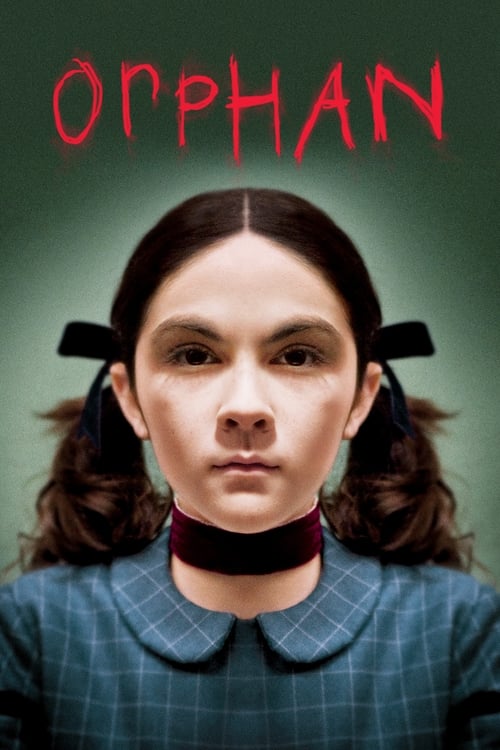
Orphan
After losing their baby, a married couple adopt 9-year old Esther, who may not be as innocent as she seems.
Despite a respectable budget of $20.0M, Orphan became a box office success, earning $77.9M worldwide—a 290% return.
1 win & 7 nominations


Plot Structure
Story beats plotted across runtime


Narrative Arc
Emotional journey through the story's key moments
Story Circle
Blueprint 15-beat structure
Arcplot Score Breakdown
Weighted: Precision (70%) + Arc (15%) + Theme (15%)
Orphan (2009) exhibits precise plot construction, characteristic of Jaume Collet-Serra's storytelling approach. This structural analysis examines how the film's 15-point plot structure maps to proven narrative frameworks across 2 hours and 2 minutes. With an Arcplot score of 6.6, the film balances conventional beats with creative variation.
Characters
Cast & narrative archetypes

Kate Coleman
Esther
John Coleman
Max Coleman
Daniel Coleman
Sister Abigail
Main Cast & Characters
Kate Coleman
Played by Vera Farmiga
A recovering alcoholic mother struggling with guilt over a miscarriage who becomes increasingly suspicious of her adopted daughter Esther.
Esther
Played by Isabelle Fuhrman
A seemingly innocent 9-year-old Russian orphan adopted by the Coleman family who harbors a dark and dangerous secret about her true identity.
John Coleman
Played by Peter Sarsgaard
Kate's devoted husband and father who initially dismisses his wife's concerns about Esther, creating tension in their marriage.
Max Coleman
Played by Aryana Engineer
The Colemans' deaf younger daughter who becomes close to Esther and is manipulated into keeping her secrets.
Daniel Coleman
Played by Jimmy Bennett
The Colemans' young son who distrusts Esther from the start and becomes a target of her violence.
Sister Abigail
Played by CCH Pounder
The nun who runs the orphanage where Esther lived and tries to warn the Colemans about her troubled past.
Structural Analysis
The Status Quo at 1 minutes (1% through the runtime) establishes Kate awakens from a nightmare about her stillborn daughter Jessica, establishing her trauma and fragile mental state. The family appears functional but grief lingers beneath the surface.. Structural examination shows that this early placement immediately immerses viewers in the story world.
The inciting incident occurs at 16 minutes when The Colemans officially adopt Esther, bringing her home. This external event disrupts their fragile equilibrium, introducing a new element into their grieving household.. At 13% through the film, this Disruption is delayed, allowing extended setup of the story world. This beat shifts the emotional landscape, launching the protagonist into the central conflict.
The First Threshold at 31 minutes marks the transition into Act II, occurring at 25% of the runtime. This indicates the protagonist's commitment to Sister Abigail confronts the family about Esther's violent incident at school, and Esther kills Sister Abigail with a hammer. Kate commits to investigating Esther's past, crossing into active opposition against her adopted daughter., moving from reaction to action.
At 61 minutes, the Midpoint arrives at 50% of the runtime—precisely centered, creating perfect narrative symmetry. Notably, this crucial beat Kate discovers Esther's hidden room in the orphanage filled with disturbing artwork and evidence of violence. False defeat: she has proof, but simultaneously, Esther frames Kate as an unstable alcoholic. Stakes raise dramatically—Kate's credibility is destroyed., fundamentally raising what's at risk. The emotional intensity shifts, dividing the narrative into clear before-and-after phases.
The Collapse moment at 92 minutes (75% through) represents the emotional nadir. Here, Esther kills John with a knife when he finally confronts her about her sexual advances. Kate's husband is dead, her protector gone. Literal death: the whiff of death is actual death. Kate hits absolute rock bottom., illustrates the protagonist at their lowest point. This beat's placement in the final quarter sets up the climactic reversal.
The Second Threshold at 98 minutes initiates the final act resolution at 81% of the runtime. Kate receives the call from the Saarne Institute revealing Esther's true identity: she's a 33-year-old woman with hypopituitarism, not a child. This synthesis of information gives Kate clarity and power. She knows what she's fighting., demonstrating the transformation achieved throughout the journey.
Emotional Journey
Orphan's emotional architecture traces a deliberate progression across 15 carefully calibrated beats.
Narrative Framework
This structural analysis employs a 15-point narrative structure framework that maps key story moments. By mapping Orphan against these established plot points, we can identify how Jaume Collet-Serra utilizes or subverts traditional narrative conventions. The plot point approach reveals not only adherence to structural principles but also creative choices that distinguish Orphan within the horror genre.
Jaume Collet-Serra's Structural Approach
Among the 10 Jaume Collet-Serra films analyzed on Arcplot, the average structural score is 7.0, reflecting strong command of classical structure. Orphan takes a more unconventional approach compared to the director's typical style. For comparative analysis, explore the complete Jaume Collet-Serra filmography.
Comparative Analysis
Additional horror films include Thinner, A Nightmare on Elm Street and Mary Reilly. For more Jaume Collet-Serra analyses, see Black Adam, House of Wax and Jungle Cruise.
Plot Points by Act
Act I
SetupStatus Quo
Kate awakens from a nightmare about her stillborn daughter Jessica, establishing her trauma and fragile mental state. The family appears functional but grief lingers beneath the surface.
Theme
Sister Abigail at the orphanage tells Kate and John, "There's something wrong when a child has no one to love them." This foreshadows the central question: what happens when you love the wrong child?
Worldbuilding
Kate and John visit the orphanage seeking to expand their family and heal from loss. We meet their children Daniel and Max (deaf), see Kate's recovering alcoholism, and the family dynamics. Esther is introduced as precocious, artistic, and oddly mature.
Disruption
The Colemans officially adopt Esther, bringing her home. This external event disrupts their fragile equilibrium, introducing a new element into their grieving household.
Resistance
Esther integrates into the family. Small red flags appear: her old-fashioned behavior, sophisticated vocabulary, strange artwork. Kate notices oddities but wants the adoption to work. A playground incident occurs where Esther pushes a bully, revealing darker tendencies.
Act II
ConfrontationFirst Threshold
Sister Abigail confronts the family about Esther's violent incident at school, and Esther kills Sister Abigail with a hammer. Kate commits to investigating Esther's past, crossing into active opposition against her adopted daughter.
Mirror World
Kate's relationship with her therapist deepens as she expresses doubt about Esther. John dismisses Kate's concerns, creating a thematic mirror: who do you believe when everyone says you're wrong? This relationship carries the theme of maternal instinct vs. gaslighting.
Premise
The "fun and games" of psychological horror: Kate investigates while Esther manipulates the family. Esther seduces John emotionally, isolates Max, threatens Daniel. Evidence mounts but Kate is increasingly isolated. The premise promise: watching a mother realize her adopted child is a monster.
Midpoint
Kate discovers Esther's hidden room in the orphanage filled with disturbing artwork and evidence of violence. False defeat: she has proof, but simultaneously, Esther frames Kate as an unstable alcoholic. Stakes raise dramatically—Kate's credibility is destroyed.
Opposition
Esther tightens her grip. She attempts to seduce John sexually (revealing her true nature). Daniel is hospitalized after Esther tries to kill him. Kate drinks again under pressure. John finally starts to doubt, but too late. The family disintegrates under Esther's manipulation.
Collapse
Esther kills John with a knife when he finally confronts her about her sexual advances. Kate's husband is dead, her protector gone. Literal death: the whiff of death is actual death. Kate hits absolute rock bottom.
Crisis
Kate processes the horror and realizes she must save her remaining children from Esther. Dark night of the soul: she's alone, bereaved, and must face a monster who has already won everyone's trust.
Act III
ResolutionSecond Threshold
Kate receives the call from the Saarne Institute revealing Esther's true identity: she's a 33-year-old woman with hypopituitarism, not a child. This synthesis of information gives Kate clarity and power. She knows what she's fighting.
Synthesis
The finale: Kate races to save Max and Daniel. Esther hunts them through the house and onto frozen pond. Kate combines her maternal instinct (what she had all along) with new knowledge (what the Mirror World taught her). Final confrontation on the ice.
Transformation
Kate kicks Esther in the face, sending her to her death beneath the ice, declaring "I'm not your fucking mommy!" Transformation complete: from traumatized, doubted mother to empowered protector. She trusted her instinct and saved her children.