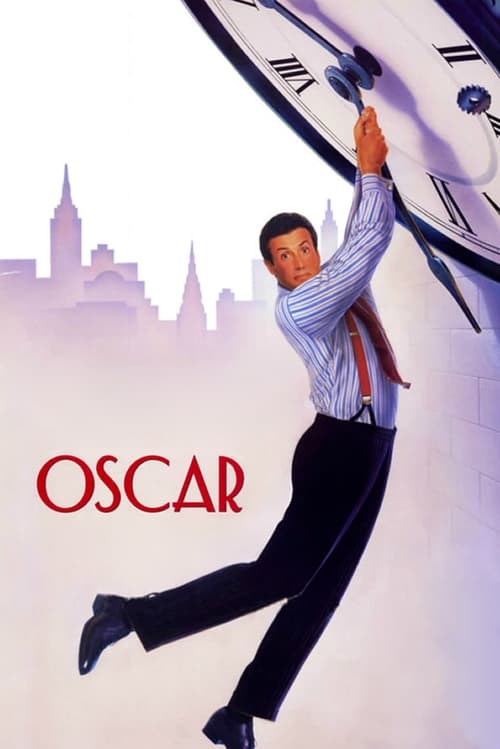
Oscar
Angelo "Snaps" Provolone made his dying father a promise on his deathbed: he would leave the world of crime and become an honest businessman. Despite having no experience in making money in a legal fashion, Snaps sets about to keep his promise.
The film struggled financially against its respectable budget of $35.0M, earning $23.6M globally (-33% loss). While initial box office returns were modest, the film has gained appreciation for its bold vision within the comedy genre.


Plot Structure
Story beats plotted across runtime


Narrative Arc
Emotional journey through the story's key moments
Story Circle
Blueprint 15-beat structure
Arcplot Score Breakdown
Weighted: Precision (70%) + Arc (15%) + Theme (15%)
Oscar (1991) demonstrates strategically placed plot construction, characteristic of John Landis's storytelling approach. This structural analysis examines how the film's 15-point plot structure maps to proven narrative frameworks across 1 hour and 49 minutes. With an Arcplot score of 7.4, the film balances conventional beats with creative variation.
Characters
Cast & narrative archetypes

Angelo "Snaps" Provolone
Lisa Provolone
Sofia Provolone
Aldo
Connie
Anthony Rossano
Father Clemente
Dr. Thornton Poole
Oscar
Main Cast & Characters
Angelo "Snaps" Provolone
Played by Sylvester Stallone
A Prohibition-era gangster trying to go legitimate after promising his dying father he'd become an honest businessman, spending one chaotic day dealing with family crises and mistaken identities.
Lisa Provolone
Played by Marisa Tomei
Snaps' headstrong daughter who claims to be pregnant and demands to marry, setting off a chain of romantic confusion throughout the day.
Sofia Provolone
Played by Ornella Muti
Snaps' loyal and long-suffering wife who tries to maintain order amid the household chaos.
Aldo
Played by Tim Curry
Snaps' dimwitted but loyal chauffeur and bodyguard who accidentally complicates every situation he tries to help with.
Connie
Played by Vincent Spano
Snaps' loyal henchman who assists with the day's increasingly complicated schemes.
Anthony Rossano
Played by Kirk Douglas
Snaps' disgruntled accountant who demands a raise and to marry Lisa, triggering the day's central conflict.
Father Clemente
Played by Don Ameche
The family priest brought in to perform a hasty wedding ceremony amid the confusion.
Dr. Thornton Poole
Played by Tim Curry
A pompous elocution teacher hired to help Snaps speak more refined as part of his legitimate transformation.
Oscar
Played by Peter Riegert
Lisa's real boyfriend, a simple-minded but goodhearted young man whose identity causes much of the confusion.
Structural Analysis
The Status Quo at 1 minutes (1% through the runtime) establishes 1928. Mob accountant Angelo "Snaps" Provolone presides over his bootlegging empire from his mansion, conducting violent business while his daughter prepares for her engagement party.. Notably, this early placement immediately immerses viewers in the story world.
The inciting incident occurs at 12 minutes when Snaps announces to his accountant Anthony that he's keeping his deathbed promise to go legitimate, planning to meet with bankers at 3pm to become respectable. Everything must go right today.. At 11% through the film, this Disruption aligns precisely with traditional story structure. This beat shifts the emotional landscape, launching the protagonist into the central conflict.
The First Threshold at 26 minutes marks the transition into Act II, occurring at 24% of the runtime. This indicates the protagonist's commitment to Believing Anthony got Lisa pregnant, Snaps forces them to marry immediately. He commits fully to handling everything "legitimately" despite his violent instincts, setting up a cascade of complications., moving from reaction to action.
At 52 minutes, the Midpoint arrives at 48% of the runtime—precisely centered, creating perfect narrative symmetry. Of particular interest, this crucial beat The banker's meeting descends into chaos when all the mistaken identities and deceptions collide. Snaps realizes going straight is harder than being a criminal, but he's in too deep to turn back., fundamentally raising what's at risk. The emotional intensity shifts, dividing the narrative into clear before-and-after phases.
The Collapse moment at 78 minutes (72% through) represents the emotional nadir. Here, Everything falls apart simultaneously: the police arrive, the bankers flee, his daughter is actually pregnant by someone else, and Snaps' dream of legitimacy appears completely destroyed., illustrates the protagonist at their lowest point. This beat's placement in the final quarter sets up the climactic reversal.
The Second Threshold at 85 minutes initiates the final act resolution at 78% of the runtime. Snaps realizes he must use his criminal cunning in service of his legitimate goals. He orchestrates a elaborate solution that satisfies everyone without breaking his word or resorting to violence., demonstrating the transformation achieved throughout the journey.
Emotional Journey
Oscar's emotional architecture traces a deliberate progression across 15 carefully calibrated beats.
Narrative Framework
This structural analysis employs a 15-point narrative structure framework that maps key story moments. By mapping Oscar against these established plot points, we can identify how John Landis utilizes or subverts traditional narrative conventions. The plot point approach reveals not only adherence to structural principles but also creative choices that distinguish Oscar within the comedy genre.
John Landis's Structural Approach
Among the 13 John Landis films analyzed on Arcplot, the average structural score is 7.1, reflecting strong command of classical structure. Oscar represents one of the director's most structurally precise works. For comparative analysis, explore the complete John Landis filmography.
Comparative Analysis
Additional comedy films include The Bad Guys, Ella Enchanted and The Evening Star. For more John Landis analyses, see Spies Like Us, The Blues Brothers and ¡Three Amigos!.
Plot Points by Act
Act I
SetupStatus Quo
1928. Mob accountant Angelo "Snaps" Provolone presides over his bootlegging empire from his mansion, conducting violent business while his daughter prepares for her engagement party.
Theme
Snaps' dying father makes him promise to go straight and become an honest businessman, stating "A man's word is his word."
Worldbuilding
Introduction to Snaps' household: his long-suffering wife Sofia, daughter Lisa, multiple servants, and the controlled chaos of his criminal empire masked as legitimate business.
Disruption
Snaps announces to his accountant Anthony that he's keeping his deathbed promise to go legitimate, planning to meet with bankers at 3pm to become respectable. Everything must go right today.
Resistance
Snaps attempts to navigate his new legitimate life while chaos erupts: mistaken identities, Anthony wants to marry Lisa, bags are switched, and multiple people named Oscar create confusion.
Act II
ConfrontationFirst Threshold
Believing Anthony got Lisa pregnant, Snaps forces them to marry immediately. He commits fully to handling everything "legitimately" despite his violent instincts, setting up a cascade of complications.
Mirror World
Dr. Thornton Poole arrives as Lisa's language tutor, representing the legitimate, educated world Snaps aspires to join. The contrasts between criminal and respectable worlds become central.
Premise
Escalating farce as Snaps tries desperately to maintain appearances before the 3pm banker meeting. Multiple bags, three men named Oscar, switched identities, hidden pregnancies, and mob associates complicate his path to legitimacy.
Midpoint
The banker's meeting descends into chaos when all the mistaken identities and deceptions collide. Snaps realizes going straight is harder than being a criminal, but he's in too deep to turn back.
Opposition
Complications multiply exponentially: rival gangsters arrive, the jewels go missing, Anthony is mistaken for Oscar the tailor, Lisa's real pregnancy is revealed, and Snaps' temper threatens his promise to his father.
Collapse
Everything falls apart simultaneously: the police arrive, the bankers flee, his daughter is actually pregnant by someone else, and Snaps' dream of legitimacy appears completely destroyed.
Crisis
Snaps confronts whether to abandon his promise and return to violence, or find another way. He struggles between his old nature and his father's dying wish.
Act III
ResolutionSecond Threshold
Snaps realizes he must use his criminal cunning in service of his legitimate goals. He orchestrates a elaborate solution that satisfies everyone without breaking his word or resorting to violence.
Synthesis
Snaps masterfully resolves all complications: correctly matching couples, recovering the money, satisfying the mob, and salvaging the banker meeting through clever negotiation rather than intimidation.
Transformation
Snaps has successfully gone legitimate, kept his word, and learned to solve problems without violence. He presides over his now-respectable household with the same authority but different methods.