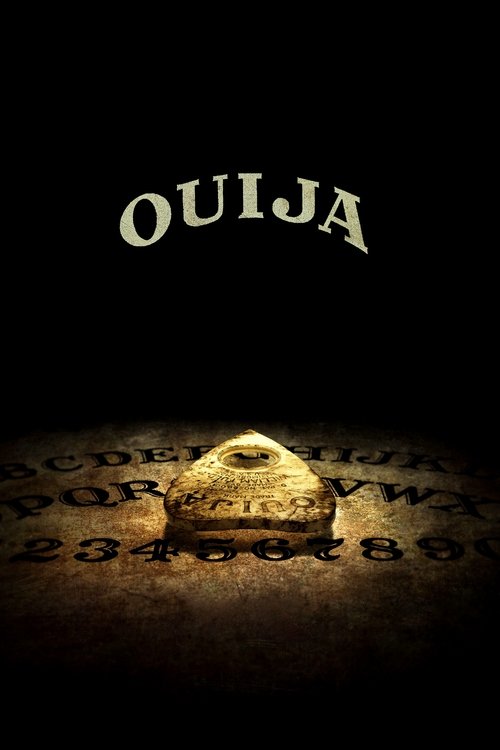
Ouija
A group of friends must confront their most terrifying fears when they awaken the dark powers of an ancient spirit board.
Despite its small-scale budget of $5.0M, Ouija became a commercial juggernaut, earning $103.6M worldwide—a remarkable 1972% return. The film's bold vision connected with viewers, demonstrating that strong storytelling can transcend budget limitations.


Plot Structure
Story beats plotted across runtime


Narrative Arc
Emotional journey through the story's key moments
Story Circle
Blueprint 15-beat structure
Arcplot Score Breakdown
Weighted: Precision (70%) + Arc (15%) + Theme (15%)
Ouija (2014) demonstrates precise story structure, characteristic of Stiles White's storytelling approach. This structural analysis examines how the film's 15-point plot structure maps to proven narrative frameworks across 1 hour and 29 minutes. With an Arcplot score of 7.3, the film balances conventional beats with creative variation.
Structural Analysis
The Status Quo at 1 minutes (1% through the runtime) establishes Young Laine and Debbie play with a Ouija board as children, establishing the rules: never play alone, never play in a graveyard, and always say goodbye. Their innocent friendship and fascination with the supernatural sets up the world before tragedy.. The analysis reveals that this early placement immediately immerses viewers in the story world.
The inciting incident occurs at 11 minutes when Debbie is found dead, apparently having hanged herself with Christmas lights. Laine is devastated by the loss of her best friend, and the death is ruled a suicide despite Debbie seeming fine just hours before.. At 12% through the film, this Disruption aligns precisely with traditional story structure. This beat shifts the emotional landscape, launching the protagonist into the central conflict.
The First Threshold at 22 minutes marks the transition into Act II, occurring at 24% of the runtime. This indicates the protagonist's commitment to Laine gathers her friends at Debbie's house to use the Ouija board together. They make contact with a spirit spelling "D-Z" and later "Hi Friend." Laine has crossed into the supernatural world, believing she's contacted Debbie., moving from reaction to action.
At 45 minutes, the Midpoint arrives at 50% of the runtime—precisely centered, creating perfect narrative symmetry. Of particular interest, this crucial beat Isabelle is killed by the spirit in a tunnel, her mouth sewn shut by supernatural forces matching Doris's fate. This is a false victory turned defeat—they thought they understood the spirit (Doris) but the deaths continue. The stakes become mortally real., fundamentally raising what's at risk. The emotional intensity shifts, dividing the narrative into clear before-and-after phases.
The Collapse moment at 66 minutes (74% through) represents the emotional nadir. Here, They find Doris's corpse hidden in the basement and cut the stitches from her mouth, believing they've freed her. But the spirit attacks again—they realize too late that Doris's spirit has been corrupted by her mother and is now just as evil. Their plan has failed completely., reveals the protagonist at their lowest point. This beat's placement in the final quarter sets up the climactic reversal.
The Second Threshold at 71 minutes initiates the final act resolution at 79% of the runtime. Laine realizes they must burn the mother's corpse, not Doris's, to end the haunting. She returns to the house with a new plan: find Mother's body hidden somewhere in the house and destroy it to sever the evil's connection to the physical world., demonstrating the transformation achieved throughout the journey.
Emotional Journey
Ouija's emotional architecture traces a deliberate progression across 15 carefully calibrated beats.
Narrative Framework
This structural analysis employs systematic plot point analysis that identifies crucial turning points. By mapping Ouija against these established plot points, we can identify how Stiles White utilizes or subverts traditional narrative conventions. The plot point approach reveals not only adherence to structural principles but also creative choices that distinguish Ouija within the horror genre.
Comparative Analysis
Additional horror films include Thinner, A Nightmare on Elm Street and Mary Reilly.
Plot Points by Act
Act I
SetupStatus Quo
Young Laine and Debbie play with a Ouija board as children, establishing the rules: never play alone, never play in a graveyard, and always say goodbye. Their innocent friendship and fascination with the supernatural sets up the world before tragedy.
Theme
Young Debbie tells Laine about the Ouija board rules, warning "It's just a game... but you have to follow the rules." This foreshadows that breaking supernatural rules has deadly consequences.
Worldbuilding
We meet teenage Laine and her close-knit friend group including boyfriend Trevor, sister Sarah, and friends Isabelle and Pete. Debbie acts strangely after finding an old Ouija board in her attic, becoming withdrawn and paranoid. The normal suburban high school world is established.
Disruption
Debbie is found dead, apparently having hanged herself with Christmas lights. Laine is devastated by the loss of her best friend, and the death is ruled a suicide despite Debbie seeming fine just hours before.
Resistance
Laine refuses to accept that Debbie killed herself. She finds the Ouija board in Debbie's room and becomes convinced her friend was trying to contact something. Despite warnings from her father and boyfriend, Laine decides to use the board to contact Debbie's spirit for answers.
Act II
ConfrontationFirst Threshold
Laine gathers her friends at Debbie's house to use the Ouija board together. They make contact with a spirit spelling "D-Z" and later "Hi Friend." Laine has crossed into the supernatural world, believing she's contacted Debbie.
Mirror World
The friends begin seeing "Hi Friend" written everywhere and experience supernatural disturbances. Laine realizes they haven't contacted Debbie at all—they've awakened something else. The spirit world bleeds into their reality as each friend becomes a target.
Premise
The group investigates the Ouija board's origins, discovering it belonged to the Zander family who lived in Debbie's house. They learn about a young girl named Doris who died there. Strange occurrences escalate as they try to understand what they've unleashed, racing to find answers before more die.
Midpoint
Isabelle is killed by the spirit in a tunnel, her mouth sewn shut by supernatural forces matching Doris's fate. This is a false victory turned defeat—they thought they understood the spirit (Doris) but the deaths continue. The stakes become mortally real.
Opposition
The group discovers Doris was actually a victim—her mother was the evil one who sewed her mouth shut to silence her. They find and visit the now-elderly sister Paulina in a psychiatric hospital who reveals the truth about Mother's evil. Pete is killed. They must find Doris's corpse to free her spirit.
Collapse
They find Doris's corpse hidden in the basement and cut the stitches from her mouth, believing they've freed her. But the spirit attacks again—they realize too late that Doris's spirit has been corrupted by her mother and is now just as evil. Their plan has failed completely.
Crisis
With friends dead and Doris still hunting them, Laine realizes the only solution is to destroy the source of evil: the mother's spirit. They must return to face both malevolent entities in the house where it all began, knowing they may not survive.
Act III
ResolutionSecond Threshold
Laine realizes they must burn the mother's corpse, not Doris's, to end the haunting. She returns to the house with a new plan: find Mother's body hidden somewhere in the house and destroy it to sever the evil's connection to the physical world.
Synthesis
Laine and the surviving friends return to Debbie's house for a final confrontation. They find Mother's corpse in a secret basement room. Despite the spirits' attacks, Laine manages to burn the Ouija board and Mother's body, destroying the source of evil. The haunting appears to end.
Transformation
Laine returns home, seemingly safe. But in the final shot, she discovers the Ouija board planchette in her room, and Doris's spirit appears in her mirror—the evil was never truly destroyed. Unlike the innocent girl who played Ouija as a child, Laine now knows some doors, once opened, can never be closed.