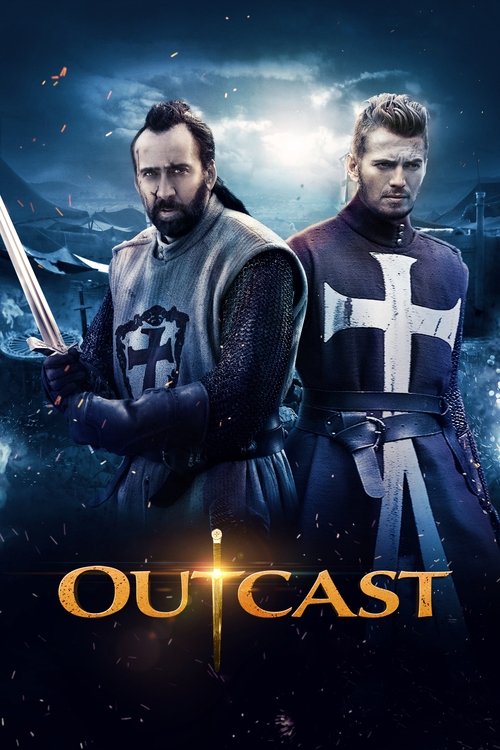
Outcast
A mysterious warrior teams up with the daughter and son of a deposed Chinese Emperor to defeat their cruel brother, who seeks their deaths.
The film commercial failure against its respectable budget of $25.0M, earning $5.1M globally (-79% loss). While initial box office returns were modest, the film has gained appreciation for its unconventional structure within the action genre.


Plot Structure
Story beats plotted across runtime


Narrative Arc
Emotional journey through the story's key moments
Story Circle
Blueprint 15-beat structure
Arcplot Score Breakdown
Weighted: Precision (70%) + Arc (15%) + Theme (15%)
Outcast (2014) exhibits deliberately positioned narrative architecture, characteristic of Nick Powell's storytelling approach. This structural analysis examines how the film's 15-point plot structure maps to proven narrative frameworks across 1 hour and 38 minutes. With an Arcplot score of 7.5, the film showcases strong structural fundamentals.
Characters
Cast & narrative archetypes

Jacob
Gallain
Lian
Shing
Zhao
The Emperor
Main Cast & Characters
Jacob
Played by Hayden Christensen
A disillusioned former Crusader living in exile in China, haunted by his violent past. He reluctantly becomes the protector of a Chinese prince and princess fleeing from their murderous brother.
Gallain
Played by Nicolas Cage
A legendary Crusader knight and former commander who served with Jacob during the Crusades. Now living as a broken man consumed by opium addiction and guilt over the atrocities he committed.
Lian
Played by Liu Yifei
A courageous Chinese princess who flees with her wounded brother after their older brother Shing seizes power. She is resourceful, determined, and becomes a love interest for Jacob.
Shing
Played by Andy On
The ruthless elder prince who murders his father the Emperor and seizes the throne. He relentlessly pursues his siblings to eliminate all threats to his claim, commanding the feared Black Guard.
Zhao
Played by Bill Su Jiahang
The young rightful heir to the Chinese throne, wounded during his escape from the palace. He must survive his brother's assassins with the help of his sister and the foreign warriors.
The Emperor
Played by Wang Xueqi
The aging ruler of China who is betrayed and killed by his eldest son Shing. His death sets the events of the film in motion.
Structural Analysis
The Status Quo at 1 minutes (1% through the runtime) establishes Crusader knights Jacob and Gallain fight brutally in the Holy Land, showing their bond and Jacob's warrior prowess before his crisis of conscience.. Significantly, this early placement immediately immerses viewers in the story world.
The inciting incident occurs at 11 minutes when Zhao and Lian are attacked by Shing's soldiers and rescued by Jacob, who stumbles into the conflict while intoxicated, inadvertently becoming their protector.. At 12% through the film, this Disruption aligns precisely with traditional story structure. This beat shifts the emotional landscape, launching the protagonist into the central conflict.
The First Threshold at 24 minutes marks the transition into Act II, occurring at 24% of the runtime. This indicates the protagonist's commitment to Jacob makes the active choice to protect Zhao and Lian and help them reach the White City, accepting responsibility and beginning to fight his demons rather than fleeing them., moving from reaction to action.
At 47 minutes, the Midpoint arrives at 48% of the runtime—precisely centered, creating perfect narrative symmetry. The analysis reveals that this crucial beat Gallain confronts Jacob directly, revealing the depth of his betrayal. Jacob realizes his former brother-in-arms has fully embraced darkness and that their final confrontation is inevitable., fundamentally raising what's at risk. The emotional intensity shifts, dividing the narrative into clear before-and-after phases.
The Collapse moment at 72 minutes (74% through) represents the emotional nadir. Here, The group is captured by Shing's forces. Zhao is taken and faces execution. Jacob is beaten and left for dead, seemingly unable to save those he has sworn to protect., indicates the protagonist at their lowest point. This beat's placement in the final quarter sets up the climactic reversal.
The Second Threshold at 78 minutes initiates the final act resolution at 80% of the runtime. Jacob retrieves his sword and armor, synthesizing his crusader skills with his newfound purpose of protection rather than conquest. He rides to rescue Zhao with full commitment., demonstrating the transformation achieved throughout the journey.
Emotional Journey
Outcast's emotional architecture traces a deliberate progression across 15 carefully calibrated beats.
Narrative Framework
This structural analysis employs proven narrative structure principles that track dramatic progression. By mapping Outcast against these established plot points, we can identify how Nick Powell utilizes or subverts traditional narrative conventions. The plot point approach reveals not only adherence to structural principles but also creative choices that distinguish Outcast within the action genre.
Comparative Analysis
Additional action films include The Bad Guys, Puss in Boots and Venom: The Last Dance.
Plot Points by Act
Act I
SetupStatus Quo
Crusader knights Jacob and Gallain fight brutally in the Holy Land, showing their bond and Jacob's warrior prowess before his crisis of conscience.
Theme
Gallain speaks to redemption and leaving the past behind as Jacob abandons his sword after a massacre, establishing the theme of seeking redemption from violence.
Worldbuilding
Jacob abandons crusading and becomes an opium-addicted outcast in China. Meanwhile, in the Chinese Empire, the Emperor is murdered and his youngest son Zhao flees with his sister Lian while the usurper Shing hunts them.
Disruption
Zhao and Lian are attacked by Shing's soldiers and rescued by Jacob, who stumbles into the conflict while intoxicated, inadvertently becoming their protector.
Resistance
Jacob reluctantly travels with the royal siblings. Zhao debates whether Jacob can be trusted. Gallain arrives in China hunting Jacob, revealing he serves Shing and has become corrupted by power.
Act II
ConfrontationFirst Threshold
Jacob makes the active choice to protect Zhao and Lian and help them reach the White City, accepting responsibility and beginning to fight his demons rather than fleeing them.
Mirror World
Lian tends to Jacob's wounds and they share a moment of connection. She represents the possibility of redemption and a new life beyond violence, embodying the theme.
Premise
The group journeys toward the White City, facing multiple attacks from Shing's forces. Jacob begins to sober up and rediscover his warrior skills, bonding with Zhao and teaching him to fight.
Midpoint
Gallain confronts Jacob directly, revealing the depth of his betrayal. Jacob realizes his former brother-in-arms has fully embraced darkness and that their final confrontation is inevitable.
Opposition
Shing's forces close in as the group nears the White City. Jacob's past sins weigh on him as Gallain's men systematically hunt them. The bond between Jacob and Lian deepens while danger intensifies.
Collapse
The group is captured by Shing's forces. Zhao is taken and faces execution. Jacob is beaten and left for dead, seemingly unable to save those he has sworn to protect.
Crisis
Jacob confronts his deepest shame and chooses to reclaim his warrior identity not for violence but for protection. He accepts that redemption comes through action, not escape.
Act III
ResolutionSecond Threshold
Jacob retrieves his sword and armor, synthesizing his crusader skills with his newfound purpose of protection rather than conquest. He rides to rescue Zhao with full commitment.
Synthesis
Jacob infiltrates Shing's stronghold and battles through his forces. The final confrontation with Gallain occurs, where Jacob must defeat his former friend. Zhao is rescued and claims his rightful throne.
Transformation
Jacob, no longer an outcast, stands with Lian as Zhao takes his place as Emperor. Jacob has found redemption through protection rather than violence, transforming from a broken warrior fleeing his past to a guardian who has made peace with it.