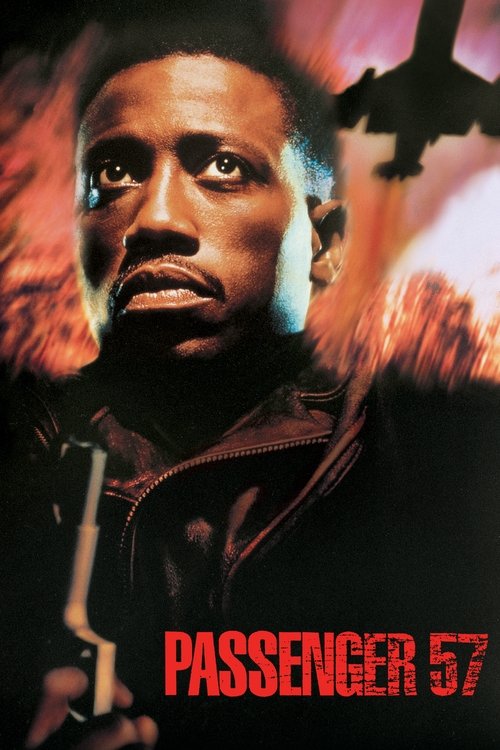
Passenger 57
Airline security specialist John Cutter, finally returning to the job after his wife's death, finds himself stuck on a flight being hijacked by notorious terrorist Charles Rane. Unfortunately for the terrorists, they're also stuck with him.
Despite a moderate budget of $15.0M, Passenger 57 became a solid performer, earning $44.1M worldwide—a 194% return.


Plot Structure
Story beats plotted across runtime


Narrative Arc
Emotional journey through the story's key moments
Story Circle
Blueprint 15-beat structure
Arcplot Score Breakdown
Weighted: Precision (70%) + Arc (15%) + Theme (15%)
Passenger 57 (1992) demonstrates meticulously timed dramatic framework, characteristic of Kevin Hooks's storytelling approach. This structural analysis examines how the film's 15-point plot structure maps to proven narrative frameworks across 1 hour and 24 minutes. With an Arcplot score of 7.3, the film balances conventional beats with creative variation.
Characters
Cast & narrative archetypes

John Cutter
Charles Rane
Marti Slayton
Sly Delvecchio
Chief Biggs
Sabrina Ritchie
Agent Dwight Henderson
Main Cast & Characters
John Cutter
Played by Wesley Snipes
An airline security expert and former cop haunted by his wife's murder, who must stop a hijacking while aboard as a passenger.
Charles Rane
Played by Bruce Payne
A notorious international terrorist known as "The Rane of Terror" who orchestrates his own escape during an FBI prisoner transport.
Marti Slayton
Played by Alex Datcher
A flight attendant who becomes Cutter's ally and love interest during the hijacking crisis.
Sly Delvecchio
Played by Tom Sizemore
Cutter's loyal friend and partner who provides ground support during the hijacking.
Chief Biggs
Played by Ernie Lively
The local small-town sheriff who initially clashes with Cutter but eventually aids in stopping Rane.
Sabrina Ritchie
Played by Elizabeth Hurley
Rane's devoted accomplice who poses as a passenger to help execute the hijacking.
Agent Dwight Henderson
Played by Robert Hooks
The FBI agent in charge of transporting Rane who underestimates the terrorist's capabilities.
Structural Analysis
The Status Quo at 1 minutes (1% through the runtime) establishes Cutter at his wife's grave, haunted by her death during a botched convenience store robbery he failed to prevent. He's emotionally shut down, refusing to move forward.. Structural examination shows that this early placement immediately immerses viewers in the story world.
The inciting incident occurs at 10 minutes when Cutter boards the same flight carrying Charles Rane. Rane's team is already aboard disguised as passengers and crew, setting up the hijacking.. At 12% through the film, this Disruption aligns precisely with traditional story structure. This beat shifts the emotional landscape, launching the protagonist into the central conflict.
The First Threshold at 22 minutes marks the transition into Act II, occurring at 26% of the runtime. This reveals the protagonist's commitment to Cutter makes active choice to fight back when terrorists execute a passenger. He declares "Always bet on black" and engages, taking down a terrorist and revealing himself as a threat to Rane., moving from reaction to action.
At 42 minutes, the Midpoint arrives at 50% of the runtime—precisely centered, creating perfect narrative symmetry. The analysis reveals that this crucial beat False victory: Plane makes emergency landing at small Louisiana airport. Cutter gets Rane off the plane and into custody. Appears to be over, but stakes actually raise as Rane's team still controls the airport., fundamentally raising what's at risk. The emotional intensity shifts, dividing the narrative into clear before-and-after phases.
The Collapse moment at 61 minutes (73% through) represents the emotional nadir. Here, Cutter is beaten and captured by Rane's inside man. Marti is taken hostage back on the plane. Rane prepares to escape with hostages. Cutter appears to have lost everything - whiff of death as passengers are in mortal danger., shows the protagonist at their lowest point. This beat's placement in the final quarter sets up the climactic reversal.
The Second Threshold at 66 minutes initiates the final act resolution at 78% of the runtime. Cutter gets critical information about Rane's escape plan and infiltrates the plane. He synthesizes his security expertise with renewed emotional commitment, fully re-engaging as a protector., demonstrating the transformation achieved throughout the journey.
Emotional Journey
Passenger 57's emotional architecture traces a deliberate progression across 15 carefully calibrated beats.
Narrative Framework
This structural analysis employs systematic plot point analysis that identifies crucial turning points. By mapping Passenger 57 against these established plot points, we can identify how Kevin Hooks utilizes or subverts traditional narrative conventions. The plot point approach reveals not only adherence to structural principles but also creative choices that distinguish Passenger 57 within the action genre.
Kevin Hooks's Structural Approach
Among the 4 Kevin Hooks films analyzed on Arcplot, the average structural score is 7.0, demonstrating varied approaches to story architecture. Passenger 57 represents one of the director's most structurally precise works. For comparative analysis, explore the complete Kevin Hooks filmography.
Comparative Analysis
Additional action films include The Bad Guys, Puss in Boots and Venom: The Last Dance. For more Kevin Hooks analyses, see Fled, Black Dog and Strictly Business.
Plot Points by Act
Act I
SetupStatus Quo
Cutter at his wife's grave, haunted by her death during a botched convenience store robbery he failed to prevent. He's emotionally shut down, refusing to move forward.
Theme
Sly Delvecchio tells Cutter: "You can't spend your whole life looking backwards." The theme of letting go of the past and re-engaging with life.
Worldbuilding
Establishment of Cutter as former cop turned airline security consultant, his friendship with Sly, and his PTSD. Meanwhile, notorious terrorist Charles Rane is being transported by FBI. Cutter reluctantly agrees to take VP of Security job with Atlantic International Airlines.
Disruption
Cutter boards the same flight carrying Charles Rane. Rane's team is already aboard disguised as passengers and crew, setting up the hijacking.
Resistance
Cutter interacts with flight attendant Marti, showing attraction but emotional distance. He observes suspicious behavior. Rane's team makes their move, taking over the plane and freeing Rane. Cutter debates whether to get involved or stay hidden.
Act II
ConfrontationFirst Threshold
Cutter makes active choice to fight back when terrorists execute a passenger. He declares "Always bet on black" and engages, taking down a terrorist and revealing himself as a threat to Rane.
Mirror World
Cutter and Marti form alliance. She represents courage and engagement with life - the opposite of his withdrawn state. Their partnership embodies the theme of trust and moving forward.
Premise
Cat-and-mouse game on the plane. Cutter uses his skills to sabotage the hijacking, moving through the aircraft, freeing passengers, and outsmarting Rane's crew. The "fun and games" of the action premise.
Midpoint
False victory: Plane makes emergency landing at small Louisiana airport. Cutter gets Rane off the plane and into custody. Appears to be over, but stakes actually raise as Rane's team still controls the airport.
Opposition
Rane manipulates the local FBI and takes over the airport. Cutter is captured and framed. The situation deteriorates as Rane gains the upper hand. Cutter's methods are questioned, and he's isolated from help.
Collapse
Cutter is beaten and captured by Rane's inside man. Marti is taken hostage back on the plane. Rane prepares to escape with hostages. Cutter appears to have lost everything - whiff of death as passengers are in mortal danger.
Crisis
Cutter's dark moment of doubt, but he finds resolve. He escapes custody and must decide to engage fully, not just physically but emotionally - to truly care about saving others again.
Act III
ResolutionSecond Threshold
Cutter gets critical information about Rane's escape plan and infiltrates the plane. He synthesizes his security expertise with renewed emotional commitment, fully re-engaging as a protector.
Synthesis
Final confrontation on the plane. Cutter systematically takes down Rane's remaining team, rescues Marti and passengers, and faces Rane in final combat. Plane crisis resolved, Rane defeated.
Transformation
Cutter and Marti together after the crisis, smiling and connecting. He's moved past his trauma, re-engaged with life and opened himself to connection. Contrast to opening image of isolation at grave.