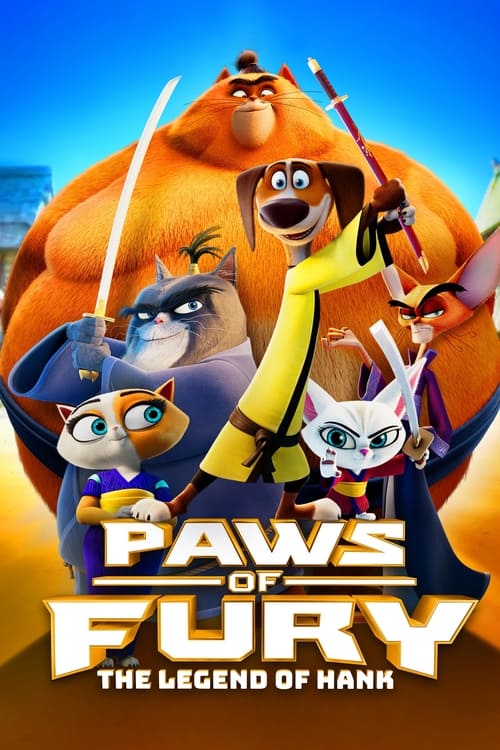
Paws of Fury: The Legend of Hank
A hard-on-his-luck hound finds himself in a town full of cats in need of a hero to defend them from a ruthless villain's wicked plot to wipe their village off the map. With help from a reluctant mentor, our underdog must assume the role of town samurai and team up with the villagers to save the day.
The film struggled financially against its mid-range budget of $45.0M, earning $42.5M globally (-6% loss).
1 win & 1 nomination


Plot Structure
Story beats plotted across runtime


Narrative Arc
Emotional journey through the story's key moments
Story Circle
Blueprint 15-beat structure
Arcplot Score Breakdown
Weighted: Precision (70%) + Arc (15%) + Theme (15%)
Paws of Fury: The Legend of Hank (2022) demonstrates meticulously timed plot construction, characteristic of Rob Minkoff's storytelling approach. This structural analysis examines how the film's 15-point plot structure maps to proven narrative frameworks across 1 hour and 34 minutes. With an Arcplot score of 7.3, the film balances conventional beats with creative variation.
Characters
Cast & narrative archetypes

Hank
Jimbo
Ika Chu
Ohga
Emiko
The Shogun
Sumo
Little Chuck
Main Cast & Characters
Hank
Played by Michael Cera
A scrappy beagle dog who dreams of becoming a samurai despite being an outsider in a world of cats. He must protect the village of Kakamucho from destruction.
Jimbo
Played by Samuel L. Jackson
A legendary but disgraced and bitter samurai cat who reluctantly becomes Hank's mentor. A once-great warrior drowning his sorrows in catnip.
Ika Chu
Played by Ricky Gervais
The villain who serves as warlord and schemes to destroy the village of Kakamucho to build his dream palace. Vain, ambitious, and utterly ruthless.
Ohga
Played by George Takei
Ika Chu's massive, dim-witted but loyal enforcer. A giant cat who follows orders without question and serves as the muscle.
Emiko
Played by Kylie Kuioka
A young kitten from Kakamucho village who becomes Hank's first friend and ally. Brave and open-minded despite her community's prejudice.
The Shogun
Played by Mel Brooks
The ruler of the land who is manipulated by Ika Chu. An oblivious but ultimately fair leader who wants peace in his realm.
Sumo
Played by Djimon Hounsou
A sumo-wrestling cat who is part of Ika Chu's gang of enforcers. Large, intimidating, and skilled in combat.
Little Chuck
Played by Gabriel Iglesias
A small but fierce ninja cat who works for Ika Chu. Despite his size, he's dangerous and quick.
Structural Analysis
The Status Quo at 1 minutes (1% through the runtime) establishes Hank, a hopeful dog, dreams of becoming a samurai while working as a lowly palace guard, eager to prove himself but rejected and mocked by the established warriors.. Of particular interest, this early placement immediately immerses viewers in the story world.
The inciting incident occurs at 10 minutes when Hank is banished and sent to Kakamucho as their "samurai protector" - a setup by Ika Chu who expects the villagers to kill Hank, giving him an excuse to destroy the town.. At 11% through the film, this Disruption aligns precisely with traditional story structure. This beat shifts the emotional landscape, launching the protagonist into the central conflict.
The First Threshold at 22 minutes marks the transition into Act II, occurring at 24% of the runtime. This demonstrates the protagonist's commitment to Hank makes the active choice to commit to samurai training under Jimbo, despite having no natural talent, believing he can become the hero the village needs., moving from reaction to action.
At 46 minutes, the Midpoint arrives at 49% of the runtime—precisely centered, creating perfect narrative symmetry. Notably, this crucial beat False victory: Hank successfully defends the village against Ika Chu's initial attack using trickery and luck rather than skill. The villagers celebrate him as a hero, but he knows he's a fraud - stakes are raised as Ika Chu vows revenge., fundamentally raising what's at risk. The emotional intensity shifts, dividing the narrative into clear before-and-after phases.
The Collapse moment at 68 minutes (73% through) represents the emotional nadir. Here, Hank is exposed as a fraud before the village when his lack of real skill is revealed. The villagers turn on him in betrayal and anger. Jimbo abandons him. Hank is cast out, alone and stripped of everything - his dream, his friends, his purpose (metaphorical death of his hero identity)., shows the protagonist at their lowest point. This beat's placement in the final quarter sets up the climactic reversal.
The Second Threshold at 75 minutes initiates the final act resolution at 79% of the runtime. Hank realizes that being a hero isn't about skill or approval - it's about courage and heart. He understands the theme: his worth comes from within. He chooses to return and fight for the village even if they don't want him, synthesizing Jimbo's lessons with his own authentic spirit., demonstrating the transformation achieved throughout the journey.
Emotional Journey
Paws of Fury: The Legend of Hank's emotional architecture traces a deliberate progression across 15 carefully calibrated beats.
Narrative Framework
This structural analysis employs systematic plot point analysis that identifies crucial turning points. By mapping Paws of Fury: The Legend of Hank against these established plot points, we can identify how Rob Minkoff utilizes or subverts traditional narrative conventions. The plot point approach reveals not only adherence to structural principles but also creative choices that distinguish Paws of Fury: The Legend of Hank within the animation genre.
Rob Minkoff's Structural Approach
Among the 5 Rob Minkoff films analyzed on Arcplot, the average structural score is 7.6, reflecting strong command of classical structure. Paws of Fury: The Legend of Hank takes a more unconventional approach compared to the director's typical style. For comparative analysis, explore the complete Rob Minkoff filmography.
Comparative Analysis
Additional animation films include The Bad Guys, Puss in Boots and Violet Evergarden: Eternity and the Auto Memory Doll. For more Rob Minkoff analyses, see Stuart Little, Stuart Little 2 and Mr. Peabody & Sherman.
Plot Points by Act
Act I
SetupStatus Quo
Hank, a hopeful dog, dreams of becoming a samurai while working as a lowly palace guard, eager to prove himself but rejected and mocked by the established warriors.
Theme
A character states that true strength comes from within, not from others' approval - hinting at Hank's journey from seeking validation to finding self-worth.
Worldbuilding
Establishment of the feudal animal world, the cat-dominated society that discriminates against dogs, Hank's outsider status, and the scheming villain Ika Chu who plans to destroy the village of Kakamucho to build his palace.
Disruption
Hank is banished and sent to Kakamucho as their "samurai protector" - a setup by Ika Chu who expects the villagers to kill Hank, giving him an excuse to destroy the town.
Resistance
Hank arrives in Kakamucho and is initially rejected by the fearful cat villagers. He debates whether to stay or flee, ultimately meeting Jimbo, a washed-up samurai who reluctantly agrees to train him despite his own cynicism.
Act II
ConfrontationFirst Threshold
Hank makes the active choice to commit to samurai training under Jimbo, despite having no natural talent, believing he can become the hero the village needs.
Mirror World
Hank bonds with Emiko, the village leader's daughter, who becomes his friend and ally. She represents acceptance and sees potential in him that others don't, embodying the theme of inner worth.
Premise
The fun of watching Hank undergo absurd samurai training montages, fumble his way through learning martial arts, and gradually win over some villagers through his earnest efforts despite constant failure and humiliation.
Midpoint
False victory: Hank successfully defends the village against Ika Chu's initial attack using trickery and luck rather than skill. The villagers celebrate him as a hero, but he knows he's a fraud - stakes are raised as Ika Chu vows revenge.
Opposition
Ika Chu intensifies his schemes and gathers a massive army. Hank's impostor syndrome grows as expectations rise. Jimbo pushes him harder but Hank's self-doubt increases. The villain closes in and Hank's lies begin to unravel.
Collapse
Hank is exposed as a fraud before the village when his lack of real skill is revealed. The villagers turn on him in betrayal and anger. Jimbo abandons him. Hank is cast out, alone and stripped of everything - his dream, his friends, his purpose (metaphorical death of his hero identity).
Crisis
Hank wanders in despair, questioning his worth and purpose. He processes the pain of rejection and confronts the truth that he was seeking external validation rather than believing in himself. Dark night of the soul.
Act III
ResolutionSecond Threshold
Hank realizes that being a hero isn't about skill or approval - it's about courage and heart. He understands the theme: his worth comes from within. He chooses to return and fight for the village even if they don't want him, synthesizing Jimbo's lessons with his own authentic spirit.
Synthesis
Hank returns to face Ika Chu's army. He rallies the villagers, combining his training with his natural resourcefulness and heart. Epic finale battle where Hank defeats Ika Chu not through perfect technique but through cleverness, bravery, and believing in himself.
Transformation
Hank is celebrated as a true samurai, but more importantly, he stands confident in who he is - no longer seeking validation but knowing his own worth. The village is saved, friendships restored, and Hank has transformed from insecure approval-seeker to self-assured hero.