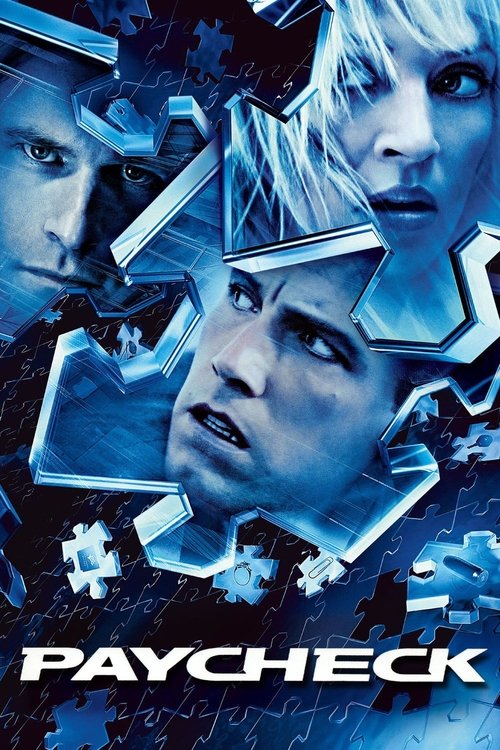
Paycheck
Michael Jennings is a genius who's hired – and paid handsomely – by high-tech firms to work on highly sensitive projects, after which his short-term memory is erased so he's incapable of breaching security. But at the end of a three-year job, he's told he isn't getting a paycheck and instead receives a mysterious envelope. In it are clues he must piece together to find out why he wasn't paid – and why he's now in hot water.
Working with a moderate budget of $60.0M, the film achieved a steady performer with $117.2M in global revenue (+95% profit margin).
3 wins & 2 nominations


Plot Structure
Story beats plotted across runtime


Narrative Arc
Emotional journey through the story's key moments
Story Circle
Blueprint 15-beat structure
Arcplot Score Breakdown
Weighted: Precision (70%) + Arc (15%) + Theme (15%)
Paycheck (2003) reveals meticulously timed dramatic framework, characteristic of John Woo's storytelling approach. This structural analysis examines how the film's 15-point plot structure maps to proven narrative frameworks across 1 hour and 59 minutes. With an Arcplot score of 7.2, the film balances conventional beats with creative variation.
Characters
Cast & narrative archetypes

Michael Jennings
Dr. Rachel Porter
James Rethrick
Agent Dodge
Shorty
John Wolfe
Main Cast & Characters
Michael Jennings
Played by Ben Affleck
A brilliant reverse engineer who takes high-paying corporate jobs and has his memory erased afterward, only to discover he traded his $92 million paycheck for an envelope of seemingly random objects.
Dr. Rachel Porter
Played by Uma Thurman
A biologist working at Allcom who becomes romantically involved with Michael during his three-year job, though he has no memory of their relationship.
James Rethrick
Played by Aaron Eckhart
The CEO of Allcom who hired Michael for a secretive three-year project and becomes the primary antagonist when he tries to eliminate Michael to protect his plans.
Agent Dodge
Played by Joe Morton
An FBI agent investigating Michael Jennings who initially pursues him as a suspect but eventually becomes an ally.
Shorty
Played by Paul Giamatti
Michael's best friend and partner who handles the memory erasure procedure and helps facilitate his reverse engineering jobs.
John Wolfe
Played by Colm Feore
Rethrick's head of security who leads the pursuit of Michael throughout the film.
Structural Analysis
The Status Quo at 1 minutes (1% through the runtime) establishes Michael Jennings completes a reverse-engineering job, has his memory wiped, and receives his paycheck. This establishes his ordinary world: he's a brilliant engineer who sells his skills and memories for money, living a disconnected, transactional life.. The analysis reveals that this early placement immediately immerses viewers in the story world.
The inciting incident occurs at 15 minutes when Michael accepts Rethrick's offer and signs the contract for the three-year job. This choice disrupts his status quo - instead of eight-week jobs, he commits to three years of his life that he'll never remember.. At 13% through the film, this Disruption is delayed, allowing extended setup of the story world. This beat shifts the emotional landscape, launching the protagonist into the central conflict.
The First Threshold at 28 minutes marks the transition into Act II, occurring at 24% of the runtime. This demonstrates the protagonist's commitment to Michael chooses to actively investigate the mystery instead of walking away. When FBI agents try to arrest him and he narrowly escapes using the seemingly random objects (which prove to be perfectly timed tools), he commits to uncovering what his past self knew., moving from reaction to action.
At 60 minutes, the Midpoint arrives at 50% of the runtime—precisely centered, creating perfect narrative symmetry. Structural examination shows that this crucial beat Michael discovers the truth: the machine he built can see the future, and when he looked, he saw an apocalyptic future caused by Rethrick weaponizing it. He realizes the stakes are global, not personal. False defeat: the enormity of the threat becomes clear, and they're being hunted., fundamentally raising what's at risk. The emotional intensity shifts, dividing the narrative into clear before-and-after phases.
The Collapse moment at 88 minutes (74% through) represents the emotional nadir. Here, Rachel is captured by Rethrick and held hostage. Michael is cornered with seemingly no way forward. The last items in the envelope appear useless. His best friend Shorty is killed (whiff of death), and Michael has lost both the woman he loves and his closest ally., reveals the protagonist at their lowest point. This beat's placement in the final quarter sets up the climactic reversal.
The Second Threshold at 95 minutes initiates the final act resolution at 79% of the runtime. Michael realizes the final pieces of his plan: the remaining envelope items will help him infiltrate Allcom and destroy the machine. He synthesizes his engineering skills with the humanity Rachel taught him. He chooses to risk everything not for money, but to save the future and Rachel., demonstrating the transformation achieved throughout the journey.
Emotional Journey
Paycheck's emotional architecture traces a deliberate progression across 15 carefully calibrated beats.
Narrative Framework
This structural analysis employs proven narrative structure principles that track dramatic progression. By mapping Paycheck against these established plot points, we can identify how John Woo utilizes or subverts traditional narrative conventions. The plot point approach reveals not only adherence to structural principles but also creative choices that distinguish Paycheck within the action genre.
John Woo's Structural Approach
Among the 9 John Woo films analyzed on Arcplot, the average structural score is 7.1, reflecting strong command of classical structure. Paycheck represents one of the director's most structurally precise works. For comparative analysis, explore the complete John Woo filmography.
Comparative Analysis
Additional action films include The Bad Guys, Puss in Boots and Venom: The Last Dance. For more John Woo analyses, see Red Cliff, Hard Target and Windtalkers.
Plot Points by Act
Act I
SetupStatus Quo
Michael Jennings completes a reverse-engineering job, has his memory wiped, and receives his paycheck. This establishes his ordinary world: he's a brilliant engineer who sells his skills and memories for money, living a disconnected, transactional life.
Theme
Shorty tells Michael, "What good is money if you can't remember what you did to earn it?" This question establishes the thematic core: what is the value of wealth without meaning, memory, or human connection?
Worldbuilding
Setup of Michael's life: his skills, his friendship with Shorty, his routine of memory erasure. Rethrick approaches with an offer: $92 million for three years of work. Michael's world of short jobs and quick payoffs is established before disruption.
Disruption
Michael accepts Rethrick's offer and signs the contract for the three-year job. This choice disrupts his status quo - instead of eight-week jobs, he commits to three years of his life that he'll never remember.
Resistance
Michael experiences the three-year job in fragmented flashes (meeting Rachel, building the machine, discovering its purpose). He wakes up post-memory wipe to find he signed away his fortune for an envelope of random objects. He debates what happened and begins investigating.
Act II
ConfrontationFirst Threshold
Michael chooses to actively investigate the mystery instead of walking away. When FBI agents try to arrest him and he narrowly escapes using the seemingly random objects (which prove to be perfectly timed tools), he commits to uncovering what his past self knew.
Mirror World
Michael reunites with Rachel Porter, the biologist from Allcom. She represents the relationship and human connection he lost. Their chemistry and her insistence that they were in love introduces the emotional/thematic subplot about choosing people over isolation.
Premise
The fun of the premise: Michael and Rachel evade Rethrick's men using the envelope's objects. Each item (keys, glasses, hairspray, etc.) proves essential at precise moments. Michael pieces together that he saw the future and sent himself these tools. Chase sequences and problem-solving.
Midpoint
Michael discovers the truth: the machine he built can see the future, and when he looked, he saw an apocalyptic future caused by Rethrick weaponizing it. He realizes the stakes are global, not personal. False defeat: the enormity of the threat becomes clear, and they're being hunted.
Opposition
Rethrick intensifies his pursuit, sending teams to kill Michael and Rachel. They discover Rethrick plans to sell the technology to the government. The FBI closes in. Michael's fragmentary memories torture him. Rachel is captured. Everything tightens as multiple forces converge.
Collapse
Rachel is captured by Rethrick and held hostage. Michael is cornered with seemingly no way forward. The last items in the envelope appear useless. His best friend Shorty is killed (whiff of death), and Michael has lost both the woman he loves and his closest ally.
Crisis
Michael processes the loss and despair. He examines the final objects in the envelope, trying to understand what his past self intended. Dark moment of doubt: can he really outwit a man who has the machine, or did he miscalculate?
Act III
ResolutionSecond Threshold
Michael realizes the final pieces of his plan: the remaining envelope items will help him infiltrate Allcom and destroy the machine. He synthesizes his engineering skills with the humanity Rachel taught him. He chooses to risk everything not for money, but to save the future and Rachel.
Synthesis
Michael infiltrates Allcom using the envelope's final items. Confrontation with Rethrick in the greenhouse/laboratory. Rachel frees herself. Michael destroys the machine, and Rethrick dies trying to save it. The future is saved. Michael proves he values people and the open future over predetermined wealth.
Transformation
Michael and Rachel reunite, choosing a life together. The final envelope item is a winning lottery ticket - enough money to be comfortable, but not the fortune he gave up. Michael smiles, having learned that the best future is one you build with people you love, not one you sell your soul to predict. Transformation complete: from isolated mercenary to connected human.