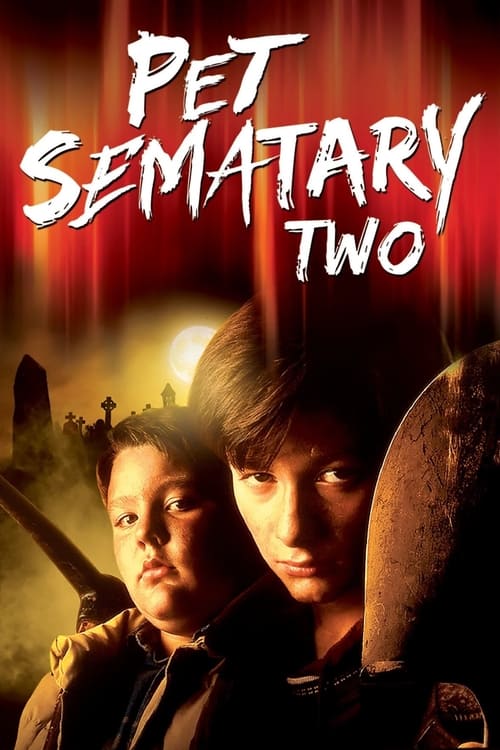
Pet Sematary II
The "sematary" is up to its old zombie-raising tricks again. This time, the protagonists are Jeff Matthews, whose mother died in a Hollywood stage accident, and Drew Gilbert, a boy coping with an abusive stepfather.
Despite its limited budget of $8.0M, Pet Sematary II became a commercial success, earning $17.1M worldwide—a 114% return.


Plot Structure
Story beats plotted across runtime


Narrative Arc
Emotional journey through the story's key moments
Story Circle
Blueprint 15-beat structure
Arcplot Score Breakdown
Weighted: Precision (70%) + Arc (15%) + Theme (15%)
Pet Sematary II (1992) reveals meticulously timed narrative architecture, characteristic of Mary Lambert's storytelling approach. This structural analysis examines how the film's 15-point plot structure maps to proven narrative frameworks across 1 hour and 40 minutes. With an Arcplot score of 7.2, the film balances conventional beats with creative variation.
Characters
Cast & narrative archetypes

Jeff Matthews
Gus Gilbert
Chase Matthews
Drew Gilbert
Renee Hallow
Amanda Gilbert
Marjorie Hargrove
Main Cast & Characters
Jeff Matthews
Played by Edward Furlong
A grieving teenager who moves to Ludlow, Maine after witnessing his actress mother's accidental death, becoming drawn into the dark power of the burial ground.
Gus Gilbert
Played by Clancy Brown
The brutal, abusive sheriff and stepfather to Drew who becomes a murderous revenant after being buried in the cursed ground.
Chase Matthews
Played by Anthony Edwards
Jeff's veterinarian father who moved his son to Ludlow to escape painful memories but finds himself confronting supernatural horrors.
Drew Gilbert
Played by Jason McGuire
Jeff's troubled new friend who suffers abuse from his stepfather Gus and makes the fateful decision to resurrect him after his death.
Renee Hallow
Played by Darlanne Fluegel
Jeff's mother, a horror film actress who dies in a gruesome on-set accident at the film's opening, setting the story in motion.
Amanda Gilbert
Played by Lisa Waltz
Drew's mother and Gus's wife who becomes a victim of her resurrected husband's violence.
Marjorie Hargrove
Played by Sarah Trigger
The friendly housekeeper who works for the Matthews family and provides maternal warmth to the grieving Jeff.
Structural Analysis
The Status Quo at 1 minutes (1% through the runtime) establishes Jeff Matthews witnesses his mother Renee's accidental death on a film set, establishing his traumatic loss and grief that will drive the story.. Of particular interest, this early placement immediately immerses viewers in the story world.
The inciting incident occurs at 13 minutes when Gus shoots and kills Drew's dog Zowie in a brutal act of cruelty, devastating Drew and setting the resurrection plot in motion.. At 13% through the film, this Disruption is delayed, allowing extended setup of the story world. This beat shifts the emotional landscape, launching the protagonist into the central conflict.
The First Threshold at 25 minutes marks the transition into Act II, occurring at 25% of the runtime. This shows the protagonist's commitment to Drew and Jeff actively choose to bury Zowie in the Micmac burial ground, crossing the threshold into supernatural horror as they attempt to resurrect the dead., moving from reaction to action.
At 50 minutes, the Midpoint arrives at 50% of the runtime—precisely centered, creating perfect narrative symmetry. Of particular interest, this crucial beat Gus kills Zowie again and dies in the process. Drew, consumed by grief and rage, buries Gus in the Micmac burial ground, raising the stakes to human resurrection., fundamentally raising what's at risk. The emotional intensity shifts, dividing the narrative into clear before-and-after phases.
The Collapse moment at 75 minutes (75% through) represents the emotional nadir. Here, Gus kills Jeff's father Chase, delivering the "whiff of death" that devastates Jeff and leaves him alone to face the evil he helped unleash., indicates the protagonist at their lowest point. This beat's placement in the final quarter sets up the climactic reversal.
The Second Threshold at 80 minutes initiates the final act resolution at 80% of the runtime. Jeff realizes he must destroy Gus and resist the temptation to resurrect his father. He synthesizes his grief with the knowledge that death must be accepted, not defied., demonstrating the transformation achieved throughout the journey.
Emotional Journey
Pet Sematary II's emotional architecture traces a deliberate progression across 15 carefully calibrated beats.
Narrative Framework
This structural analysis employs structural analysis methodology used to understand storytelling architecture. By mapping Pet Sematary II against these established plot points, we can identify how Mary Lambert utilizes or subverts traditional narrative conventions. The plot point approach reveals not only adherence to structural principles but also creative choices that distinguish Pet Sematary II within the horror genre.
Mary Lambert's Structural Approach
Among the 2 Mary Lambert films analyzed on Arcplot, the average structural score is 7.2, reflecting strong command of classical structure. Pet Sematary II exemplifies the director's characteristic narrative technique. For comparative analysis, explore the complete Mary Lambert filmography.
Comparative Analysis
Additional horror films include Thinner, A Nightmare on Elm Street and Mary Reilly. For more Mary Lambert analyses, see Pet Sematary.
Plot Points by Act
Act I
SetupStatus Quo
Jeff Matthews witnesses his mother Renee's accidental death on a film set, establishing his traumatic loss and grief that will drive the story.
Theme
Drew comments on death and loss as Jeff and Chase discuss the pet cemetery, foreshadowing the dangerous temptation of trying to bring back the dead.
Worldbuilding
Jeff and his veterinarian father move to Ludlow, Maine. Jeff befriends Drew, meets antagonistic stepfather Gus Gilbert, and discovers the Micmac burial ground beyond the pet cemetery.
Disruption
Gus shoots and kills Drew's dog Zowie in a brutal act of cruelty, devastating Drew and setting the resurrection plot in motion.
Resistance
Drew debates whether to bury Zowie in the Micmac burial ground. Jeff encourages him despite warnings. They wrestle with grief and the temptation to defy death.
Act II
ConfrontationFirst Threshold
Drew and Jeff actively choose to bury Zowie in the Micmac burial ground, crossing the threshold into supernatural horror as they attempt to resurrect the dead.
Mirror World
Zowie returns from the dead, but something is wrong—he's aggressive and unnatural, showing the corrupted nature of resurrection and foreshadowing darker consequences.
Premise
The boys deal with resurrected Zowie's increasingly violent behavior. Gus escalates his abuse. The promise of the premise: exploring the horror of things that come back wrong.
Midpoint
Gus kills Zowie again and dies in the process. Drew, consumed by grief and rage, buries Gus in the Micmac burial ground, raising the stakes to human resurrection.
Opposition
Resurrected Gus returns as a violent, demonic force. He begins killing townspeople. Jeff realizes the terrible mistake while Drew falls under Gus's dark influence. The horror intensifies.
Collapse
Gus kills Jeff's father Chase, delivering the "whiff of death" that devastates Jeff and leaves him alone to face the evil he helped unleash.
Crisis
Jeff processes his father's death and the horror of what resurrection truly means. He faces his darkest moment, tempted to bring his father back but understanding the cost.
Act III
ResolutionSecond Threshold
Jeff realizes he must destroy Gus and resist the temptation to resurrect his father. He synthesizes his grief with the knowledge that death must be accepted, not defied.
Synthesis
Jeff confronts and destroys resurrected Gus in a violent showdown. He saves Drew and chooses not to bury his father in the burial ground, breaking the cycle.
Transformation
Jeff stands at his father's grave, having learned to accept death. But the final image reveals his resurrected mother appearing, suggesting the curse continues—a dark transformation.