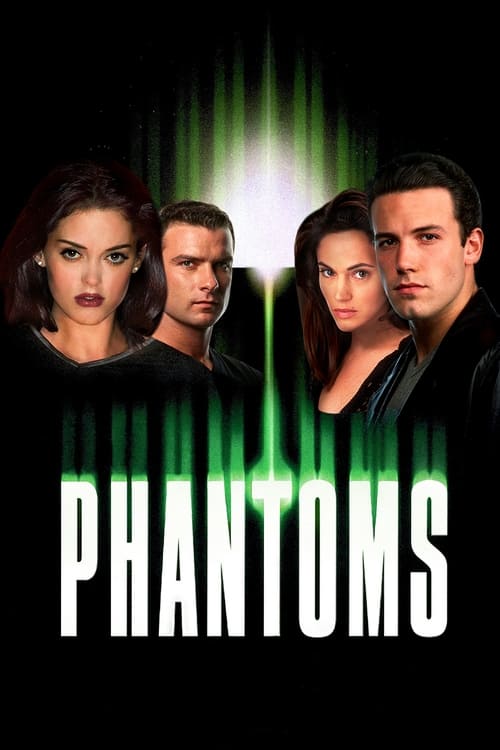
Phantoms
In the peaceful Colorado town of Snowfield, something evil has wiped out the community. And now, it's up to a group of people to stop it, or at least get out of Snowfield alive.
The film commercial failure against its modest budget of $14.0M, earning $5.6M globally (-60% loss). While initial box office returns were modest, the film has gained appreciation for its innovative storytelling within the horror genre.


Plot Structure
Story beats plotted across runtime


Narrative Arc
Emotional journey through the story's key moments
Story Circle
Blueprint 15-beat structure
Arcplot Score Breakdown
Weighted: Precision (70%) + Arc (15%) + Theme (15%)
Phantoms (1998) showcases precise dramatic framework, characteristic of Joe Chappelle's storytelling approach. This structural analysis examines how the film's 15-point plot structure maps to proven narrative frameworks across 1 hour and 36 minutes. With an Arcplot score of 7.1, the film balances conventional beats with creative variation.
Characters
Cast & narrative archetypes

Dr. Jennifer Pailey
Sheriff Bryce Hammond
Lisa Pailey
Dr. Timothy Flyte
Deputy Stu Wargle
Deputy Steve Shanning
The Ancient Enemy
Main Cast & Characters
Dr. Jennifer Pailey
Played by Joanna Going
A physician who returns to her hometown of Snowfield with her sister, only to discover the town's population has been mysteriously killed.
Sheriff Bryce Hammond
Played by Ben Affleck
The local sheriff who investigates the mysterious deaths in Snowfield and becomes a key leader in confronting the ancient evil.
Lisa Pailey
Played by Rose McGowan
Jennifer's younger sister who accompanies her to Snowfield and must face her fears while surviving the nightmare.
Dr. Timothy Flyte
Played by Peter O'Toole
A tabloid writer and former academic who theorized about an ancient enemy responsible for mass disappearances throughout history.
Deputy Stu Wargle
Played by Liev Schreiber
A disturbed deputy with violent tendencies who becomes possessed by the Ancient Enemy.
Deputy Steve Shanning
Played by Nicky Katt
A deputy who joins Sheriff Hammond in investigating the Snowfield incident.
The Ancient Enemy
A primordial shape-shifting entity that has existed for millions of years, consuming civilizations and absorbing the knowledge of its victims.
Structural Analysis
The Status Quo at 1 minutes (1% through the runtime) establishes Dr. Jennifer Pailey drives with her younger sister Lisa through mountain roads to the peaceful town of Snowfield, Colorado. Jennifer is returning home to show Lisa her small-town medical practice, expecting a quiet reunion with the community.. Significantly, this early placement immediately immerses viewers in the story world.
The inciting incident occurs at 12 minutes when The sisters discover the first mutilated corpse and realize something malevolent is responsible for the town's fate. They attempt to call for help but find themselves trapped—the phone lines are dead, and something is actively preventing their escape.. At 12% through the film, this Disruption aligns precisely with traditional story structure. This beat shifts the emotional landscape, launching the protagonist into the central conflict.
The First Threshold at 23 minutes marks the transition into Act II, occurring at 24% of the runtime. This indicates the protagonist's commitment to The group decides to remain in Snowfield and actively investigate the phenomenon rather than wait for outside help. They choose to enter the hotel and explore the evidence, crossing from reactive victims into active investigators of the unknown force., moving from reaction to action.
At 47 minutes, the Midpoint arrives at 49% of the runtime—precisely centered, creating perfect narrative symmetry. Significantly, this crucial beat The Ancient Enemy directly communicates with the group, revealing its intelligence and god-like superiority. It demonstrates its power by controlling victims and creating horrific manifestations. The stakes shift from survival and escape to understanding they're dealing with an ancient, nearly omnipotent force., fundamentally raising what's at risk. The emotional intensity shifts, dividing the narrative into clear before-and-after phases.
The Collapse moment at 72 minutes (75% through) represents the emotional nadir. Here, Multiple team members are killed in rapid succession. The Ancient Enemy seems invincible, and all attempts to fight or escape have failed. The survivors face the reality that they will likely all die—there appears to be no way to defeat or escape this entity., demonstrates the protagonist at their lowest point. This beat's placement in the final quarter sets up the climactic reversal.
The Second Threshold at 76 minutes initiates the final act resolution at 79% of the runtime. Flyte realizes the Ancient Enemy's weakness: its vanity and need for recognition. By understanding it seeks acknowledgment of its superiority, they discover they can potentially destroy it using biological warfare—targeting it as a living organism despite its god-like qualities., demonstrating the transformation achieved throughout the journey.
Emotional Journey
Phantoms's emotional architecture traces a deliberate progression across 15 carefully calibrated beats.
Narrative Framework
This structural analysis employs proven narrative structure principles that track dramatic progression. By mapping Phantoms against these established plot points, we can identify how Joe Chappelle utilizes or subverts traditional narrative conventions. The plot point approach reveals not only adherence to structural principles but also creative choices that distinguish Phantoms within the horror genre.
Joe Chappelle's Structural Approach
Among the 2 Joe Chappelle films analyzed on Arcplot, the average structural score is 7.4, reflecting strong command of classical structure. Phantoms takes a more unconventional approach compared to the director's typical style. For comparative analysis, explore the complete Joe Chappelle filmography.
Comparative Analysis
Additional horror films include Thinner, A Nightmare on Elm Street and Mary Reilly. For more Joe Chappelle analyses, see Halloween: The Curse of Michael Myers.
Plot Points by Act
Act I
SetupStatus Quo
Dr. Jennifer Pailey drives with her younger sister Lisa through mountain roads to the peaceful town of Snowfield, Colorado. Jennifer is returning home to show Lisa her small-town medical practice, expecting a quiet reunion with the community.
Theme
Lisa remarks on the eerie silence: "It's too quiet." Jennifer dismisses her concerns, suggesting rational explanations. The tension between rationality and primal fear is established—what happens when science can't explain everything?
Worldbuilding
The sisters explore increasingly disturbing scenes in the abandoned town: bodies in strange conditions, no signs of struggle, mysterious disappearances. Jennifer's medical training and protective relationship with Lisa is established. The town's complete desertion and bizarre clues build dread.
Disruption
The sisters discover the first mutilated corpse and realize something malevolent is responsible for the town's fate. They attempt to call for help but find themselves trapped—the phone lines are dead, and something is actively preventing their escape.
Resistance
Sheriff Bryce Hammond and his deputies arrive in response to Jennifer's emergency call. Initial skepticism turns to horror as they encounter the evidence. Military and scientific authorities are contacted. The group debates whether to flee or investigate, constrained by quarantine protocols.
Act II
ConfrontationFirst Threshold
The group decides to remain in Snowfield and actively investigate the phenomenon rather than wait for outside help. They choose to enter the hotel and explore the evidence, crossing from reactive victims into active investigators of the unknown force.
Mirror World
Timothy Flyte, the tabloid journalist and theorist of mass disappearances, is introduced via his writings and eventually brought to Snowfield. He represents the thematic counterpoint: embracing the irrational and inexplicable as valid forms of knowledge alongside Jennifer's scientific method.
Premise
The team investigates the Ancient Enemy's nature through encounters with its manifestations. They discover it's an intelligent, shape-shifting entity that has existed for millennia. Flyte's arrival provides historical context. The horror-mystery unfolds as they piece together what they're facing.
Midpoint
The Ancient Enemy directly communicates with the group, revealing its intelligence and god-like superiority. It demonstrates its power by controlling victims and creating horrific manifestations. The stakes shift from survival and escape to understanding they're dealing with an ancient, nearly omnipotent force.
Opposition
The entity picks off team members one by one, demonstrating its control over the environment. The military's weapons prove ineffective. Tensions rise within the group as fear and paranoia grow. The Ancient Enemy toys with them, displaying their helplessness against its power.
Collapse
Multiple team members are killed in rapid succession. The Ancient Enemy seems invincible, and all attempts to fight or escape have failed. The survivors face the reality that they will likely all die—there appears to be no way to defeat or escape this entity.
Crisis
In the darkness following devastating losses, the survivors process their terror and despair. Jennifer, Bryce, Lisa, and Flyte confront the apparent futility of resistance. They must find meaning and resolve in the face of cosmic horror.
Act III
ResolutionSecond Threshold
Flyte realizes the Ancient Enemy's weakness: its vanity and need for recognition. By understanding it seeks acknowledgment of its superiority, they discover they can potentially destroy it using biological warfare—targeting it as a living organism despite its god-like qualities.
Synthesis
The survivors execute a desperate plan to deploy a biological agent against the Ancient Enemy. They use Flyte's psychological insight combined with Jennifer's scientific knowledge to lure and attack the entity. The final confrontation unfolds as they attempt to destroy what has existed for millennia.
Transformation
Jennifer and Lisa emerge from Snowfield as survivors who have confronted ultimate terror and prevailed. Jennifer has evolved from relying solely on rational medicine to accepting that some phenomena transcend science. The sisters' bond has been forged through shared trauma and victory over the impossible.