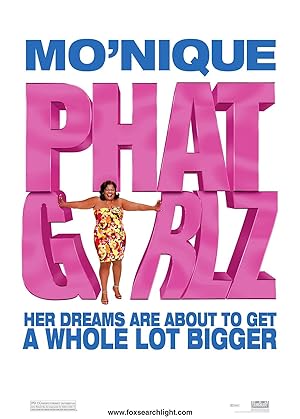
Phat Girlz
Superstar comedienne Mo'Nique is hilarious as a sassy, plus-sized fashion designer who's tired of taking no for an answer in this delightful comedy about living life to the fullest. Jazmin Biltmore (Mo'Nique) has big plans for large ladies: she's designed a sexy line of clothes for curvaceous women like herself. But when she can't get funding for her designs or meet a man who appreciates her unique physique, Jazmin's patience runs thin. That is, until she wins an all-expenses-paid trip to a resort in Palm Springs, where she just might just meet the man of her dreams.
Despite its small-scale budget of $3.0M, Phat Girlz became a commercial success, earning $7.3M worldwide—a 143% return.


Plot Structure
Story beats plotted across runtime


Narrative Arc
Emotional journey through the story's key moments
Story Circle
Blueprint 15-beat structure
Arcplot Score Breakdown
Weighted: Precision (70%) + Arc (15%) + Theme (15%)
Phat Girlz (2006) demonstrates precise narrative architecture, characteristic of Nnegest Likké's storytelling approach. This structural analysis examines how the film's 15-point plot structure maps to proven narrative frameworks across 1 hour and 39 minutes. With an Arcplot score of 7.3, the film balances conventional beats with creative variation.
Characters
Cast & narrative archetypes

Jazmin Biltmore
Stacey
Dr. Tunde Jonathan
Mia
Dr. Akibo Jonathan
Richard
Jezebel
Main Cast & Characters
Jazmin Biltmore
Played by Mo'Nique
A plus-size woman working as a buyer for a department store who dreams of designing clothes for larger women while struggling with society's beauty standards.
Stacey
Played by Joyful Drake
Jazmin's slim and conventionally attractive cousin who often gets attention that Jazmin desires, creating tension between them.
Dr. Tunde Jonathan
Played by Jimmy Jean-Louis
A Nigerian doctor who genuinely appreciates and is attracted to plus-size women, becoming Jazmin's love interest.
Mia
Played by Kendra C. Johnson
Jazmin's best friend who is also plus-size and provides emotional support throughout her journey.
Dr. Akibo Jonathan
Played by Godfrey
Tunde's friend and fellow Nigerian doctor who becomes interested in Mia.
Richard
Played by Eric Roberts
Stacey's dismissive and superficial boyfriend who represents the shallow attitudes Jazmin fights against.
Jezebel
Played by Laura Hayes
A thin, mean-spirited coworker at the department store who constantly belittles Jazmin about her weight.
Structural Analysis
The Status Quo at 1 minutes (1% through the runtime) establishes Jazmin Biltmore struggles with body image in a thin-obsessed world. She works at a department store while dreaming of launching her own plus-size fashion line called "Thick Madame.".. Structural examination shows that this early placement immediately immerses viewers in the story world.
The inciting incident occurs at 12 minutes when Jazmin wins a trip to Palm Springs at a luxury spa resort. This unexpected opportunity offers an escape from her frustrating routine and opens a door to new possibilities.. At 12% through the film, this Disruption aligns precisely with traditional story structure. This beat shifts the emotional landscape, launching the protagonist into the central conflict.
The First Threshold at 25 minutes marks the transition into Act II, occurring at 25% of the runtime. This demonstrates the protagonist's commitment to Jazmin arrives at the Palm Springs resort and actively decides to embrace this new world. She chooses to be confident and open to whatever experiences come her way., moving from reaction to action.
At 50 minutes, the Midpoint arrives at 50% of the runtime—precisely centered, creating perfect narrative symmetry. Of particular interest, this crucial beat Jazmin and Tunde's relationship deepens significantly. She receives validation and experiences what feels like true acceptance. This false victory makes her believe external validation is the answer to her insecurities., fundamentally raising what's at risk. The emotional intensity shifts, dividing the narrative into clear before-and-after phases.
The Collapse moment at 74 minutes (75% through) represents the emotional nadir. Here, Jazmin's dream of her fashion line faces major rejection, and her relationship with Tunde hits crisis point due to her inability to truly accept herself. Her old insecurities completely take over., shows the protagonist at their lowest point. This beat's placement in the final quarter sets up the climactic reversal.
The Second Threshold at 79 minutes initiates the final act resolution at 80% of the runtime. Jazmin has a breakthrough realization: she must love herself first, independent of others' opinions. She synthesizes Tunde's acceptance with her own need for authentic self-love., demonstrating the transformation achieved throughout the journey.
Emotional Journey
Phat Girlz's emotional architecture traces a deliberate progression across 15 carefully calibrated beats.
Narrative Framework
This structural analysis employs proven narrative structure principles that track dramatic progression. By mapping Phat Girlz against these established plot points, we can identify how Nnegest Likké utilizes or subverts traditional narrative conventions. The plot point approach reveals not only adherence to structural principles but also creative choices that distinguish Phat Girlz within the comedy genre.
Comparative Analysis
Additional comedy films include The Bad Guys, Ella Enchanted and The Evening Star.
Plot Points by Act
Act I
SetupStatus Quo
Jazmin Biltmore struggles with body image in a thin-obsessed world. She works at a department store while dreaming of launching her own plus-size fashion line called "Thick Madame."
Theme
Jazmin's friend Mia discusses self-acceptance and suggests that real beauty comes from confidence, not conforming to society's narrow standards.
Worldbuilding
Jazmin's daily life is shown: her retail job, her passion for fashion design, tensions with her critical mother, and her close friendship with Stacey and Mia. Her dreams clash with constant rejection.
Disruption
Jazmin wins a trip to Palm Springs at a luxury spa resort. This unexpected opportunity offers an escape from her frustrating routine and opens a door to new possibilities.
Resistance
Jazmin debates whether to take the trip and contemplates what it might mean. She prepares with her friends, dealing with insecurities but building excitement about the adventure ahead.
Act II
ConfrontationFirst Threshold
Jazmin arrives at the Palm Springs resort and actively decides to embrace this new world. She chooses to be confident and open to whatever experiences come her way.
Mirror World
Jazmin meets Dr. Tunde Kulego, a Nigerian doctor who finds her attractive and celebrates her curves. This relationship introduces the film's central theme: she is desirable exactly as she is.
Premise
Jazmin experiences romance with Tunde, who appreciates full-figured women. She explores confidence, sensuality, and possibility. The "fun and games" of being celebrated for her body rather than shamed for it.
Midpoint
Jazmin and Tunde's relationship deepens significantly. She receives validation and experiences what feels like true acceptance. This false victory makes her believe external validation is the answer to her insecurities.
Opposition
Reality intrudes as Jazmin returns home. Her insecurities resurface, her mother's criticism continues, and she struggles to maintain the confidence she found. Doubts about Tunde's sincerity emerge.
Collapse
Jazmin's dream of her fashion line faces major rejection, and her relationship with Tunde hits crisis point due to her inability to truly accept herself. Her old insecurities completely take over.
Crisis
Jazmin processes her pain and confronts the reality that no external validation—not Tunde, not a fashion line—can fix her internal struggle. She must find self-worth from within.
Act III
ResolutionSecond Threshold
Jazmin has a breakthrough realization: she must love herself first, independent of others' opinions. She synthesizes Tunde's acceptance with her own need for authentic self-love.
Synthesis
Jazmin takes control of her destiny, pursues her fashion dreams on her own terms, and reconciles with Tunde from a place of wholeness rather than need. She confronts those who doubted her.
Transformation
Jazmin confidently showcases her fashion line, fully embracing who she is. The final image mirrors the opening but shows a transformed woman who has found self-acceptance and inner strength.