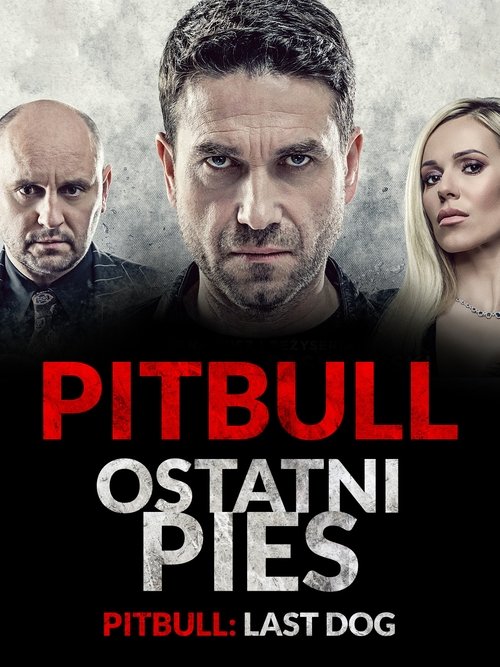
Pitbull. Last Dog
A policeman gets killed and the short-staffed police chief sends for a few experienced officers to support him in his fight with organized crime. Meanwhile, a conflict between local gangster groups escalates.
The film earned $6.3M at the global box office.
Plot Structure
Story beats plotted across runtime


Narrative Arc
Emotional journey through the story's key moments
Story Circle
Blueprint 15-beat structure
Arcplot Score Breakdown
Weighted: Precision (70%) + Arc (15%) + Theme (15%)
Pitbull. Last Dog (2018) exemplifies meticulously timed story structure, characteristic of Władysław Pasikowski's storytelling approach. This structural analysis examines how the film's 15-point plot structure maps to proven narrative frameworks across 2 hours and 4 minutes. With an Arcplot score of 7.2, the film balances conventional beats with creative variation.
Structural Analysis
The Status Quo at 1 minutes (1% through the runtime) establishes Majami, the aging police lieutenant, is shown in his routine work life, a veteran cop operating in a corrupt system where he's survived by understanding the rules of the game.. Of particular interest, this early placement immediately immerses viewers in the story world.
The inciting incident occurs at 15 minutes when A major crime or political shift threatens the delicate balance of power, putting Majami and his unit under intense scrutiny and forcing them into dangerous territory.. At 12% through the film, this Disruption aligns precisely with traditional story structure. This beat shifts the emotional landscape, launching the protagonist into the central conflict.
The First Threshold at 32 minutes marks the transition into Act II, occurring at 26% of the runtime. This shows the protagonist's commitment to Majami makes the active choice to pursue a dangerous investigation or take on a case that will put him directly in conflict with powerful forces, crossing a line he cannot uncross., moving from reaction to action.
At 62 minutes, the Midpoint arrives at 50% of the runtime—precisely centered, creating perfect narrative symmetry. Notably, this crucial beat A false victory where Majami appears to have the upper hand is revealed as a trap, or a major revelation shows the conspiracy reaches higher than he thought, raising the stakes dramatically., fundamentally raising what's at risk. The emotional intensity shifts, dividing the narrative into clear before-and-after phases.
The Collapse moment at 93 minutes (75% through) represents the emotional nadir. Here, A team member is killed, betrayed, or Majami loses his position/protection. The "whiff of death" as everything he's built and fought for crumbles, leaving him isolated and powerless., indicates the protagonist at their lowest point. This beat's placement in the final quarter sets up the climactic reversal.
The Second Threshold at 99 minutes initiates the final act resolution at 80% of the runtime. New evidence, a realization, or an alliance gives Majami the clarity and means to act. He synthesizes his old-school street wisdom with a newfound moral clarity for a final confrontation., demonstrating the transformation achieved throughout the journey.
Emotional Journey
Pitbull. Last Dog's emotional architecture traces a deliberate progression across 15 carefully calibrated beats.
Narrative Framework
This structural analysis employs structural analysis methodology used to understand storytelling architecture. By mapping Pitbull. Last Dog against these established plot points, we can identify how Władysław Pasikowski utilizes or subverts traditional narrative conventions. The plot point approach reveals not only adherence to structural principles but also creative choices that distinguish Pitbull. Last Dog within the action genre.
Władysław Pasikowski's Structural Approach
Among the 2 Władysław Pasikowski films analyzed on Arcplot, the average structural score is 7.2, reflecting strong command of classical structure. Pitbull. Last Dog exemplifies the director's characteristic narrative technique. For comparative analysis, explore the complete Władysław Pasikowski filmography.
Comparative Analysis
Additional action films include The Ministry of Ungentlemanly Warfare, The Bad Guys and Lake Placid. For more Władysław Pasikowski analyses, see Pigs 3.
Plot Points by Act
Act I
SetupStatus Quo
Majami, the aging police lieutenant, is shown in his routine work life, a veteran cop operating in a corrupt system where he's survived by understanding the rules of the game.
Theme
A colleague warns Majami that in this new Poland, the old ways of doing things won't protect him anymore - loyalty and survival require choosing sides carefully.
Worldbuilding
Establishment of the criminal underworld of Warsaw, introduction of Majami's police unit, their methods, and the complex web of corruption connecting law enforcement, criminals, and politicians.
Disruption
A major crime or political shift threatens the delicate balance of power, putting Majami and his unit under intense scrutiny and forcing them into dangerous territory.
Resistance
Majami debates how to respond to the new threat, consults with his team, and navigates between competing pressures from above and below while trying to maintain his position.
Act II
ConfrontationFirst Threshold
Majami makes the active choice to pursue a dangerous investigation or take on a case that will put him directly in conflict with powerful forces, crossing a line he cannot uncross.
Mirror World
A relationship with a younger officer, informant, or family member presents an alternative worldview, representing the possibility of operating with integrity in a corrupt system.
Premise
The investigation deepens as Majami navigates the criminal underworld, using his street knowledge and connections. The "fun and games" of police procedural - interrogations, surveillance, and tactical operations.
Midpoint
A false victory where Majami appears to have the upper hand is revealed as a trap, or a major revelation shows the conspiracy reaches higher than he thought, raising the stakes dramatically.
Opposition
The antagonistic forces close in from all sides. Majami's team is compromised, political pressure intensifies, and his old methods and alliances begin to fail him as enemies tighten their grip.
Collapse
A team member is killed, betrayed, or Majami loses his position/protection. The "whiff of death" as everything he's built and fought for crumbles, leaving him isolated and powerless.
Crisis
Majami confronts the cost of his choices and the moral compromises he's made. A dark night of the soul where he must decide whether to accept defeat or risk everything for a final stand.
Act III
ResolutionSecond Threshold
New evidence, a realization, or an alliance gives Majami the clarity and means to act. He synthesizes his old-school street wisdom with a newfound moral clarity for a final confrontation.
Synthesis
The finale unfolds as Majami executes his plan, confronts the main antagonists, and resolves the central conflict through a combination of violence, cunning, and sacrifice.
Transformation
Final image shows Majami transformed - whether through victory that came at too high a cost, defeat that reveals systemic corruption cannot be beaten, or a pyrrhic survival in a world that has moved past him.