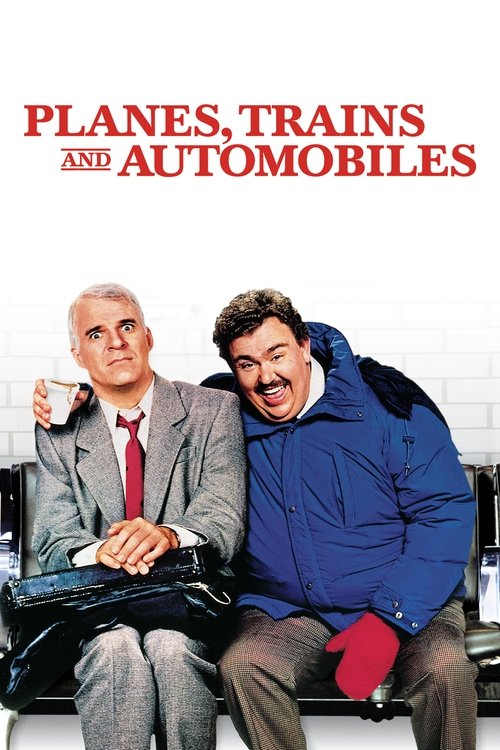
Planes, Trains and Automobiles
An irritable marketing executive, Neal Page, is heading home to Chicago for Thanksgiving when a number of delays force him to travel with a well meaning but overbearing shower curtain ring salesman, Del Griffith.
Despite a moderate budget of $15.0M, Planes, Trains and Automobiles became a solid performer, earning $49.5M worldwide—a 230% return.


Plot Structure
Story beats plotted across runtime


Narrative Arc
Emotional journey through the story's key moments
Story Circle
Blueprint 15-beat structure
Arcplot Score Breakdown
Weighted: Precision (70%) + Arc (15%) + Theme (15%)
Planes, Trains and Automobiles (1987) reveals meticulously timed plot construction, characteristic of John Hughes's storytelling approach. This structural analysis examines how the film's 15-point plot structure maps to proven narrative frameworks across 1 hour and 32 minutes. With an Arcplot score of 7.8, the film showcases strong structural fundamentals.
Characters
Cast & narrative archetypes

Neal Page
Del Griffith
Susan Page
Main Cast & Characters
Neal Page
Played by Steve Martin
A high-strung marketing executive desperately trying to get home to Chicago for Thanksgiving, whose journey becomes an odyssey of mishaps.
Del Griffith
Played by John Candy
A boisterous, well-meaning shower curtain ring salesman whose overbearing friendliness masks a profound loneliness and tragic past.
Susan Page
Played by Laila Robins
Neal's patient and loving wife waiting for him at home in Chicago, representing the domestic stability he's fighting to reach.
Structural Analysis
The Status Quo at 1 minutes (1% through the runtime) establishes Neal Page is a successful, uptight marketing executive in a New York business meeting, displaying his controlled, professional world before Thanksgiving. He's focused, efficient, and in his element.. Of particular interest, this early placement immediately immerses viewers in the story world.
The inciting incident occurs at 11 minutes when Neal's flight is diverted to Wichita, Kansas due to bad weather, stranding him hundreds of miles from Chicago with no clear way home for Thanksgiving.. At 12% through the film, this Disruption aligns precisely with traditional story structure. This beat shifts the emotional landscape, launching the protagonist into the central conflict.
The First Threshold at 22 minutes marks the transition into Act II, occurring at 24% of the runtime. This illustrates the protagonist's commitment to Neal makes the active choice to accept Del's offer to travel together to Chicago, entering into a partnership with this annoying stranger. This decision launches him into the chaotic journey of Act 2., moving from reaction to action.
At 46 minutes, the Midpoint arrives at 50% of the runtime—precisely centered, creating perfect narrative symmetry. Significantly, this crucial beat Neal explodes at Del in the car, cruelly telling him "You're no ray of sunshine either" and that he doesn't like him. This false victory of asserting control masks the truth that Neal's losing his humanity. The stakes raise as their relationship hits rock bottom., fundamentally raising what's at risk. The emotional intensity shifts, dividing the narrative into clear before-and-after phases.
The Collapse moment at 67 minutes (73% through) represents the emotional nadir. Here, Neal finally reaches the Chicago L train station and says goodbye to Del, believing his nightmare is over. But as he sits alone on the train, he experiences a metaphorical death of his old self, realizing Del has nowhere to go—his wife has been dead for years., illustrates the protagonist at their lowest point. This beat's placement in the final quarter sets up the climactic reversal.
The Second Threshold at 74 minutes initiates the final act resolution at 80% of the runtime. Neal makes the active choice to go back for Del at the train station. This synthesis moment combines his original goal (getting home) with what he's learned (compassion for others). He can't leave Del alone on Thanksgiving., demonstrating the transformation achieved throughout the journey.
Emotional Journey
Planes, Trains and Automobiles's emotional architecture traces a deliberate progression across 15 carefully calibrated beats.
Narrative Framework
This structural analysis employs proven narrative structure principles that track dramatic progression. By mapping Planes, Trains and Automobiles against these established plot points, we can identify how John Hughes utilizes or subverts traditional narrative conventions. The plot point approach reveals not only adherence to structural principles but also creative choices that distinguish Planes, Trains and Automobiles within the comedy genre.
John Hughes's Structural Approach
Among the 8 John Hughes films analyzed on Arcplot, the average structural score is 7.0, reflecting strong command of classical structure. Planes, Trains and Automobiles represents one of the director's most structurally precise works. For comparative analysis, explore the complete John Hughes filmography.
Comparative Analysis
Additional comedy films include The Bad Guys, Ella Enchanted and The Evening Star. For more John Hughes analyses, see She's Having a Baby, Curly Sue and Weird Science.
Plot Points by Act
Act I
SetupStatus Quo
Neal Page is a successful, uptight marketing executive in a New York business meeting, displaying his controlled, professional world before Thanksgiving. He's focused, efficient, and in his element.
Theme
Del Griffith casually mentions "You could say I'm a road warrior" when first meeting Neal in the taxi they both fight over, hinting at the theme of life's journey and how we treat fellow travelers.
Worldbuilding
Establishment of Neal's status quo: his urgency to get home to Chicago for Thanksgiving, the difficulty getting a cab in New York, his first frustrating encounter with Del who steals his taxi, and the beginning of travel complications when his flight is delayed.
Disruption
Neal's flight is diverted to Wichita, Kansas due to bad weather, stranding him hundreds of miles from Chicago with no clear way home for Thanksgiving.
Resistance
Neal debates his options in Wichita, reluctantly encounters Del again at the airport and hotel, and resists the idea of traveling together. Del becomes an unwanted "guide" offering transportation solutions despite Neal's resistance.
Act II
ConfrontationFirst Threshold
Neal makes the active choice to accept Del's offer to travel together to Chicago, entering into a partnership with this annoying stranger. This decision launches him into the chaotic journey of Act 2.
Mirror World
Neal and Del share a motel room (the infamous "two pillows" scene), forcing Neal into uncomfortable intimacy with Del. This B-story relationship will teach Neal about compassion and human connection beyond his controlled world.
Premise
The "fun and games" of the journey: the motel room chaos, the rental car burning up, the wrong-way highway scene, getting stranded, riding in freezing truck beds, and various modes of failed transportation. The promise of a comedy road trip delivers.
Midpoint
Neal explodes at Del in the car, cruelly telling him "You're no ray of sunshine either" and that he doesn't like him. This false victory of asserting control masks the truth that Neal's losing his humanity. The stakes raise as their relationship hits rock bottom.
Opposition
After the blowup, more disasters pile on: Del's credit cards are stolen, they're stuck in various increasingly degrading situations, and Neal's frustration intensifies. The journey becomes harder, colder, and more desperate as Thanksgiving approaches.
Collapse
Neal finally reaches the Chicago L train station and says goodbye to Del, believing his nightmare is over. But as he sits alone on the train, he experiences a metaphorical death of his old self, realizing Del has nowhere to go—his wife has been dead for years.
Crisis
Neal processes the emotional weight of Del's loneliness and his own cruelty. He sits in the dark night of the soul, recognizing that Del has been homeless and alone while trying to help him, and that Neal has been blind to another person's pain.
Act III
ResolutionSecond Threshold
Neal makes the active choice to go back for Del at the train station. This synthesis moment combines his original goal (getting home) with what he's learned (compassion for others). He can't leave Del alone on Thanksgiving.
Synthesis
Neal returns to find Del on the platform, invites him home for Thanksgiving, and they travel together to Neal's house. Neal introduces Del to his family, executing the final act of compassion and completing his transformation.
Transformation
Del is welcomed into Neal's home and family for Thanksgiving dinner. Neal, transformed from the uptight executive we saw at the beginning, now embodies compassion and genuine human connection, his family embracing the stranger he once rejected.