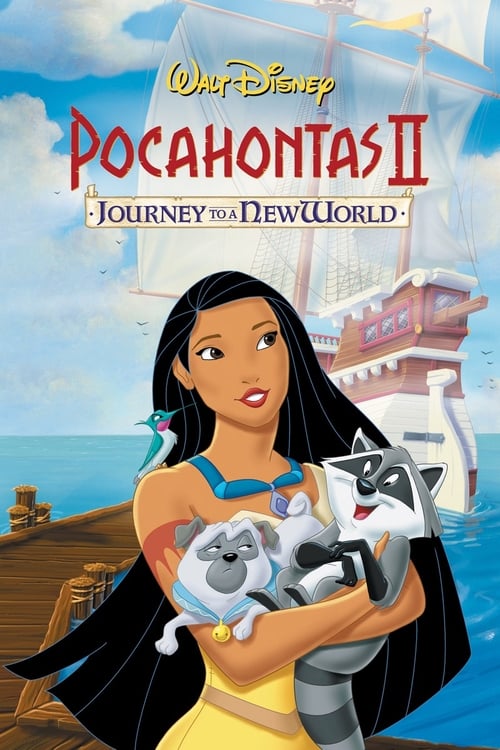
Pocahontas II: Journey to a New World
When news of John Smith's death reaches America, Pocahontas is devastated. She sets off to London with John Rolfe, to meet with the King of England on a diplomatic mission: to create peace and respect between the two great lands. However, Governor Ratcliffe is still around; he wants to return to Jamestown and take over. He will stop at nothing to discredit the young princess.


Plot Structure
Story beats plotted across runtime


Narrative Arc
Emotional journey through the story's key moments
Story Circle
Blueprint 15-beat structure
Arcplot Score Breakdown
Weighted: Precision (70%) + Arc (15%) + Theme (15%)
Pocahontas II: Journey to a New World (1998) exhibits precise narrative architecture, characteristic of Tom Ellery's storytelling approach. This structural analysis examines how the film's 15-point plot structure maps to proven narrative frameworks across 1 hour and 12 minutes. With an Arcplot score of 7.6, the film showcases strong structural fundamentals.
Characters
Cast & narrative archetypes

Pocahontas
John Rolfe
John Smith
Governor Ratcliffe
Meeko
Flit
Percy
King James I
Main Cast & Characters
Pocahontas
Played by Irene Bedard
A Powhatan princess who travels to England as an ambassador to prevent war between her people and the English settlers, facing a new world and a choice between two loves.
John Rolfe
Played by Billy Zane
A dignified English diplomat who escorts Pocahontas to England and gradually falls in love with her, representing civility and genuine respect for her culture.
John Smith
Played by Donal Gibson
Pocahontas's former love who was believed dead but resurfaces in England, now working undercover to protect her and stop Ratcliffe's schemes.
Governor Ratcliffe
Played by David Ogden Stiers
A scheming nobleman who manipulates King James to wage war against the Powhatan people, seeking revenge after his humiliation in the first film.
Meeko
Pocahontas's mischievous and food-obsessed raccoon companion who provides comic relief throughout the journey to England.
Flit
Pocahontas's protective hummingbird companion who is suspicious of the English but loyal to his friend.
Percy
Ratcliffe's former pampered pug who has become Pocahontas's loyal companion, torn between his old master and new friends.
King James I
Played by Jim Cummings
The pompous and easily manipulated King of England who must decide whether to pursue war or peace with the Powhatan nation.
Structural Analysis
The Status Quo at 1 minutes (1% through the runtime) establishes Pocahontas lives peacefully in her village, teaching children about harmony with nature and speaking with her animal friends, having found contentment after John Smith's departure.. Structural examination shows that this early placement immediately immerses viewers in the story world.
The inciting incident occurs at 9 minutes when John Rolfe arrives with urgent news that John Smith has been accused of treason in London and will be executed. Pocahontas must travel to England to testify and save him, shattering her peaceful existence.. At 12% through the film, this Disruption aligns precisely with traditional story structure. This beat shifts the emotional landscape, launching the protagonist into the central conflict.
The First Threshold at 18 minutes marks the transition into Act II, occurring at 25% of the runtime. This illustrates the protagonist's commitment to Pocahontas boards the ship to England, making the active choice to leave her homeland and enter the unfamiliar world of London. She crosses the ocean, symbolically entering Act Two., moving from reaction to action.
At 36 minutes, the Midpoint arrives at 49% of the runtime—precisely centered, creating perfect narrative symmetry. The analysis reveals that this crucial beat Pocahontas finally reunites with John Smith, but the meeting is awkward and reveals they've grown apart. She realizes he isn't the man she remembered, and her mission becomes complicated. The stakes raise as Governor Ratcliffe's schemes intensify., fundamentally raising what's at risk. The emotional intensity shifts, dividing the narrative into clear before-and-after phases.
The Collapse moment at 53 minutes (74% through) represents the emotional nadir. Here, The King orders an armada to attack Pocahontas's people, believing Ratcliffe's lies. Pocahontas is arrested and imprisoned, having failed in her mission. Her dreams of peace die, and she faces the destruction of everything she loves., indicates the protagonist at their lowest point. This beat's placement in the final quarter sets up the climactic reversal.
The Second Threshold at 57 minutes initiates the final act resolution at 79% of the runtime. John Rolfe and John Smith work together to free Pocahontas. She realizes that her true strength comes not from romantic love but from her own wisdom and voice. She synthesizes what she's learned about both worlds to make a final stand., demonstrating the transformation achieved throughout the journey.
Emotional Journey
Pocahontas II: Journey to a New World's emotional architecture traces a deliberate progression across 15 carefully calibrated beats.
Narrative Framework
This structural analysis employs systematic plot point analysis that identifies crucial turning points. By mapping Pocahontas II: Journey to a New World against these established plot points, we can identify how Tom Ellery utilizes or subverts traditional narrative conventions. The plot point approach reveals not only adherence to structural principles but also creative choices that distinguish Pocahontas II: Journey to a New World within the animation genre.
Comparative Analysis
Additional animation films include The Bad Guys, Puss in Boots and Violet Evergarden: Eternity and the Auto Memory Doll.
Plot Points by Act
Act I
SetupStatus Quo
Pocahontas lives peacefully in her village, teaching children about harmony with nature and speaking with her animal friends, having found contentment after John Smith's departure.
Theme
Nakoma tells Pocahontas that "sometimes the right path is not the easiest one," establishing the theme of choosing between comfort and growth, between staying in the familiar world or embracing new journeys.
Worldbuilding
Pocahontas's life in Virginia is established with her teaching role, her longing for John Smith, and the peaceful relationship between her people and the colonists. We see her connection to nature and her father's protective love.
Disruption
John Rolfe arrives with urgent news that John Smith has been accused of treason in London and will be executed. Pocahontas must travel to England to testify and save him, shattering her peaceful existence.
Resistance
Pocahontas debates whether to leave her home and people. Her father warns against trusting the English, but she feels compelled to save John Smith. John Rolfe serves as her guide, preparing her for London society and the mission ahead.
Act II
ConfrontationFirst Threshold
Pocahontas boards the ship to England, making the active choice to leave her homeland and enter the unfamiliar world of London. She crosses the ocean, symbolically entering Act Two.
Mirror World
Pocahontas develops a relationship with John Rolfe, who represents the thematic counterpoint - he believes in diplomacy, understanding, and bridging two worlds through respect rather than romantic idealism.
Premise
Pocahontas navigates London society, attending balls and trying to gain an audience with the King. She experiences culture shock, learns English customs, and discovers the complexities of politics while searching for John Smith.
Midpoint
Pocahontas finally reunites with John Smith, but the meeting is awkward and reveals they've grown apart. She realizes he isn't the man she remembered, and her mission becomes complicated. The stakes raise as Governor Ratcliffe's schemes intensify.
Opposition
Ratcliffe manipulates events to turn the King against Pocahontas and her people. She faces mounting pressure as her credibility is destroyed, her relationship with Rolfe becomes strained, and war between England and her homeland looms.
Collapse
The King orders an armada to attack Pocahontas's people, believing Ratcliffe's lies. Pocahontas is arrested and imprisoned, having failed in her mission. Her dreams of peace die, and she faces the destruction of everything she loves.
Crisis
Pocahontas sits in darkness in the Tower of London, processing her failure. She must confront her deepest fears and find new resolve to save her people despite seemingly impossible odds.
Act III
ResolutionSecond Threshold
John Rolfe and John Smith work together to free Pocahontas. She realizes that her true strength comes not from romantic love but from her own wisdom and voice. She synthesizes what she's learned about both worlds to make a final stand.
Synthesis
Pocahontas confronts Ratcliffe and exposes his treachery to the King. She stops the armada, saves her people, and proves that understanding between cultures is possible. She chooses her own path forward.
Transformation
Pocahontas chooses to stay with John Rolfe and return to Virginia together, having transformed from a woman defined by past romance into one who charts her own destiny, bridging two worlds through wisdom rather than idealism.