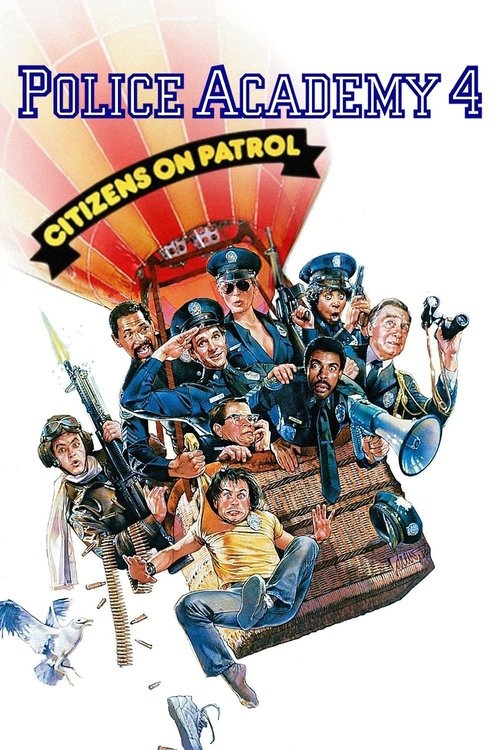
Police Academy 4: Citizens on Patrol
A new batch of recruits arrives at Police Academy, this time a group of civilian volunteers who have joined Commandant Lassard's new Citizens on Patrol program. Although the community relations project has strong governmental support, a disgusted Captain Harris is determined to see it fail.
Despite a respectable budget of $17.0M, Police Academy 4: Citizens on Patrol became a commercial success, earning $76.8M worldwide—a 352% return.


Plot Structure
Story beats plotted across runtime


Narrative Arc
Emotional journey through the story's key moments
Story Circle
Blueprint 15-beat structure
Arcplot Score Breakdown
Weighted: Precision (70%) + Arc (15%) + Theme (15%)
Police Academy 4: Citizens on Patrol (1987) reveals strategically placed plot construction, characteristic of Jim Drake's storytelling approach. This structural analysis examines how the film's 15-point plot structure maps to proven narrative frameworks across 1 hour and 28 minutes. With an Arcplot score of 7.7, the film showcases strong structural fundamentals.
Characters
Cast & narrative archetypes

Carey Mahoney
Larvell Jones
Moses Hightower
Eugene Tackleberry
Laverne Hooks
Zed McGlunk
Commandant Eric Lassard
Captain Thaddeus Harris
Lieutenant Proctor
Laura
Main Cast & Characters
Carey Mahoney
Played by Steve Guttenberg
Charismatic and mischievous police officer who helps train the Citizens on Patrol program, using wit and charm to overcome obstacles.
Larvell Jones
Played by Michael Winslow
Officer with an extraordinary ability to create realistic sound effects with his voice, providing comedic relief and unexpected tactical advantages.
Moses Hightower
Played by Bubba Smith
Gentle giant and former florist with incredible physical strength, serving as a loyal and reliable member of the police force.
Eugene Tackleberry
Played by David Graf
Gun-obsessed, hyper-vigilant officer who takes law enforcement extremely seriously and shows enthusiasm for any combat situation.
Laverne Hooks
Played by Marion Ramsey
Soft-spoken female officer with a timid demeanor who can unleash a powerful commanding voice when pushed to her limits.
Zed McGlunk
Played by Bobcat Goldthwait
Reformed gang leader turned police officer, bringing street smarts and an eccentric personality to the force.
Commandant Eric Lassard
Played by George Gaynes
Beloved but absent-minded police academy commandant who champions the Citizens on Patrol program despite opposition.
Captain Thaddeus Harris
Played by G.W. Bailey
Ambitious and scheming officer who opposes Lassard and constantly tries to sabotage the academy and its programs.
Lieutenant Proctor
Played by Lance Kinsey
Harris's dim-witted but loyal subordinate who blindly follows orders and often bungles their schemes.
Laura
Played by Sharon Stone
Newspaper reporter and love interest who initially investigates the Citizens on Patrol program and develops a romance with Mahoney.
Structural Analysis
The Status Quo at 1 minutes (1% through the runtime) establishes Commandant Lassard successfully leads the police academy while Captain Harris schemes to undermine him. The status quo shows the academy running smoothly despite Harris's jealousy.. Significantly, this early placement immediately immerses viewers in the story world.
The inciting incident occurs at 10 minutes when Lassard announces the new Citizens on Patrol (C.O.P.) program to involve civilians in community policing. This disrupts the normal academy operations and creates the central premise.. At 12% through the film, this Disruption aligns precisely with traditional story structure. This beat shifts the emotional landscape, launching the protagonist into the central conflict.
The First Threshold at 22 minutes marks the transition into Act II, occurring at 25% of the runtime. This reveals the protagonist's commitment to The C.O.P. Program officially launches with the first group of citizen trainees. Mahoney and his team commit to making the program succeed despite Harris's interference., moving from reaction to action.
At 44 minutes, the Midpoint arrives at 50% of the runtime—precisely centered, creating perfect narrative symmetry. Significantly, this crucial beat Harris executes a major sabotage scheme that makes the C.O.P. Program look incompetent. A botched operation causes public embarrassment and puts the program's future in jeopardy., fundamentally raising what's at risk. The emotional intensity shifts, dividing the narrative into clear before-and-after phases.
The Collapse moment at 66 minutes (75% through) represents the emotional nadir. Here, The program is officially suspended and Lassard faces losing his position. The citizens disband and the criminal element celebrates. This represents the death of the dream and community spirit., illustrates the protagonist at their lowest point. This beat's placement in the final quarter sets up the climactic reversal.
The Second Threshold at 70 minutes initiates the final act resolution at 80% of the runtime. News breaks of a major crime in progress requiring all available help. Mahoney realizes the trained citizens are needed and can prove themselves. The team reunites with renewed purpose., demonstrating the transformation achieved throughout the journey.
Emotional Journey
Police Academy 4: Citizens on Patrol's emotional architecture traces a deliberate progression across 15 carefully calibrated beats.
Narrative Framework
This structural analysis employs systematic plot point analysis that identifies crucial turning points. By mapping Police Academy 4: Citizens on Patrol against these established plot points, we can identify how Jim Drake utilizes or subverts traditional narrative conventions. The plot point approach reveals not only adherence to structural principles but also creative choices that distinguish Police Academy 4: Citizens on Patrol within the comedy genre.
Comparative Analysis
Additional comedy films include The Bad Guys, Ella Enchanted and The Evening Star.
Plot Points by Act
Act I
SetupStatus Quo
Commandant Lassard successfully leads the police academy while Captain Harris schemes to undermine him. The status quo shows the academy running smoothly despite Harris's jealousy.
Theme
Lassard discusses the value of community involvement in law enforcement, stating that ordinary citizens can make a difference. This establishes the theme of empowerment through participation.
Worldbuilding
Introduction to the police academy world, the main officers including Mahoney, Jones, Tackleberry, and Hightower. Captain Harris is established as the antagonist who wants Lassard's position. The city's crime problems are shown.
Disruption
Lassard announces the new Citizens on Patrol (C.O.P.) program to involve civilians in community policing. This disrupts the normal academy operations and creates the central premise.
Resistance
Preparation for the C.O.P. program begins. Mahoney and team debate how to train civilians. A diverse group of citizens volunteers, including an elderly couple and skateboarding teens. Harris plots to sabotage the program.
Act II
ConfrontationFirst Threshold
The C.O.P. program officially launches with the first group of citizen trainees. Mahoney and his team commit to making the program succeed despite Harris's interference.
Mirror World
The citizens begin their training, forming bonds with the officers. The relationship between professional officers and enthusiastic amateurs mirrors the theme of cooperation and mutual respect.
Premise
The fun of the C.O.P. program in action. Citizens learn police skills through comedic training montages. The team handles minor crimes and community issues. Harris's sabotage attempts create humorous complications.
Midpoint
Harris executes a major sabotage scheme that makes the C.O.P. program look incompetent. A botched operation causes public embarrassment and puts the program's future in jeopardy.
Opposition
Pressure mounts to shut down the program. Harris escalates his schemes while crime increases in the city. The citizens lose confidence and the officers struggle to maintain morale. A criminal gang takes advantage of the chaos.
Collapse
The program is officially suspended and Lassard faces losing his position. The citizens disband and the criminal element celebrates. This represents the death of the dream and community spirit.
Crisis
The team processes their failure. Mahoney and the officers reflect on what the program meant. The citizens express disappointment but also what they learned about courage and community.
Act III
ResolutionSecond Threshold
News breaks of a major crime in progress requiring all available help. Mahoney realizes the trained citizens are needed and can prove themselves. The team reunites with renewed purpose.
Synthesis
The finale operation where officers and citizens work together to stop the criminal gang. Everyone uses their unique skills taught during training. Harris's scheme is exposed. The C.O.P. program proves its worth through coordinated community action.
Transformation
The C.O.P. program is celebrated and expanded citywide. Lassard is honored and Harris is demoted. The final image shows officers and citizens working together as equals, transformed from skepticism to partnership.