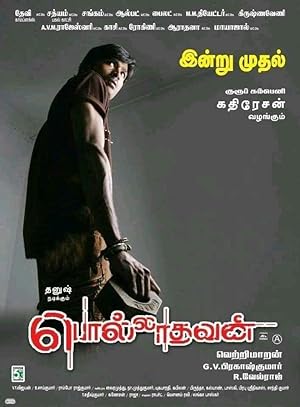
Polladhavan
A contemporary action drama revolving around a young man's love for his bike, including the trials and travails he is forced to undergo when it goes missing.
Despite its modest budget of $1.6M, Polladhavan became a financial success, earning $7.6M worldwide—a 375% return. The film's bold vision found its audience, proving that strong storytelling can transcend budget limitations.
Plot Structure
Story beats plotted across runtime


Narrative Arc
Emotional journey through the story's key moments
Story Circle
Blueprint 15-beat structure
Arcplot Score Breakdown
Weighted: Precision (70%) + Arc (15%) + Theme (15%)
Polladhavan (2007) reveals carefully calibrated narrative design, characteristic of Vetrimaaran's storytelling approach. This structural analysis examines how the film's 15-point plot structure maps to proven narrative frameworks across 2 hours and 30 minutes. With an Arcplot score of 7.4, the film balances conventional beats with creative variation.
Structural Analysis
The Status Quo at 2 minutes (1% through the runtime) establishes Prabhu is introduced as an aimless young man living in North Chennai, unemployed and spending his days hanging out with friends. His father constantly criticizes him for his lack of direction and responsibility.. Of particular interest, this early placement immediately immerses viewers in the story world.
The inciting incident occurs at 18 minutes when Prabhu's father finally relents and buys him a Yamaha RX100 motorcycle with borrowed money. This is a moment of joy and validation for Prabhu, giving him a sense of identity and pride. The bike becomes an extension of his personality.. At 12% through the film, this Disruption aligns precisely with traditional story structure. This beat shifts the emotional landscape, launching the protagonist into the central conflict.
The First Threshold at 38 minutes marks the transition into Act II, occurring at 26% of the runtime. This indicates the protagonist's commitment to Prabhu's motorcycle is stolen while he's at a party. Despite warnings from friends about the area, he chose to park carelessly. This devastating loss forces him to make a choice: accept the loss or enter the dangerous criminal underworld to find it., moving from reaction to action.
At 76 minutes, the Midpoint arrives at 50% of the runtime—precisely centered, creating perfect narrative symmetry. Significantly, this crucial beat Prabhu discovers that his bike is connected to Selvam's gang, a powerful crime syndicate. He learns that retrieving it won't be simple theft recovery but will put him in direct conflict with dangerous criminals. The stakes escalate from personal loss to life-threatening danger., fundamentally raising what's at risk. The emotional intensity shifts, dividing the narrative into clear before-and-after phases.
The Collapse moment at 113 minutes (75% through) represents the emotional nadir. Here, Selvam's gang brutally attacks Prabhu's close friend, leaving him severely injured. Prabhu realizes his obsession with the motorcycle has brought violence to innocent people he cares about. He faces the devastating cost of his quest and questions whether the bike is worth the destruction it's caused., reveals the protagonist at their lowest point. This beat's placement in the final quarter sets up the climactic reversal.
The Second Threshold at 120 minutes initiates the final act resolution at 80% of the runtime. Prabhu realizes this is no longer about the motorcycle—it's about standing up to the criminal forces terrorizing his neighborhood and protecting his loved ones. He chooses to confront Selvam not for revenge but to end the cycle of violence and reclaim his dignity and self-worth., demonstrating the transformation achieved throughout the journey.
Emotional Journey
Polladhavan's emotional architecture traces a deliberate progression across 15 carefully calibrated beats.
Narrative Framework
This structural analysis employs systematic plot point analysis that identifies crucial turning points. By mapping Polladhavan against these established plot points, we can identify how Vetrimaaran utilizes or subverts traditional narrative conventions. The plot point approach reveals not only adherence to structural principles but also creative choices that distinguish Polladhavan within the action genre.
Comparative Analysis
Additional action films include The Ministry of Ungentlemanly Warfare, The Bad Guys and Lake Placid.
Plot Points by Act
Act I
SetupStatus Quo
Prabhu is introduced as an aimless young man living in North Chennai, unemployed and spending his days hanging out with friends. His father constantly criticizes him for his lack of direction and responsibility.
Theme
Prabhu's father berates him about the importance of hard work and earning respect through honest means, suggesting that without purpose and effort, a man is nothing. This establishes the film's theme of finding identity and self-worth.
Worldbuilding
We see Prabhu's daily life: his strained relationship with his disapproving father, his close friendship with his gang, the rough neighborhood of North Chennai, and his dream of owning a motorcycle. His world is established as one of economic struggle and limited opportunities.
Disruption
Prabhu's father finally relents and buys him a Yamaha RX100 motorcycle with borrowed money. This is a moment of joy and validation for Prabhu, giving him a sense of identity and pride. The bike becomes an extension of his personality.
Resistance
Prabhu bonds with his motorcycle, using it to court Hema, a girl he falls for. He begins to gain confidence and purpose through the bike. His friends warn him about the dangers of the neighborhood and keeping the bike safe, but he's too happy to worry.
Act II
ConfrontationFirst Threshold
Prabhu's motorcycle is stolen while he's at a party. Despite warnings from friends about the area, he chose to park carelessly. This devastating loss forces him to make a choice: accept the loss or enter the dangerous criminal underworld to find it.
Mirror World
Prabhu begins searching the underworld for his bike and encounters Kumar, a small-time criminal who becomes an unlikely guide. Through Kumar, Prabhu learns about the bike theft network and realizes the harsh realities of the criminal world he must navigate.
Premise
Prabhu dives deeper into the criminal underworld, tracking leads about his stolen bike. He navigates dangerous encounters with thieves, learns the network of stolen vehicle trade, and discovers connections to local gang lord Selvam. His obsession grows as he gets closer to finding his motorcycle.
Midpoint
Prabhu discovers that his bike is connected to Selvam's gang, a powerful crime syndicate. He learns that retrieving it won't be simple theft recovery but will put him in direct conflict with dangerous criminals. The stakes escalate from personal loss to life-threatening danger.
Opposition
Selvam's gang becomes aware of Prabhu's investigation and begins threatening him and his family. Prabhu's relationship with Hema suffers as she learns about his dangerous pursuit. His friends are caught in the crossfire, and the gang's pressure intensifies, making his quest increasingly costly.
Collapse
Selvam's gang brutally attacks Prabhu's close friend, leaving him severely injured. Prabhu realizes his obsession with the motorcycle has brought violence to innocent people he cares about. He faces the devastating cost of his quest and questions whether the bike is worth the destruction it's caused.
Crisis
Prabhu suffers in guilt and despair, confronting the consequences of his actions. His father's earlier words about earning respect through honest means haunt him. He must decide whether to retreat and accept defeat or find the courage to confront Selvam despite the personal cost.
Act III
ResolutionSecond Threshold
Prabhu realizes this is no longer about the motorcycle—it's about standing up to the criminal forces terrorizing his neighborhood and protecting his loved ones. He chooses to confront Selvam not for revenge but to end the cycle of violence and reclaim his dignity and self-worth.
Synthesis
Prabhu rallies his friends and confronts Selvam's gang in a intense final battle. Using his knowledge of the neighborhood and the courage he's developed through his journey, he fights not as a boy seeking a bike but as a man defending his community. The confrontation is brutal but decisive.
Transformation
Prabhu stands victorious but changed. He has found the self-worth and purpose his father spoke of, not through possessing a motorcycle but through courage and sacrifice. He's transformed from an aimless youth into a responsible man who earned respect through his actions.