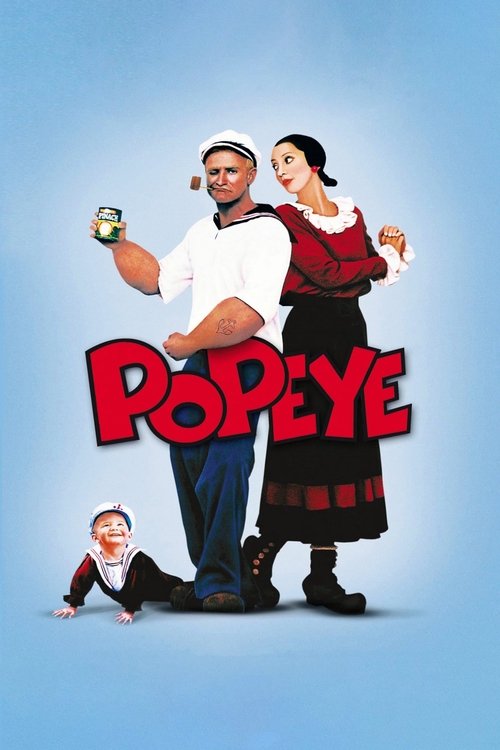
Popeye
Popeye is a super-strong, spinach-scarfing sailor man who's searching for his father. During a storm that wrecks his ship, Popeye washes ashore and winds up rooming at the Oyl household, where he meets Olive. Before he can win her heart, he must first contend with Olive's fiancé, Bluto.
Despite a moderate budget of $20.0M, Popeye became a box office success, earning $49.8M worldwide—a 149% return.
3 wins & 4 nominations


Plot Structure
Story beats plotted across runtime


Narrative Arc
Emotional journey through the story's key moments
Story Circle
Blueprint 15-beat structure
Arcplot Score Breakdown
Weighted: Precision (70%) + Arc (15%) + Theme (15%)
Popeye (1980) demonstrates deliberately positioned story structure, characteristic of Robert Altman's storytelling approach. This structural analysis examines how the film's 15-point plot structure maps to proven narrative frameworks across 1 hour and 54 minutes. With an Arcplot score of 6.7, the film balances conventional beats with creative variation.
Characters
Cast & narrative archetypes

Popeye
Olive Oyl
Bluto
Swee'Pea
Wimpy
Poopdeck Pappy
The Commodore
Main Cast & Characters
Popeye
Played by Robin Williams
A squinting, mumbling sailor who arrives in Sweethaven searching for his long-lost father while discovering his strength comes from spinach and his heart belongs to Olive Oyl.
Olive Oyl
Played by Shelley Duvall
A tall, gangly woman engaged to Bluto who falls for the newcomer Popeye and becomes surrogate mother to the abandoned baby Swee'Pea.
Bluto
Played by Paul L. Smith
The brutish, bearded captain who terrorizes Sweethaven, serves the Commodore, and violently pursues Olive Oyl as his intended bride.
Swee'Pea
Played by Wesley Ivan Hurt
An abandoned infant with the mysterious ability to predict the future, becoming the surrogate child of Popeye and Olive.
Wimpy
Played by Paul Dooley
A rotund, mild-mannered hamburger-obsessed man who befriends Popeye and provides comic relief with his endless pursuit of free meals.
Poopdeck Pappy
Played by Ray Walston
Popeye's cantankerous, long-lost father who abandoned him as a child and now lives as a hermit, initially refusing to acknowledge his son.
The Commodore
Played by Ray Walston
The mysterious, unseen ruler of Sweethaven who taxes everything and everyone, revealed to be Poopdeck Pappy operating through Bluto.
Structural Analysis
The Status Quo at 1 minutes (1% through the runtime) establishes Popeye arrives by boat at Sweethaven, a stranger muttering about searching for his long-lost father, Poopdeck Pappy. He is a solitary wanderer defined by his quest.. Structural examination shows that this early placement immediately immerses viewers in the story world.
The inciting incident occurs at 14 minutes when Baby Swee'Pea is left on the Oyls' doorstep with a note. This unexpected arrival disrupts the household and particularly affects Olive, who is supposed to marry Bluto but becomes attached to the baby.. At 13% through the film, this Disruption is delayed, allowing extended setup of the story world. This beat shifts the emotional landscape, launching the protagonist into the central conflict.
The First Threshold at 29 minutes marks the transition into Act II, occurring at 25% of the runtime. This reveals the protagonist's commitment to Popeye actively chooses to protect Swee'Pea and Olive from Bluto's aggression, standing up to the bully at the engagement party. This decision commits him to staying in Sweethaven and entering a new world of relationships and responsibility., moving from reaction to action.
At 57 minutes, the Midpoint arrives at 50% of the runtime—precisely centered, creating perfect narrative symmetry. Structural examination shows that this crucial beat The Commodore (revealed as Poopdeck Pappy's captor) learns of Swee'Pea's powers and demands the baby be brought to him. The stakes raise dramatically—Popeye's quest for his father collides with the threat to his new family. False defeat: finding his father seems further away., fundamentally raising what's at risk. The emotional intensity shifts, dividing the narrative into clear before-and-after phases.
The Collapse moment at 86 minutes (75% through) represents the emotional nadir. Here, Popeye is captured and faces the Commodore, who is revealed to be his father, Poopdeck Pappy. However, Pappy rejects him, showing no paternal love. Popeye's lifelong quest ends in emotional death—his father doesn't want him. Swee'Pea remains in danger., shows the protagonist at their lowest point. This beat's placement in the final quarter sets up the climactic reversal.
The Second Threshold at 91 minutes initiates the final act resolution at 80% of the runtime. Popeye eats his spinach and gains extraordinary strength. More importantly, he synthesizes his realization: family isn't about blood or finding his father—it's about those who love you. He chooses to fight for Olive and Swee'Pea, his true family., demonstrating the transformation achieved throughout the journey.
Emotional Journey
Popeye's emotional architecture traces a deliberate progression across 15 carefully calibrated beats.
Narrative Framework
This structural analysis employs structural analysis methodology used to understand storytelling architecture. By mapping Popeye against these established plot points, we can identify how Robert Altman utilizes or subverts traditional narrative conventions. The plot point approach reveals not only adherence to structural principles but also creative choices that distinguish Popeye within the action genre.
Robert Altman's Structural Approach
Among the 10 Robert Altman films analyzed on Arcplot, the average structural score is 6.9, demonstrating varied approaches to story architecture. Popeye takes a more unconventional approach compared to the director's typical style. For comparative analysis, explore the complete Robert Altman filmography.
Comparative Analysis
Additional action films include The Bad Guys, Puss in Boots and Venom: The Last Dance. For more Robert Altman analyses, see Cookie's Fortune, Dr. T & the Women and Nashville.
Plot Points by Act
Act I
SetupStatus Quo
Popeye arrives by boat at Sweethaven, a stranger muttering about searching for his long-lost father, Poopdeck Pappy. He is a solitary wanderer defined by his quest.
Theme
Wimpy states, "I would gladly pay you Tuesday for a hamburger today," establishing the film's theme about authenticity versus deception, and keeping one's word in a world of broken promises.
Worldbuilding
Introduction to Sweethaven's oppressive world under the Commodore's taxation system. Popeye rents a room from the Oyl family, meets Olive Oyl (engaged to Bluto), and navigates the town's bizarre rules and corrupt power structure.
Disruption
Baby Swee'Pea is left on the Oyls' doorstep with a note. This unexpected arrival disrupts the household and particularly affects Olive, who is supposed to marry Bluto but becomes attached to the baby.
Resistance
Popeye reluctantly becomes involved with Olive and Swee'Pea. He resists emotional connection, focused on finding his father. Olive questions her engagement to Bluto. The community debates the baby's fate while Popeye debates his own involvement.
Act II
ConfrontationFirst Threshold
Popeye actively chooses to protect Swee'Pea and Olive from Bluto's aggression, standing up to the bully at the engagement party. This decision commits him to staying in Sweethaven and entering a new world of relationships and responsibility.
Mirror World
Popeye, Olive, and Swee'Pea form an unconventional family unit. Their relationship becomes the emotional core that teaches Popeye about love, belonging, and finding family in unexpected places—mirroring his search for his father.
Premise
The "fun and games" of Popeye adapting to family life, his boxing match, discovering Swee'Pea's fortune-telling ability, and navigating life in Sweethaven with Olive. The promise of a Popeye musical comedy with quirky characters and physical humor.
Midpoint
The Commodore (revealed as Poopdeck Pappy's captor) learns of Swee'Pea's powers and demands the baby be brought to him. The stakes raise dramatically—Popeye's quest for his father collides with the threat to his new family. False defeat: finding his father seems further away.
Opposition
Bluto and the Commodore's forces close in. Swee'Pea is kidnapped to exploit his powers for treasure hunting. Popeye and Olive's relationship is tested. The Commodore's greed intensifies, and Popeye must pursue them by sea, facing escalating dangers.
Collapse
Popeye is captured and faces the Commodore, who is revealed to be his father, Poopdeck Pappy. However, Pappy rejects him, showing no paternal love. Popeye's lifelong quest ends in emotional death—his father doesn't want him. Swee'Pea remains in danger.
Crisis
Popeye processes the devastating rejection from his father while Swee'Pea is still threatened. He faces his dark night: the family he was born into doesn't want him, and the family he's chosen is being torn apart. He must find strength from within.
Act III
ResolutionSecond Threshold
Popeye eats his spinach and gains extraordinary strength. More importantly, he synthesizes his realization: family isn't about blood or finding his father—it's about those who love you. He chooses to fight for Olive and Swee'Pea, his true family.
Synthesis
Powered by spinach and love, Popeye battles Bluto in an epic fight, rescues Swee'Pea, defeats the Commodore's plans, and saves everyone. He reconciles with Pappy on his own terms, liberates Sweethaven from taxation, and unites his chosen family.
Transformation
Popeye sails off with Olive and Swee'Pea as a family, no longer a lonely wanderer searching for his father. He has transformed from someone seeking belonging to someone who creates it. He found what he was looking for by accepting what he had.