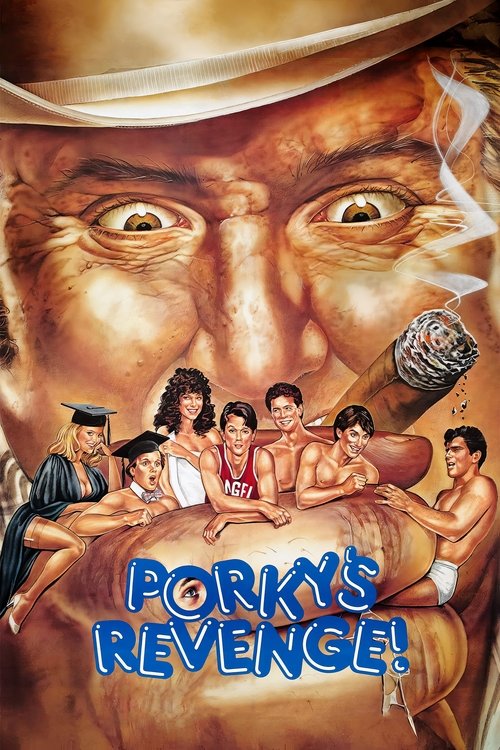
Porky's Revenge
As graduation nears for the class of 1955 at Angel Beach High, the gang once again faces off against their old enemy, Porky, who wants them to throw the school's championship basketball game since he has bet on the opposing team.
Despite its small-scale budget of $9.0M, Porky's Revenge became a solid performer, earning $20.5M worldwide—a 128% return.
1 nomination
Plot Structure
Story beats plotted across runtime


Narrative Arc
Emotional journey through the story's key moments
Story Circle
Blueprint 15-beat structure
Arcplot Score Breakdown
Weighted: Precision (70%) + Arc (15%) + Theme (15%)
Porky's Revenge (1985) showcases deliberately positioned dramatic framework, characteristic of James Komack's storytelling approach. This structural analysis examines how the film's 15-point plot structure maps to proven narrative frameworks across 1 hour and 32 minutes. With an Arcplot score of 7.9, the film showcases strong structural fundamentals.
Structural Analysis
The Status Quo at 1 minutes (1% through the runtime) establishes The Angel Beach High School gang enjoys their senior year, with the basketball team preparing for the crucial championship game. Pee Wee, Meat, and the crew are in their familiar world of pranks and adolescent adventures.. Significantly, this early placement immediately immerses viewers in the story world.
The inciting incident occurs at 12 minutes when Porky returns with a revenge scheme to sabotage the basketball team and ruin their championship chances. He targets key players, particularly those who humiliated him in the previous films, threatening their ability to play in the big game.. At 13% through the film, this Disruption is delayed, allowing extended setup of the story world. This beat shifts the emotional landscape, launching the protagonist into the central conflict.
The First Threshold at 24 minutes marks the transition into Act II, occurring at 26% of the runtime. This illustrates the protagonist's commitment to The team makes an active choice to not let Porky intimidate them. They commit to both winning the championship and taking Porky down once and for all. They enter the world of their final confrontation with their old nemesis., moving from reaction to action.
At 47 minutes, the Midpoint arrives at 51% of the runtime—precisely centered, creating perfect narrative symmetry. The analysis reveals that this crucial beat False defeat: Porky's scheme succeeds in getting one or more key players suspended or otherwise unable to play. The championship seems impossible to win. What looked like manageable opposition now seems insurmountable. Stakes are raised—this is serious now., fundamentally raising what's at risk. The emotional intensity shifts, dividing the narrative into clear before-and-after phases.
The Collapse moment at 69 minutes (75% through) represents the emotional nadir. Here, All is lost: The team faces their darkest moment—either falling behind badly in the championship game, or it seems certain they'll lose both the game and their final chance at defeating Porky. A metaphorical death of their high school dreams and identity., illustrates the protagonist at their lowest point. This beat's placement in the final quarter sets up the climactic reversal.
The Second Threshold at 73 minutes initiates the final act resolution at 79% of the runtime. New information or realization gives them hope. The gang discovers evidence of Porky's cheating/sabotage, or they find inner resolve by remembering what they learned about friendship and teamwork. They synthesize their growth with their original spirit to make one final push., demonstrating the transformation achieved throughout the journey.
Emotional Journey
Porky's Revenge's emotional architecture traces a deliberate progression across 15 carefully calibrated beats.
Narrative Framework
This structural analysis employs proven narrative structure principles that track dramatic progression. By mapping Porky's Revenge against these established plot points, we can identify how James Komack utilizes or subverts traditional narrative conventions. The plot point approach reveals not only adherence to structural principles but also creative choices that distinguish Porky's Revenge within the comedy genre.
Comparative Analysis
Additional comedy films include The Bad Guys, Ella Enchanted and The Evening Star.
Plot Points by Act
Act I
SetupStatus Quo
The Angel Beach High School gang enjoys their senior year, with the basketball team preparing for the crucial championship game. Pee Wee, Meat, and the crew are in their familiar world of pranks and adolescent adventures.
Theme
Coach Goodenough or another mentor figure emphasizes that this final game is about more than basketball—it's about proving who they've become and leaving a legacy. The theme of maturation and final revenge is established.
Worldbuilding
Introduction to the senior year dynamics: the basketball team's importance, ongoing sexual escapades, relationship with Wendy and other girls, the school environment, and the stakes of the upcoming championship game. We see who these characters are before everything changes.
Disruption
Porky returns with a revenge scheme to sabotage the basketball team and ruin their championship chances. He targets key players, particularly those who humiliated him in the previous films, threatening their ability to play in the big game.
Resistance
The gang debates how to handle Porky's threats while maintaining focus on the championship. Coach Goodenough and others provide guidance. The boys struggle between their desire for revenge and their need to stay focused on basketball and graduating.
Act II
ConfrontationFirst Threshold
The team makes an active choice to not let Porky intimidate them. They commit to both winning the championship and taking Porky down once and for all. They enter the world of their final confrontation with their old nemesis.
Mirror World
Pee Wee's relationship with Wendy deepens, representing the transition from adolescent lust to genuine connection. This subplot carries the theme of growing up and leaving childish things behind as graduation approaches.
Premise
The fun of the premise: basketball preparation montages, pranks and counter-pranks with Porky, sexual misadventures, and the gang enjoying their final days of high school while navigating Porky's sabotage attempts. The audience gets what they came for—raunchy comedy and underdog sports action.
Midpoint
False defeat: Porky's scheme succeeds in getting one or more key players suspended or otherwise unable to play. The championship seems impossible to win. What looked like manageable opposition now seems insurmountable. Stakes are raised—this is serious now.
Opposition
Porky tightens his grip with further sabotage. Internal conflicts emerge—players blame each other, relationships strain, doubt creeps in. The team struggles to stay together while finding a way to both compete in the championship and expose Porky's schemes.
Collapse
All is lost: The team faces their darkest moment—either falling behind badly in the championship game, or it seems certain they'll lose both the game and their final chance at defeating Porky. A metaphorical death of their high school dreams and identity.
Crisis
The dark night of the soul. The gang processes what it means to lose—not just the game, but their dignity and final chance to stand up to Porky. They reflect on their journey together and what they've learned throughout high school.
Act III
ResolutionSecond Threshold
New information or realization gives them hope. The gang discovers evidence of Porky's cheating/sabotage, or they find inner resolve by remembering what they learned about friendship and teamwork. They synthesize their growth with their original spirit to make one final push.
Synthesis
The finale: The team executes their plan to win the championship while simultaneously exposing and defeating Porky's revenge scheme. They work together using everything they've learned, combining their juvenile creativity with newfound maturity to triumph on both fronts.
Transformation
The closing image mirrors the opening but shows transformation: The gang celebrates victory, but there's a bittersweet acknowledgment that high school is ending. They've grown from crude pranksters into young men ready for the next chapter, having defeated their demons and won their final battle.