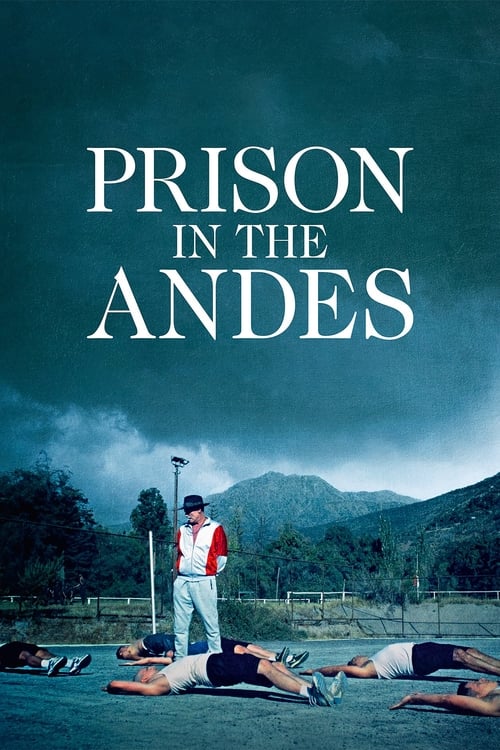
Prison in the Andes
Plot Structure
Story beats plotted across runtime


Narrative Arc
Emotional journey through the story's key moments
Story Circle
Blueprint 15-beat structure
Characters
Cast & narrative archetypes

Mateo
El Comandante
Rosa
Pablo
Father Domingo
Serpiente
Lucia
Miguel
Main Cast & Characters
Mateo
Played by Diego Luna
A wrongfully imprisoned journalist who maintains his integrity while navigating the brutal Andean prison system.
El Comandante
Played by Joaquín Cosío
The ruthless prison warden who rules through fear and corruption, profiting from the inmates' suffering.
Rosa
Played by Eiza González
Mateo's determined wife who fights tirelessly from the outside to prove his innocence and secure his release.
Pablo
Played by Tenoch Huerta
A hardened long-term inmate who becomes Mateo's protector and teaches him how to survive the prison's dangers.
Father Domingo
Played by Damián Alcázar
An aging priest who ministers to the prisoners and provides Mateo with spiritual guidance and hope.
Serpiente
Played by José María Yazpik
A violent gang leader within the prison who sees Mateo as a threat to his power structure.
Lucia
Played by Yalitza Aparicio
A human rights lawyer who takes on Mateo's case and uncovers the conspiracy behind his imprisonment.
Miguel
Played by Gael García Bernal
Mateo's former colleague who betrayed him and whose testimony led to his wrongful conviction.
Structural Analysis
The Status Quo at 1 minutes (1% through the runtime) establishes [Requires film access to determine opening image and protagonist's ordinary world].. Significantly, this early placement immediately immerses viewers in the story world.
The inciting incident occurs at 12 minutes when [Requires film access to identify catalyst event].. At 12% through the film, this Disruption aligns precisely with traditional story structure. This beat shifts the emotional landscape, launching the protagonist into the central conflict.
The First Threshold at 26 minutes marks the transition into Act II, occurring at 25% of the runtime. This demonstrates the protagonist's commitment to [Requires film access to identify protagonist's active choice to enter new world]., moving from reaction to action.
At 52 minutes, the Midpoint arrives at 50% of the runtime—precisely centered, creating perfect narrative symmetry. Structural examination shows that this crucial beat [Requires film access to identify midpoint shift]., fundamentally raising what's at risk. The emotional intensity shifts, dividing the narrative into clear before-and-after phases.
The Collapse moment at 78 minutes (75% through) represents the emotional nadir. Here, [Requires film access to identify all-is-lost moment]., shows the protagonist at their lowest point. This beat's placement in the final quarter sets up the climactic reversal.
The Second Threshold at 83 minutes initiates the final act resolution at 80% of the runtime. [Requires film access to identify breakthrough moment]., demonstrating the transformation achieved throughout the journey.
Emotional Journey
Prison in the Andes's emotional architecture traces a deliberate progression across 15 carefully calibrated beats.
Narrative Framework
This structural analysis employs proven narrative structure principles that track dramatic progression. By mapping Prison in the Andes against these established plot points, we can identify how Felipe Carmona utilizes or subverts traditional narrative conventions. The plot point approach reveals not only adherence to structural principles but also creative choices that distinguish Prison in the Andes within its genre.
Plot Points by Act
Act I
SetupStatus Quo
[Requires film access to determine opening image and protagonist's ordinary world]
Theme
[Requires film access to identify thematic statement]
Worldbuilding
[Requires film access to analyze setup period]
Disruption
[Requires film access to identify catalyst event]
Resistance
[Requires film access to analyze debate period]
Act II
ConfrontationFirst Threshold
[Requires film access to identify protagonist's active choice to enter new world]
Mirror World
[Requires film access to identify B-story character/relationship]
Premise
[Requires film access to analyze premise exploration]
Midpoint
[Requires film access to identify midpoint shift]
Opposition
[Requires film access to analyze rising opposition]
Collapse
[Requires film access to identify all-is-lost moment]
Crisis
[Requires film access to analyze dark night period]
Act III
ResolutionSecond Threshold
[Requires film access to identify breakthrough moment]
Synthesis
[Requires film access to analyze finale sequence]
Transformation
[Requires film access to identify closing image]