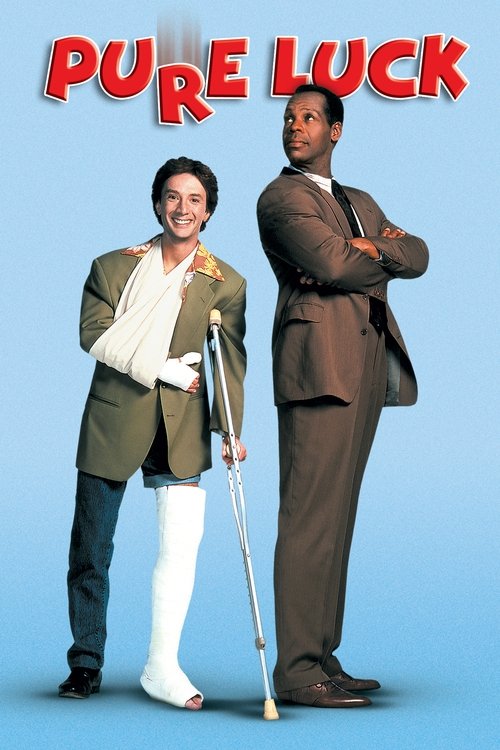
Pure Luck
The daughter of a wealthy businessman has disappeared in Mexico, and all the efforts to find her have been unsuccessful. A psychologist, knowing that the girl has an ultra bad luck, persuades her father to send to Mexico one of his employees, an accountant with super bad luck, to find her. Perhaps he will be lucky, and his bad luck could help to find the unlucky girl.
Working with a moderate budget of $17.0M, the film achieved a steady performer with $24.9M in global revenue (+47% profit margin).


Plot Structure
Story beats plotted across runtime


Narrative Arc
Emotional journey through the story's key moments
Story Circle
Blueprint 15-beat structure
Arcplot Score Breakdown
Weighted: Precision (70%) + Arc (15%) + Theme (15%)
Pure Luck (1991) demonstrates carefully calibrated narrative architecture, characteristic of Nadia Tass's storytelling approach. This structural analysis examines how the film's 15-point plot structure maps to proven narrative frameworks across 1 hour and 36 minutes. With an Arcplot score of 7.4, the film balances conventional beats with creative variation.
Characters
Cast & narrative archetypes

Eugene Proctor
Raymond Campanella
Valerie Highsmith
Monosoff
Main Cast & Characters
Eugene Proctor
Played by Martin Short
An extraordinarily unlucky accountant assigned to find a missing heiress due to his matching bad luck pattern.
Raymond Campanella
Played by Danny Glover
A meticulous, by-the-book detective forced to partner with the disaster-prone Eugene on the case.
Valerie Highsmith
Played by Sheila Kelley
The missing heiress with equally catastrophic bad luck who has disappeared in Mexico.
Monosoff
Played by Scott Wilson
A bumbling criminal who becomes involved in the kidnapping scheme.
Structural Analysis
The Status Quo at 1 minutes (1% through the runtime) establishes Eugene Proctor, an extraordinarily unlucky accountant, accidentally destroys his office during a simple task, demonstrating his catastrophic incompetence and bad luck that defines his miserable existence.. Structural examination shows that this early placement immediately immerses viewers in the story world.
The inciting incident occurs at 12 minutes when Highsmith summons the bewildered Eugene to his office and orders him to go to Mexico to find his missing daughter, despite Eugene's complete lack of detective skills or qualifications.. At 13% through the film, this Disruption is delayed, allowing extended setup of the story world. This beat shifts the emotional landscape, launching the protagonist into the central conflict.
The First Threshold at 24 minutes marks the transition into Act II, occurring at 25% of the runtime. This shows the protagonist's commitment to Eugene and Campanella begin actively investigating in Mexico, following Valerie's trail. Eugene's bad luck immediately kicks in as disasters plague every step, but they commit to the search in earnest., moving from reaction to action.
At 48 minutes, the Midpoint arrives at 50% of the runtime—precisely centered, creating perfect narrative symmetry. Significantly, this crucial beat Eugene and Campanella find Valerie, successfully locating her after following the trail of chaos. However, she's been kidnapped by criminals who want ransom, raising the stakes from a simple missing person case to a dangerous rescue mission., fundamentally raising what's at risk. The emotional intensity shifts, dividing the narrative into clear before-and-after phases.
The Collapse moment at 72 minutes (75% through) represents the emotional nadir. Here, The rescue attempt fails catastrophically. Eugene and Campanella are captured by the kidnappers, and all seems lost. They're now prisoners alongside Valerie with no apparent way out and no rescue coming., indicates the protagonist at their lowest point. This beat's placement in the final quarter sets up the climactic reversal.
The Second Threshold at 77 minutes initiates the final act resolution at 80% of the runtime. Eugene realizes that their combined bad luck can be weaponized against the kidnappers. He chooses to embrace his catastrophic nature rather than fight it, forming a plan with Valerie to turn their curse into their salvation., demonstrating the transformation achieved throughout the journey.
Emotional Journey
Pure Luck's emotional architecture traces a deliberate progression across 15 carefully calibrated beats.
Narrative Framework
This structural analysis employs proven narrative structure principles that track dramatic progression. By mapping Pure Luck against these established plot points, we can identify how Nadia Tass utilizes or subverts traditional narrative conventions. The plot point approach reveals not only adherence to structural principles but also creative choices that distinguish Pure Luck within the comedy genre.
Comparative Analysis
Additional comedy films include The Bad Guys, Ella Enchanted and The Evening Star.
Plot Points by Act
Act I
SetupStatus Quo
Eugene Proctor, an extraordinarily unlucky accountant, accidentally destroys his office during a simple task, demonstrating his catastrophic incompetence and bad luck that defines his miserable existence.
Theme
Raymond Campanella tells Highsmith that finding Valerie requires someone who thinks like her - "It takes bad luck to find bad luck" - establishing the film's central theme about matching complementary forces.
Worldbuilding
We meet Eugene Proctor, the unluckiest man alive, working at Highsmith Industries. Simultaneously, Valerie Highsmith, equally accident-prone, disappears in Mexico. Campanella convinces her father that only someone as unlucky as Eugene can track down the equally unlucky Valerie.
Disruption
Highsmith summons the bewildered Eugene to his office and orders him to go to Mexico to find his missing daughter, despite Eugene's complete lack of detective skills or qualifications.
Resistance
Eugene reluctantly prepares for the mission with Campanella's guidance. They travel to Mexico where Campanella explains the investigation. Eugene resists, feeling completely out of his depth, but has no choice but to follow orders.
Act II
ConfrontationFirst Threshold
Eugene and Campanella begin actively investigating in Mexico, following Valerie's trail. Eugene's bad luck immediately kicks in as disasters plague every step, but they commit to the search in earnest.
Mirror World
Eugene discovers evidence of Valerie's presence through a series of accidents and mishaps that mirror his own bad luck, creating an unconscious connection between the two accident-prone souls he's never met.
Premise
Eugene's spectacular bad luck becomes the detective method - every disaster, injury, and mishap leads them closer to Valerie. The comedy escalates as Eugene and Campanella survive increasingly absurd accidents that trace Valerie's equally catastrophic path through Mexico.
Midpoint
Eugene and Campanella find Valerie, successfully locating her after following the trail of chaos. However, she's been kidnapped by criminals who want ransom, raising the stakes from a simple missing person case to a dangerous rescue mission.
Opposition
The kidnappers tighten their grip while demanding ransom. Eugene and Campanella's attempts to rescue Valerie are thwarted by both the criminals and their own continued bad luck. The situation becomes increasingly dangerous as the antagonists prove formidable.
Collapse
The rescue attempt fails catastrophically. Eugene and Campanella are captured by the kidnappers, and all seems lost. They're now prisoners alongside Valerie with no apparent way out and no rescue coming.
Crisis
Eugene hits rock bottom, believing he's failed completely. In captivity, he faces his deepest fears and inadequacies. However, he begins to understand that his bad luck, when combined with Valerie's, might be their greatest asset.
Act III
ResolutionSecond Threshold
Eugene realizes that their combined bad luck can be weaponized against the kidnappers. He chooses to embrace his catastrophic nature rather than fight it, forming a plan with Valerie to turn their curse into their salvation.
Synthesis
Eugene and Valerie execute their escape, their combined bad luck creating a cascade of disasters that overwhelm the kidnappers. Every accident works in their favor as they turn the tables. The finale is a spectacular chain reaction of mishaps that defeats the villains and frees them.
Transformation
Eugene returns triumphant, having saved Valerie and discovered that his bad luck, when accepted and understood, can be a gift. He's transformed from a pathetic victim of circumstance into someone who owns his unique nature, finding connection with a kindred spirit.