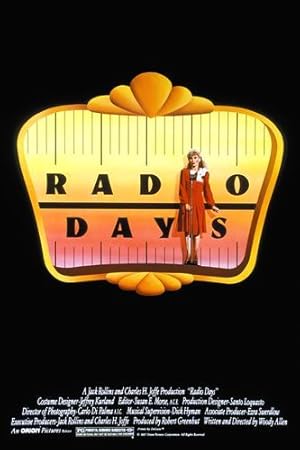
Radio Days
Woody Allen's sentimental reminiscence about the golden age of radio. A series of vignettes involving radio personalities is intertwined with the life of a working class family in Rockaway Beach, NY circa 1942.
The film disappointed at the box office against its mid-range budget of $16.0M, earning $14.8M globally (-8% loss).
Nominated for 2 Oscars. 3 wins & 10 nominations


Plot Structure
Story beats plotted across runtime


Narrative Arc
Emotional journey through the story's key moments
Story Circle
Blueprint 15-beat structure
Arcplot Score Breakdown
Weighted: Precision (70%) + Arc (15%) + Theme (15%)
Radio Days (1987) demonstrates meticulously timed dramatic framework, characteristic of Woody Allen's storytelling approach. This structural analysis examines how the film's 15-point plot structure maps to proven narrative frameworks across 1 hour and 29 minutes. With an Arcplot score of 7.3, the film balances conventional beats with creative variation.
Characters
Cast & narrative archetypes

Joe (Narrator)
Young Joe
Sally White
Mother
Father
Aunt Bea
Roger
Masked Avenger
Main Cast & Characters
Joe (Narrator)
Played by Woody Allen
The nostalgic narrator reflecting on his childhood in 1940s Rockaway Beach, recounting his family's obsession with radio.
Young Joe
Played by Seth Green
The curious, imaginative child experiencing the golden age of radio alongside his colorful extended family.
Sally White
Played by Mia Farrow
An aspiring radio star with a thick Brooklyn accent who transforms herself to achieve glamour and fame.
Mother
Played by Julie Kavner
Joe's sensible, long-suffering mother who manages the chaotic household while listening to radio serials.
Father
Played by Michael Tucker
Joe's hardworking father who delivers fish and dreams of the jewels hidden in a radio giveaway.
Aunt Bea
Played by Dianne Wiest
Joe's spinster aunt desperately seeking love through radio matchmaking and wishful thinking.
Roger
Played by Danny Aiello
Sally's smooth-talking, married lover and radio producer who keeps her as his mistress.
Masked Avenger
Played by Wallace Shawn
The heroic radio show host who becomes young Joe's idol and inspiration.
Structural Analysis
The Status Quo at 1 minutes (1% through the runtime) establishes Opening montage of 1940s radio broadcasts and families listening at home, establishing the golden age when radio was the center of American life. Narrator (adult Joe) introduces the world: "I never forgot that New Year's Eve when Aunt Bea awakened me to watch 1944 come in.".. Of particular interest, this early placement immediately immerses viewers in the story world.
The inciting incident occurs at 10 minutes when The structure disrupts traditional catalyst expectations: rather than a single inciting incident, the film presents the ongoing "disruption" of radio itself transforming American life. The burglars calling the radio quiz show from the family's robbed house exemplifies how radio has infiltrated even criminal activity—nothing is untouched by this medium.. At 12% through the film, this Disruption aligns precisely with traditional story structure. This beat shifts the emotional landscape, launching the protagonist into the central conflict.
The First Threshold at 22 minutes marks the transition into Act II, occurring at 24% of the runtime. This reveals the protagonist's commitment to Sally White gets her first real radio job, crossing from obscurity into the radio world. Simultaneously, Joe fully commits to radio fantasy over reality when he becomes obsessed with his Masked Avenger ring and radio premiums. Both characters choose to pursue the radio dream despite obstacles—the parallel threshold into Act 2., moving from reaction to action.
At 45 minutes, the Midpoint arrives at 50% of the runtime—precisely centered, creating perfect narrative symmetry. Structural examination shows that this crucial beat Pearl Harbor attack announced on radio. The false victory of radio entertainment suddenly crashes into harsh reality—war has come. The family gathers around the radio in shock. This raises stakes permanently: radio must now serve a more serious purpose, and the innocent escapism of the golden age begins its decline. Time becomes finite., fundamentally raising what's at risk. The emotional intensity shifts, dividing the narrative into clear before-and-after phases.
The Collapse moment at 67 minutes (76% through) represents the emotional nadir. Here, The death of the radio celebrities on the roof. A group of glamorous radio personalities, locked out of a New Year's Eve party on a rooftop, freeze to death while the city celebrates below, unaware. The literal death of radio's golden age—the beautiful people who created the dreams die in an absurd, tragic way. Innocence cannot survive., shows the protagonist at their lowest point. This beat's placement in the final quarter sets up the climactic reversal.
The Second Threshold at 71 minutes initiates the final act resolution at 80% of the runtime. Adult Joe's narration shifts tone—acceptance and understanding. He synthesizes the lesson: radio gave them dreams, community, and shared imagination during hard times. Even though the era ended and the people are gone, what they created mattered. The realization that nostalgia, properly understood, honors rather than denies loss. Permission to remember with love., demonstrating the transformation achieved throughout the journey.
Emotional Journey
Radio Days's emotional architecture traces a deliberate progression across 15 carefully calibrated beats.
Narrative Framework
This structural analysis employs proven narrative structure principles that track dramatic progression. By mapping Radio Days against these established plot points, we can identify how Woody Allen utilizes or subverts traditional narrative conventions. The plot point approach reveals not only adherence to structural principles but also creative choices that distinguish Radio Days within the comedy genre.
Woody Allen's Structural Approach
Among the 42 Woody Allen films analyzed on Arcplot, the average structural score is 7.0, demonstrating varied approaches to story architecture. Radio Days represents one of the director's most structurally precise works. For comparative analysis, explore the complete Woody Allen filmography.
Comparative Analysis
Additional comedy films include The Bad Guys, Ella Enchanted and The Evening Star. For more Woody Allen analyses, see Everyone Says I Love You, Celebrity and Interiors.
Plot Points by Act
Act I
SetupStatus Quo
Opening montage of 1940s radio broadcasts and families listening at home, establishing the golden age when radio was the center of American life. Narrator (adult Joe) introduces the world: "I never forgot that New Year's Eve when Aunt Bea awakened me to watch 1944 come in."
Theme
Young Joe's family discusses radio and fantasy vs. reality. His mother says, "You live in a dream world." This thematic statement frames the film's exploration of how radio created shared dreams and escape during difficult times, blurring reality and imagination.
Worldbuilding
Establishment of dual worlds: Young Joe's working-class Brooklyn family (parents, grandparents, aunts, uncle) and the glamorous Manhattan radio industry. Introduction of ensemble characters including Sally White (aspiring radio star), the Masked Avenger, and various radio personalities. Shows how radio programs permeate every aspect of 1940s life.
Disruption
The structure disrupts traditional catalyst expectations: rather than a single inciting incident, the film presents the ongoing "disruption" of radio itself transforming American life. The burglars calling the radio quiz show from the family's robbed house exemplifies how radio has infiltrated even criminal activity—nothing is untouched by this medium.
Resistance
Series of vignettes showing characters navigating their relationship with radio culture: Sally White takes voice lessons and tries to break into radio; Joe's family debates over programs; Aunt Bea's romantic misadventures guided by radio romance advice; Joe learns about sex and adult relationships through radio innuendo and family drama. Radio serves as the "guide" teaching everyone how to dream.
Act II
ConfrontationFirst Threshold
Sally White gets her first real radio job, crossing from obscurity into the radio world. Simultaneously, Joe fully commits to radio fantasy over reality when he becomes obsessed with his Masked Avenger ring and radio premiums. Both characters choose to pursue the radio dream despite obstacles—the parallel threshold into Act 2.
Mirror World
Introduction of Roger and Irene, the on-air celebrity couple whose glamorous radio personas mask their miserable real marriage. They embody the film's central theme: the beautiful fantasy of radio versus the messy reality of life. Their storyline serves as the thematic mirror reflecting all characters' struggles between dreams and truth.
Premise
The "fun and games" of radio's golden age: Sally's rise in radio society, attending glamorous parties and dating celebrities; Joe's childhood adventures intertwined with radio programs; family vignettes showing radio's influence on romance, politics, and daily life; the Polly Phelps story (little girl trapped in well covered by radio); wartime broadcasts. Pure nostalgia and exploration of radio's promise.
Midpoint
Pearl Harbor attack announced on radio. The false victory of radio entertainment suddenly crashes into harsh reality—war has come. The family gathers around the radio in shock. This raises stakes permanently: radio must now serve a more serious purpose, and the innocent escapism of the golden age begins its decline. Time becomes finite.
Opposition
Wartime pressures intensify. Sally faces increasing superficiality of radio fame—substance versus style conflicts. Joe's family deals with wartime rationing, fear, relatives going to war. The tension between radio's escapist function and real-world tragedy grows. Relationships strain under pressure. The magic of radio begins competing with the weight of reality.
Collapse
The death of the radio celebrities on the roof. A group of glamorous radio personalities, locked out of a New Year's Eve party on a rooftop, freeze to death while the city celebrates below, unaware. The literal death of radio's golden age—the beautiful people who created the dreams die in an absurd, tragic way. Innocence cannot survive.
Crisis
The narrator (adult Joe) reflects on the tragedy and the end of an era. The family and radio community process the loss. Sally confronts the emptiness of fame. Joe as a child witnesses adults' grief and confusion. The realization settles: this golden age is ending, and all the dreams radio sold were temporary. Darkness before acceptance.
Act III
ResolutionSecond Threshold
Adult Joe's narration shifts tone—acceptance and understanding. He synthesizes the lesson: radio gave them dreams, community, and shared imagination during hard times. Even though the era ended and the people are gone, what they created mattered. The realization that nostalgia, properly understood, honors rather than denies loss. Permission to remember with love.
Synthesis
Final vignettes wrap character arcs with bittersweet resolution. Sally finds contentedness in her radio career despite its limitations. Joe's family endures, holding together through radio's companionship. The war continues but community persists. Final radio broadcasts shown with warmth and gentle humor. The narrator gives gifts of memory to each character and moment.
Transformation
Closing montage mirrors opening: radio broadcasts, families listening, but now filtered through adult understanding. Narrator concludes: "I never forgot that New Year's Eve..." The transformation isn't in plot but perspective—from child's wonder to adult's bittersweet wisdom. We understand what was lost and what endures: the voices on the radio are gone, but the memories and meaning they created live on.