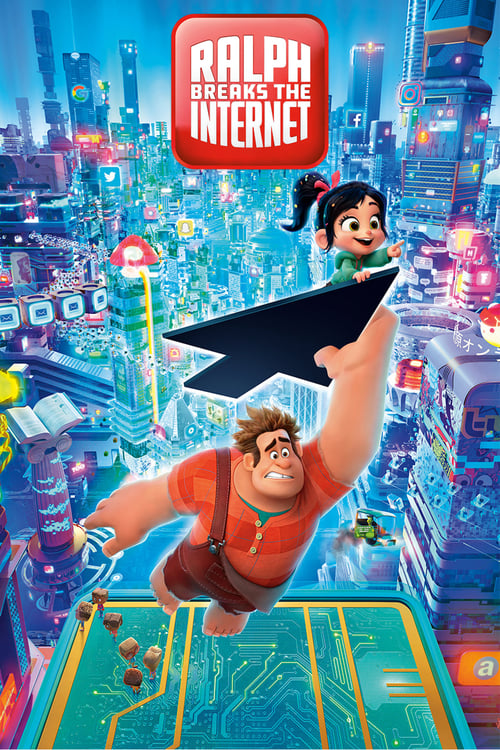
Ralph Breaks the Internet
On a quest to save the video game 'Sugar Rush' and to find a replacement, Ralph and his best friend Vanellope travel to the World Wide Web through a Wi-Fi router they find at the arcade.
Despite a major studio investment of $175.0M, Ralph Breaks the Internet became a commercial success, earning $529.3M worldwide—a 202% return. This commercial performance validated the ambitious narrative scope, confirming that audiences embrace compelling narrative even at blockbuster scale.
Nominated for 1 Oscar. 4 wins & 67 nominations


Plot Structure
Story beats plotted across runtime


Narrative Arc
Emotional journey through the story's key moments
Story Circle
Blueprint 15-beat structure
Characters
Cast & narrative archetypes

Wreck-It Ralph
Vanellope von Schweetz
Shank
Yesss
Main Cast & Characters
Wreck-It Ralph
Played by John C. Reilly
A video game bad guy who ventures into the internet to save Vanellope's game, struggling with codependency and fear of abandonment.
Vanellope von Schweetz
Played by Sarah Silverman
A glitch-turned-racer who discovers a new racing game online and must choose between her best friend and her dreams.
Shank
Played by Gal Gadot
A tough and cool street racer from Slaughter Race who becomes Vanellope's inspiration and mentor figure.
Yesss
Played by Taraji P. Henson
The head algorithm of BuzzzTube who helps Ralph go viral to earn money, representing internet culture and trends.
Structural Analysis
The Status Quo at 1 minutes (1% through the runtime) establishes Ralph and Vanellope's happy routine: game-hopping after Litwak's Arcade closes. They're content, especially Ralph, who loves their predictable friendship.. Of particular interest, this early placement immediately immerses viewers in the story world.
The inciting incident occurs at 12 minutes when The Sugar Rush steering wheel breaks when a player fights Vanellope for control. Without a replacement, the game will be unplugged and Vanellope will be homeless.. At 11% through the film, this Disruption aligns precisely with traditional story structure. This beat shifts the emotional landscape, launching the protagonist into the central conflict.
The First Threshold at 28 minutes marks the transition into Act II, occurring at 25% of the runtime. This shows the protagonist's commitment to Ralph and Vanellope choose to journey into the internet together to find and buy the steering wheel, leaving the safety of the arcade for the first time., moving from reaction to action.
At 56 minutes, the Midpoint arrives at 50% of the runtime—precisely centered, creating perfect narrative symmetry. Significantly, this crucial beat False victory: They win the eBay auction and get the wheel! But stakes raise—they owe $27,001 and have only 24 hours to pay or lose it. Vanellope wants to stay in Slaughter Race., fundamentally raising what's at risk. The emotional intensity shifts, dividing the narrative into clear before-and-after phases.
The Collapse moment at 84 minutes (75% through) represents the emotional nadir. Here, Ralph's insecurity virus corrupts the internet, creating thousands of Ralph monsters that threaten to destroy everything. Vanellope rejects Ralph: "You really are a bad guy." Their friendship dies., reveals the protagonist at their lowest point. This beat's placement in the final quarter sets up the climactic reversal.
The Second Threshold at 90 minutes initiates the final act resolution at 81% of the runtime. Ralph realizes true friendship means letting go. He accepts that Vanellope needs to grow and change, even if it means leaving him. He chooses her happiness over his security., demonstrating the transformation achieved throughout the journey.
Emotional Journey
Ralph Breaks the Internet's emotional architecture traces a deliberate progression across 15 carefully calibrated beats.
Narrative Framework
This structural analysis employs structural analysis methodology used to understand storytelling architecture. By mapping Ralph Breaks the Internet against these established plot points, we can identify how Phil Johnston utilizes or subverts traditional narrative conventions. The plot point approach reveals not only adherence to structural principles but also creative choices that distinguish Ralph Breaks the Internet within the animation genre.
Comparative Analysis
Additional animation films include The Bad Guys, Puss in Boots and Violet Evergarden: Eternity and the Auto Memory Doll.
Plot Points by Act
Act I
SetupStatus Quo
Ralph and Vanellope's happy routine: game-hopping after Litwak's Arcade closes. They're content, especially Ralph, who loves their predictable friendship.
Theme
Vanellope expresses feeling bored with her predictable racing track. Ralph insists their life is perfect as-is. Theme: Growth requires change; friendships must evolve.
Worldbuilding
Establishment of arcade life, Ralph and Vanellope's friendship, their nightly routine, and the rules of their video game world. Ralph's insecurity about losing Vanellope surfaces.
Disruption
The Sugar Rush steering wheel breaks when a player fights Vanellope for control. Without a replacement, the game will be unplugged and Vanellope will be homeless.
Resistance
Ralph and Vanellope learn about the internet and eBay where a replacement wheel exists. They debate entering this unknown world. Mr. Litwak can't afford the wheel. They must act.
Act II
ConfrontationFirst Threshold
Ralph and Vanellope choose to journey into the internet together to find and buy the steering wheel, leaving the safety of the arcade for the first time.
Mirror World
Vanellope discovers Slaughter Race and meets Shank, a cool racer who represents the exciting, unpredictable life Vanellope craves. Shank embodies change and growth.
Premise
Ralph and Vanellope explore the internet: winning money through viral videos, navigating pop-ups, meeting Disney princesses. Vanellope falls in love with Slaughter Race while Ralph grows anxious.
Midpoint
False victory: They win the eBay auction and get the wheel! But stakes raise—they owe $27,001 and have only 24 hours to pay or lose it. Vanellope wants to stay in Slaughter Race.
Opposition
Pressure mounts: grinding for hearts in BuzzzTube becomes exhausting. Ralph discovers Vanellope wants to leave Sugar Rush for Slaughter Race. His insecurity drives him to sabotage her dream.
Collapse
Ralph's insecurity virus corrupts the internet, creating thousands of Ralph monsters that threaten to destroy everything. Vanellope rejects Ralph: "You really are a bad guy." Their friendship dies.
Crisis
Ralph faces the monster made of his own insecurity. He processes that his neediness and fear of abandonment nearly destroyed Vanellope and the internet. He must let her go.
Act III
ResolutionSecond Threshold
Ralph realizes true friendship means letting go. He accepts that Vanellope needs to grow and change, even if it means leaving him. He chooses her happiness over his security.
Synthesis
Ralph defeats the insecurity monster by letting Vanellope go, literally falling to save the internet. Vanellope saves him. They reconcile, understanding their friendship can survive distance and change.
Transformation
Mirror to opening: Ralph video-chats with Vanellope across games. He's content with a different kind of friendship—evolved, mature, no longer codependent. Both have grown.