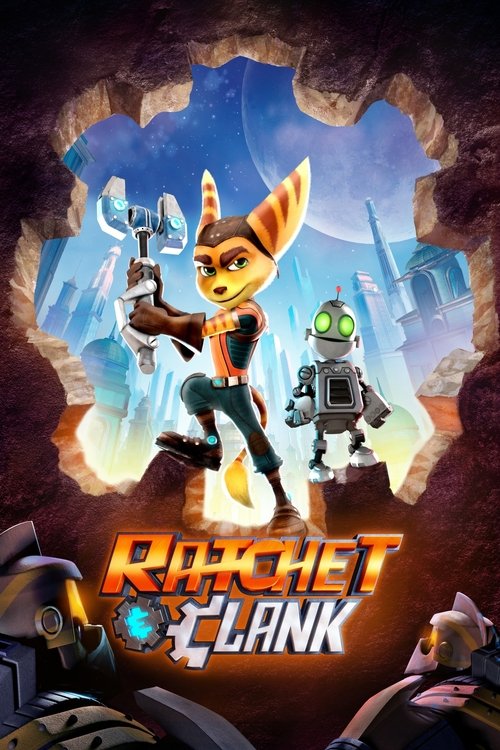
Ratchet & Clank
When the galaxy comes under the threat of a nefarious space captain, a mechanic and his newfound robot ally join an elite squad of combatants to save the universe.
The film financial setback against its mid-range budget of $20.0M, earning $8.8M globally (-56% loss). While initial box office returns were modest, the film has gained appreciation for its distinctive approach within the action genre.
1 win & 6 nominations


Plot Structure
Story beats plotted across runtime


Narrative Arc
Emotional journey through the story's key moments
Story Circle
Blueprint 15-beat structure
Arcplot Score Breakdown
Weighted: Precision (70%) + Arc (15%) + Theme (15%)
Ratchet & Clank (2016) exhibits meticulously timed plot construction, characteristic of Jericca Cleland's storytelling approach. This structural analysis examines how the film's 15-point plot structure maps to proven narrative frameworks across 1 hour and 34 minutes. With an Arcplot score of 7.4, the film balances conventional beats with creative variation.
Characters
Cast & narrative archetypes

Ratchet
Clank
Captain Qwark
Chairman Drek
Dr. Nefarious
Elaris
Cora
Brax
Main Cast & Characters
Ratchet
Played by James Arnold Taylor
A young Lombax mechanic who dreams of joining the Galactic Rangers and becoming a hero.
Clank
Played by David Kaye
A small defective warbot who escapes from Chairman Drek's factory and becomes Ratchet's partner.
Captain Qwark
Played by Jim Ward
The egotistical leader of the Galactic Rangers who is more concerned with fame than heroism.
Chairman Drek
Played by Paul Giamatti
The ruthless Blarg leader who plans to destroy planets to build a perfect new world for his people.
Dr. Nefarious
Played by Armin Shimerman
A robotic villain who serves as Chairman Drek's scientific advisor and weapons designer.
Elaris
Played by Rosario Dawson
A brilliant and enthusiastic tech support officer for the Galactic Rangers who believes in Ratchet.
Cora
Played by Bella Thorne
A tough and disciplined Galactic Ranger who is skeptical of Ratchet's abilities.
Brax
Played by Vincent Tong
A large, muscular Galactic Ranger who is loyal to the team.
Structural Analysis
The Status Quo at 1 minutes (1% through the runtime) establishes Ratchet works alone in his garage on planet Veldin, dreaming of becoming a Galactic Ranger while fixing ships. He's an outcast orphan with big dreams but no clear path forward.. Of particular interest, this early placement immediately immerses viewers in the story world.
The inciting incident occurs at 10 minutes when Clank, a defective warbot, escapes from Drek's factory with information about the villain's planet-destruction weapon. He crash-lands on Veldin, disrupting Ratchet's ordinary world.. At 11% through the film, this Disruption aligns precisely with traditional story structure. This beat shifts the emotional landscape, launching the protagonist into the central conflict.
The First Threshold at 23 minutes marks the transition into Act II, occurring at 24% of the runtime. This shows the protagonist's commitment to Ratchet actively chooses to join the Galactic Rangers and leave his old life behind. He commits to becoming a hero and enters the world of adventure, though his motivations are still self-centered., moving from reaction to action.
At 46 minutes, the Midpoint arrives at 49% of the runtime—precisely centered, creating perfect narrative symmetry. Significantly, this crucial beat False victory: The Rangers appear to defeat Drek's forces and Ratchet becomes the star hero he always wanted to be. However, stakes raise when Dr. Nefarious is revealed as the true villain with a bigger plan., fundamentally raising what's at risk. The emotional intensity shifts, dividing the narrative into clear before-and-after phases.
The Collapse moment at 69 minutes (73% through) represents the emotional nadir. Here, Ratchet is kicked off the Ranger team after his arrogance leads to disaster. He loses everything he wanted - his hero status, his team, and Clank's trust. His dream dies and he returns home in disgrace., reveals the protagonist at their lowest point. This beat's placement in the final quarter sets up the climactic reversal.
The Second Threshold at 74 minutes initiates the final act resolution at 78% of the runtime. Ratchet realizes that being a hero isn't about fame or glory - it's about doing the right thing and working as a team. He chooses to help even though he's no longer a Ranger, synthesizing his skills with Clank's wisdom., demonstrating the transformation achieved throughout the journey.
Emotional Journey
Ratchet & Clank's emotional architecture traces a deliberate progression across 15 carefully calibrated beats.
Narrative Framework
This structural analysis employs systematic plot point analysis that identifies crucial turning points. By mapping Ratchet & Clank against these established plot points, we can identify how Jericca Cleland utilizes or subverts traditional narrative conventions. The plot point approach reveals not only adherence to structural principles but also creative choices that distinguish Ratchet & Clank within the action genre.
Comparative Analysis
Additional action films include The Bad Guys, Puss in Boots and Venom: The Last Dance.
Plot Points by Act
Act I
SetupStatus Quo
Ratchet works alone in his garage on planet Veldin, dreaming of becoming a Galactic Ranger while fixing ships. He's an outcast orphan with big dreams but no clear path forward.
Theme
Grimroth tells Ratchet that "heroes are not born, they're made" and questions whether Ratchet is ready for what he thinks he wants. The theme explores what it truly means to be a hero.
Worldbuilding
Establishment of the Solana Galaxy, the Galactic Rangers led by Captain Qwark, and Chairman Drek's villainous plan to destroy planets. Ratchet attempts to join the Rangers but is rejected.
Disruption
Clank, a defective warbot, escapes from Drek's factory with information about the villain's planet-destruction weapon. He crash-lands on Veldin, disrupting Ratchet's ordinary world.
Resistance
Ratchet rescues Clank and debates whether to help. They travel to the Rangers' headquarters where Clank shares intel about Drek. Ratchet is initially accepted as a Ranger not for his skill but because of Clank.
Act II
ConfrontationFirst Threshold
Ratchet actively chooses to join the Galactic Rangers and leave his old life behind. He commits to becoming a hero and enters the world of adventure, though his motivations are still self-centered.
Mirror World
Ratchet's relationship with Clank deepens as they become partners. Clank represents the moral compass and true heroism that Ratchet needs to learn, serving as the thematic mirror to Ratchet's growth.
Premise
Ratchet enjoys being a Ranger, collecting weapons, fighting Drek's forces, and gaining fame. He becomes increasingly self-absorbed and celebrity-focused, losing sight of what truly matters. The fun of being a hero.
Midpoint
False victory: The Rangers appear to defeat Drek's forces and Ratchet becomes the star hero he always wanted to be. However, stakes raise when Dr. Nefarious is revealed as the true villain with a bigger plan.
Opposition
Ratchet's ego and desire for fame alienate Clank and the other Rangers. The bad guys gain the upper hand as Nefarious' true plan unfolds. Ratchet's character flaws make him vulnerable to manipulation.
Collapse
Ratchet is kicked off the Ranger team after his arrogance leads to disaster. He loses everything he wanted - his hero status, his team, and Clank's trust. His dream dies and he returns home in disgrace.
Crisis
Ratchet wallows in his failure back on Veldin. He confronts what Grimroth tried to teach him about true heroism. Dark reflection on what kind of hero he really wants to be.
Act III
ResolutionSecond Threshold
Ratchet realizes that being a hero isn't about fame or glory - it's about doing the right thing and working as a team. He chooses to help even though he's no longer a Ranger, synthesizing his skills with Clank's wisdom.
Synthesis
Ratchet and Clank reunite and lead the charge against Nefarious. Working together as true partners and with the Rangers as a team, they execute a plan to save the galaxy. The finale battle on Deplanetizer.
Transformation
Ratchet turns down glory and recognition, choosing instead to work humbly with Clank. The closing image shows them as true partners and heroes, not because of fame, but because of character. Heroes are made, not born.