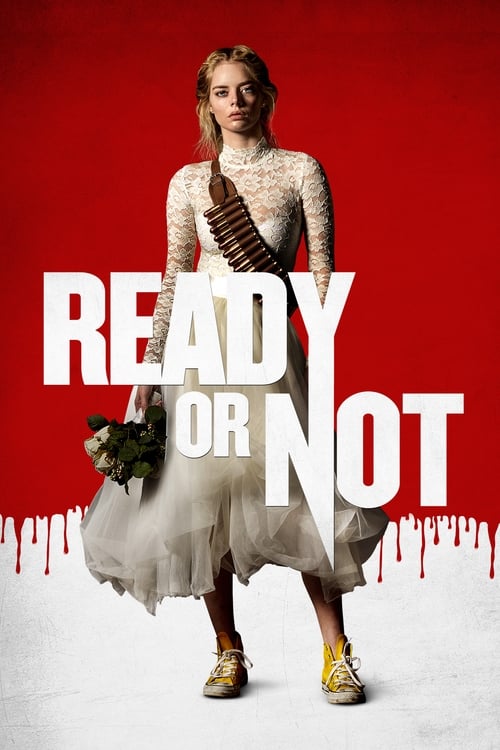
Ready or Not
A young bride's wedding night turns into her worst nightmare when her ridiculously rich in-laws force her to play a gruesome game of hide-and-seek.
Despite its tight budget of $6.0M, Ready or Not became a box office phenomenon, earning $57.6M worldwide—a remarkable 860% return. The film's bold vision attracted moviegoers, proving that strong storytelling can transcend budget limitations.
4 wins & 24 nominations


Plot Structure
Story beats plotted across runtime


Narrative Arc
Emotional journey through the story's key moments
Story Circle
Blueprint 15-beat structure
Arcplot Score Breakdown
Weighted: Precision (70%) + Arc (15%) + Theme (15%)
Ready or Not (2019) exhibits carefully calibrated narrative design, characteristic of Matt Bettinelli-Olpin's storytelling approach. This structural analysis examines how the film's 11-point plot structure maps to proven narrative frameworks across 1 hour and 35 minutes. With an Arcplot score of 7.2, the film balances conventional beats with creative variation.
Characters
Cast & narrative archetypes

Grace Le Domas
Alex Le Domas
Tony Le Domas
Becky Le Domas
Daniel Le Domas
Charity Le Domas
Emilie Le Domas
Fitch Bradley
Aunt Helene
Main Cast & Characters
Grace Le Domas
Played by Samara Weaving
A bride who must survive a deadly game of hide-and-seek with her new in-laws on her wedding night.
Alex Le Domas
Played by Mark O'Brien
Grace's groom who struggles between loyalty to his family and protecting his new wife.
Tony Le Domas
Played by Henry Czerny
The patriarch of the Le Domas family, ruthless and committed to upholding the family tradition.
Becky Le Domas
Played by Andie MacDowell
The matriarch who is coldly devoted to maintaining the family's power and legacy.
Daniel Le Domas
Played by Adam Brody
Alex's alcoholic older brother who becomes an unlikely ally to Grace.
Charity Le Domas
Played by Elyse Levesque
Daniel's bitter, drug-addicted wife who participates enthusiastically in the hunt.
Emilie Le Domas
Played by Melanie Scrofano
Alex's sister, heavily pregnant and nervously participates in the deadly tradition.
Fitch Bradley
Played by Kristian Bruun
Emilie's husband, an anxious and incompetent participant in the hunt.
Aunt Helene
Played by Nicky Guadagni
Tony's sister, an eccentric and viciously cruel family member eager to hunt Grace.
Structural Analysis
The Status Quo at 1 minutes (1% through the runtime) establishes A flashback reveals a terrified young boy hiding during a previous Le Domas family game night, establishing the dark family tradition and foreshadowing the horror to come.. Significantly, this early placement immediately immerses viewers in the story world.
The inciting incident occurs at 11 minutes when Alex reveals to Grace that she must participate in a family tradition: playing a game at midnight on her wedding night. The family's strange insistence transforms the celebration into something ominous.. At 12% through the film, this Disruption aligns precisely with traditional story structure. This beat shifts the emotional landscape, launching the protagonist into the central conflict.
The First Threshold at 24 minutes marks the transition into Act II, occurring at 25% of the runtime. This shows the protagonist's commitment to Grace witnesses a maid being shot through the head with a crossbow bolt by Emilie. The game's true murderous nature is revealed, and Grace must now fight to survive until dawn., moving from reaction to action.
The Collapse moment at 71 minutes (75% through) represents the emotional nadir. Here, Alex betrays Grace, revealing he's been on his family's side all along. He captures her and drags her back to the ritual room. Her husband—the one person she trusted completely—has condemned her to death., illustrates the protagonist at their lowest point. This beat's placement in the final quarter sets up the climactic reversal.
The Synthesis at 76 minutes initiates the final act resolution at 80% of the runtime. Grace fights the family in a brutal final confrontation. Dawn breaks and the curse proves real—family members begin spontaneously exploding one by one. Grace survives as the Le Domas bloodline is violently extinguished., demonstrating the transformation achieved throughout the journey.
Emotional Journey
Ready or Not's emotional architecture traces a deliberate progression across 11 carefully calibrated beats.
Narrative Framework
This structural analysis employs systematic plot point analysis that identifies crucial turning points. By mapping Ready or Not against these established plot points, we can identify how Matt Bettinelli-Olpin utilizes or subverts traditional narrative conventions. The plot point approach reveals not only adherence to structural principles but also creative choices that distinguish Ready or Not within the horror genre.
Comparative Analysis
Additional horror films include Thinner, A Nightmare on Elm Street and Mary Reilly.
Plot Points by Act
Act I
SetupStatus Quo
A flashback reveals a terrified young boy hiding during a previous Le Domas family game night, establishing the dark family tradition and foreshadowing the horror to come.
Theme
Aunt Helene coldly tells Grace, "You're not part of this family yet," articulating the theme of belonging, acceptance, and what one must sacrifice to be accepted into wealth and privilege.
Worldbuilding
Grace and Alex's wedding unfolds at the opulent Le Domas estate. We meet the eccentric family members—including suspicious Aunt Helene, drug-addled Emilie, and conflicted Daniel—while learning about Grace's foster care background and desire for a real family.
Disruption
Alex reveals to Grace that she must participate in a family tradition: playing a game at midnight on her wedding night. The family's strange insistence transforms the celebration into something ominous.
Resistance
Alex reluctantly explains the Le Domas gaming tradition to Grace. At midnight, she draws a card from the mysterious box—Hide and Seek. The family arms themselves with antique weapons while Grace, still unaware of the deadly stakes, begins to hide.
Act II
ConfrontationFirst Threshold
Grace witnesses a maid being shot through the head with a crossbow bolt by Emilie. The game's true murderous nature is revealed, and Grace must now fight to survive until dawn.
Premise
The deadly game of hide and seek unfolds throughout the mansion. Grace evades capture through dumbwaiters, secret passages, and narrow escapes while the bumbling family members accidentally kill servants and argue amongst themselves.
Opposition
The family intensifies their hunt. Grace is captured, escapes again, and seeks help from Alex who appears to assist her. She's pursued to a barn, goat pit, and back to the estate as the family's desperation grows with approaching dawn.
Collapse
Alex betrays Grace, revealing he's been on his family's side all along. He captures her and drags her back to the ritual room. Her husband—the one person she trusted completely—has condemned her to death.
Crisis
Grace is bound to the sacrificial altar as dawn approaches. The family prepares the ritual, believing they must kill her before sunrise or face Mr. Le Bail's curse. All hope seems lost as Grace awaits her death.
Act III
ResolutionSynthesis
Grace fights the family in a brutal final confrontation. Dawn breaks and the curse proves real—family members begin spontaneously exploding one by one. Grace survives as the Le Domas bloodline is violently extinguished.