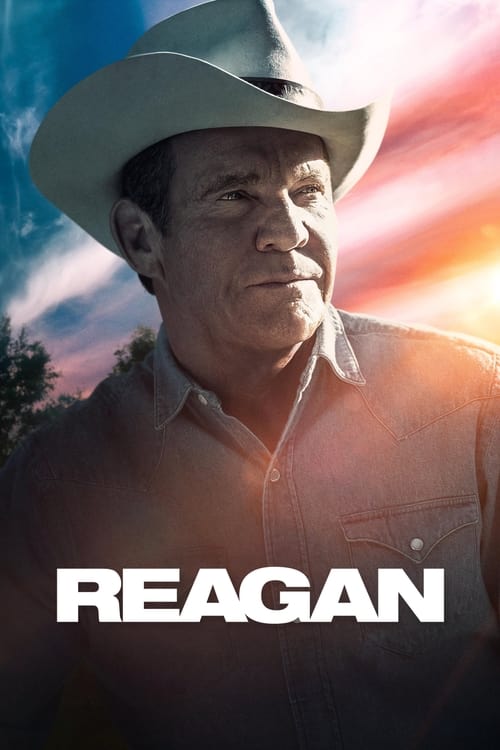
Reagan
A drama based on the life of Ronald Reagan, from his childhood to his time in the oval office.
Working with a respectable budget of $25.0M, the film achieved a steady performer with $30.1M in global revenue (+20% profit margin).


Plot Structure
Story beats plotted across runtime


Narrative Arc
Emotional journey through the story's key moments
Story Circle
Blueprint 15-beat structure
Characters
Cast & narrative archetypes

Ronald Reagan
Nancy Reagan
Viktor Petrovich
Young Ronald Reagan
Main Cast & Characters
Ronald Reagan
Played by Dennis Quaid
The 40th President of the United States, chronicled from his Hollywood acting career through his governorship and presidency during the Cold War.
Nancy Reagan
Played by Penelope Ann Miller
Ronald Reagan's devoted wife and First Lady, who served as his closest advisor and protector throughout his political career.
Viktor Petrovich
Played by Jon Voight
A fictional KGB agent who serves as the film's narrator, providing a Soviet perspective on Reagan's life and impact on the Cold War.
Young Ronald Reagan
Played by David Henrie
Reagan in his younger years as a Hollywood actor and during his early political awakening.
Structural Analysis
The Status Quo at 1 minutes (1% through the runtime) establishes Soviet KGB agent Viktor Petrovich begins narrating his decades-long observation of Reagan, establishing the framing device. We see young Ronald Reagan in Depression-era Illinois, a boy from humble beginnings with an alcoholic father but a deeply faithful mother who instills values that will shape his destiny.. Structural examination shows that this early placement immediately immerses viewers in the story world.
The inciting incident occurs at 17 minutes when Reagan confronts communist infiltration in Hollywood during the SAG labor disputes. His marriage to Jane Wyman crumbles as she leaves him, citing his obsessive focus on politics over their family. Reagan faces professional and personal crisis simultaneously, his old life shattered.. At 12% through the film, this Disruption aligns precisely with traditional story structure. This beat shifts the emotional landscape, launching the protagonist into the central conflict.
The First Threshold at 35 minutes marks the transition into Act II, occurring at 25% of the runtime. This reveals the protagonist's commitment to Reagan delivers "A Time for Choosing" speech supporting Barry Goldwater in 1964. Though Goldwater loses, Reagan's speech captivates the nation and launches his political career. He makes the irreversible choice to leave entertainment and pursue politics, running for Governor of California., moving from reaction to action.
At 71 minutes, the Midpoint arrives at 50% of the runtime—precisely centered, creating perfect narrative symmetry. Significantly, this crucial beat John Hinckley Jr. Shoots Reagan outside the Washington Hilton on March 30, 1981. Reagan nearly dies, the bullet stopping an inch from his heart. This false defeat transforms into revelation as Reagan interprets his survival as divine confirmation of his mission. He emerges more determined than ever to confront Soviet communism., fundamentally raising what's at risk. The emotional intensity shifts, dividing the narrative into clear before-and-after phases.
The Collapse moment at 106 minutes (75% through) represents the emotional nadir. Here, The Iran-Contra scandal reaches its peak, threatening to destroy Reagan's legacy and presidency. His approval ratings plummet. Critics declare his presidency a failure, his dreams of ending the Cold War seemingly impossible. Reagan faces his darkest political hour, everything he's worked for appearing to crumble., demonstrates the protagonist at their lowest point. This beat's placement in the final quarter sets up the climactic reversal.
The Second Threshold at 113 minutes initiates the final act resolution at 80% of the runtime. Reagan travels to Berlin and, against advisors' objections, delivers his historic challenge: "Mr. Gorbachev, tear down this wall!" This synthesis moment combines Reagan's communication gifts, moral clarity, and strategic vision. He chooses to directly confront the Soviet empire, setting the stage for the Cold War's end., demonstrating the transformation achieved throughout the journey.
Emotional Journey
Reagan's emotional architecture traces a deliberate progression across 15 carefully calibrated beats.
Narrative Framework
This structural analysis employs systematic plot point analysis that identifies crucial turning points. By mapping Reagan against these established plot points, we can identify how Sean McNamara utilizes or subverts traditional narrative conventions. The plot point approach reveals not only adherence to structural principles but also creative choices that distinguish Reagan within the biography genre.
Sean McNamara's Structural Approach
Among the 5 Sean McNamara films analyzed on Arcplot, the average structural score is 7.3, reflecting strong command of classical structure. Reagan exemplifies the director's characteristic narrative technique. For comparative analysis, explore the complete Sean McNamara filmography.
Comparative Analysis
Additional biography films include After Thomas, Taking Woodstock and The Fire Inside. For more Sean McNamara analyses, see Soul Surfer, Raise Your Voice and The Miracle Season.
Plot Points by Act
Act I
SetupStatus Quo
Soviet KGB agent Viktor Petrovich begins narrating his decades-long observation of Reagan, establishing the framing device. We see young Ronald Reagan in Depression-era Illinois, a boy from humble beginnings with an alcoholic father but a deeply faithful mother who instills values that will shape his destiny.
Theme
Reagan's mother Nelle tells young Ronald that God has a plan for his life and that one person with conviction can make a difference. She emphasizes that faith and determination can overcome any obstacle - the thematic core that will drive Reagan's entire journey from lifeguard to president.
Worldbuilding
Young Reagan's formative years are established: his work as a lifeguard saving 77 lives, his college radio ambitions, and his move to Hollywood. We see his first marriage to Jane Wyman, his rise as a movie star, and his growing awareness of communist infiltration in Hollywood through his work with the Screen Actors Guild.
Disruption
Reagan confronts communist infiltration in Hollywood during the SAG labor disputes. His marriage to Jane Wyman crumbles as she leaves him, citing his obsessive focus on politics over their family. Reagan faces professional and personal crisis simultaneously, his old life shattered.
Resistance
Reagan debates his future path. He meets Nancy Davis under the pretense of helping clear her name from a communist blacklist. Their romance blossoms as she becomes his anchor. Reagan transitions from acting to hosting General Electric Theater, traveling the country and developing his conservative political philosophy through speeches to factory workers.
Act II
ConfrontationFirst Threshold
Reagan delivers "A Time for Choosing" speech supporting Barry Goldwater in 1964. Though Goldwater loses, Reagan's speech captivates the nation and launches his political career. He makes the irreversible choice to leave entertainment and pursue politics, running for Governor of California.
Mirror World
Nancy Reagan emerges as Ronald's essential partner and protector. Their deep love and partnership is contrasted with the political battles ahead. Nancy represents the personal stakes and emotional truth that grounds Reagan's public mission - she sees the man behind the politician and believes in his destiny.
Premise
Reagan's political rise unfolds: two terms as California Governor, failed 1976 presidential bid against Ford, and triumphant 1980 campaign against Carter. We see Reagan's optimistic vision, his communication skills, and his unwavering anti-communist stance. The KGB watches with growing alarm as this former actor becomes leader of the free world.
Midpoint
John Hinckley Jr. shoots Reagan outside the Washington Hilton on March 30, 1981. Reagan nearly dies, the bullet stopping an inch from his heart. This false defeat transforms into revelation as Reagan interprets his survival as divine confirmation of his mission. He emerges more determined than ever to confront Soviet communism.
Opposition
Reagan faces mounting opposition: critics mock his Strategic Defense Initiative as "Star Wars," the Iran-Contra scandal threatens his presidency, and Soviet leaders dismiss his calls for peace through strength. Domestically, he battles recession and skeptics. The KGB intensifies efforts to undermine him as Reagan pushes for military buildup and directly challenges Soviet legitimacy.
Collapse
The Iran-Contra scandal reaches its peak, threatening to destroy Reagan's legacy and presidency. His approval ratings plummet. Critics declare his presidency a failure, his dreams of ending the Cold War seemingly impossible. Reagan faces his darkest political hour, everything he's worked for appearing to crumble.
Crisis
Reagan retreats to process the political devastation. He and Nancy grapple with the scandal's toll. Yet Reagan's faith sustains him. He reflects on his mother's teachings and his near-death experience. Rather than surrender to despair, he recommits to his mission of confronting the Soviet Union, preparing for one final push.
Act III
ResolutionSecond Threshold
Reagan travels to Berlin and, against advisors' objections, delivers his historic challenge: "Mr. Gorbachev, tear down this wall!" This synthesis moment combines Reagan's communication gifts, moral clarity, and strategic vision. He chooses to directly confront the Soviet empire, setting the stage for the Cold War's end.
Synthesis
The finale unfolds as Reagan's vision is vindicated. He negotiates arms treaties with Gorbachev, the Berlin Wall falls in 1989, and the Soviet Union collapses. Viktor Petrovich, the KGB narrator, acknowledges that this one man achieved what seemed impossible - defeating the Soviet empire without firing a shot. Reagan's legacy of ending the Cold War is secured.
Transformation
An elderly Reagan, now diagnosed with Alzheimer's, shares a final moment with Nancy. The film shows his poignant farewell letter to America. The Soviet agent reflects that this son of an alcoholic from small-town Illinois changed the world through faith and conviction. Reagan rides off into the sunset at his ranch - the cowboy who won the ultimate showdown.