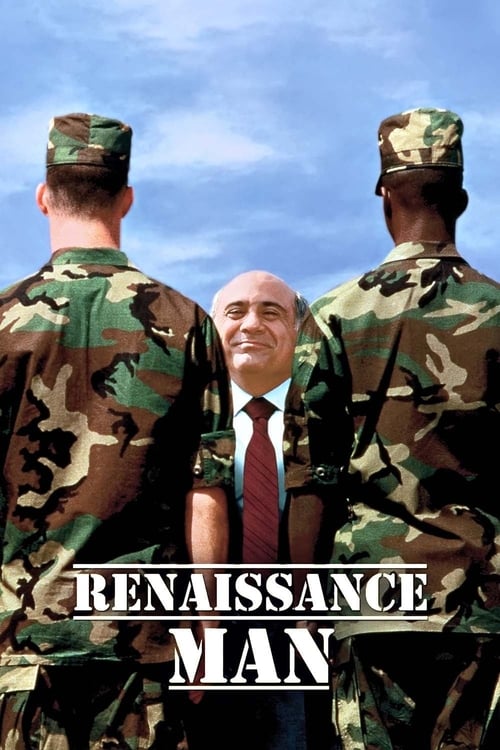
Renaissance Man
An advertising man is slowly sliding downhill. When he is fired from his job in Detroit, he signs up for unemployment. One day they find him a job: teaching thinking skills to Army recruits. He arrives on base to find that there is no structure set up for the class.
The film underperformed commercially against its moderate budget of $40.0M, earning $24.3M globally (-39% loss). While initial box office returns were modest, the film has gained appreciation for its fresh perspective within the comedy genre.


Plot Structure
Story beats plotted across runtime


Narrative Arc
Emotional journey through the story's key moments
Story Circle
Blueprint 15-beat structure
Arcplot Score Breakdown
Weighted: Precision (70%) + Arc (15%) + Theme (15%)
Renaissance Man (1994) exemplifies meticulously timed narrative design, characteristic of Penny Marshall's storytelling approach. This structural analysis examines how the film's 15-point plot structure maps to proven narrative frameworks across 2 hours and 8 minutes. With an Arcplot score of 6.7, the film balances conventional beats with creative variation.
Characters
Cast & narrative archetypes

Bill Rago
Captain Murdoch
Private Roosevelt Hobbs
Private Benitez
Private Donnie Benitez
Private Mel Melvin
Private Jackson Leroy
Private Brian Davis Jr.
Main Cast & Characters
Bill Rago
Played by Danny DeVito
Unemployed advertising executive forced to teach basic comprehension to Army recruits, discovers purpose through education.
Captain Murdoch
Played by Gregory Hines
Hard-nosed Army officer overseeing the remedial education program, skeptical of unconventional teaching methods.
Private Roosevelt Hobbs
Played by James Remar
Struggling recruit who becomes invested in learning Shakespeare and dreams of a better future.
Private Benitez
Played by Lillo Brancato
Hispanic recruit dealing with literacy challenges and family expectations about military service.
Private Donnie Benitez
Played by Khalil Kain
Young recruit struggling with reading comprehension who forms strong bond with his platoon.
Private Mel Melvin
Played by Richard T. Jones
Recruit who initially resists education but gradually opens up to learning.
Private Jackson Leroy
Played by Mark Wahlberg
Street-smart recruit who uses humor as defense mechanism against vulnerability.
Private Brian Davis Jr.
Played by Kadeem Hardison
Reserved recruit from disadvantaged background who finds confidence through literature.
Structural Analysis
The Status Quo at 2 minutes (1% through the runtime) establishes Bill Rago, a once-successful advertising executive, sits dejected in an unemployment office, his career and confidence in ruins. He's broke, divorced, and has no prospects.. Of particular interest, this early placement immediately immerses viewers in the story world.
The inciting incident occurs at 15 minutes when With no other choice, Bill is forced to accept the Army teaching position at Fort McClane. He arrives at the base, completely out of his element, facing a world utterly foreign to his advertising background.. At 12% through the film, this Disruption aligns precisely with traditional story structure. This beat shifts the emotional landscape, launching the protagonist into the central conflict.
The First Threshold at 33 minutes marks the transition into Act II, occurring at 26% of the runtime. This indicates the protagonist's commitment to After his students show complete disinterest in standard curriculum, Bill makes the active choice to teach them Shakespeare's Hamlet - something he's passionate about. He commits to actually teaching rather than just collecting a paycheck., moving from reaction to action.
At 65 minutes, the Midpoint arrives at 50% of the runtime—precisely centered, creating perfect narrative symmetry. Notably, this crucial beat The students perform Hamlet successfully and show dramatic improvement in their comprehension scores. Bill feels triumphant - he's found his calling as a teacher. But the stakes raise when military bureaucracy and Captain Murdoch's skepticism intensify., fundamentally raising what's at risk. The emotional intensity shifts, dividing the narrative into clear before-and-after phases.
The Collapse moment at 96 minutes (75% through) represents the emotional nadir. Here, The Double D platoon fails their final military training exercise. Despite their educational growth, they're deemed unfit for service and face discharge. Bill's efforts appear to have been for nothing - his teaching success means nothing if his students are kicked out., illustrates the protagonist at their lowest point. This beat's placement in the final quarter sets up the climactic reversal.
The Second Threshold at 102 minutes initiates the final act resolution at 80% of the runtime. Bill realizes that true education means preparing his students to fight for themselves. He synthesizes his advertising persuasion skills with what he's learned about believing in others. He decides to help them make one final stand to prove their worth., demonstrating the transformation achieved throughout the journey.
Emotional Journey
Renaissance Man's emotional architecture traces a deliberate progression across 15 carefully calibrated beats.
Narrative Framework
This structural analysis employs structural analysis methodology used to understand storytelling architecture. By mapping Renaissance Man against these established plot points, we can identify how Penny Marshall utilizes or subverts traditional narrative conventions. The plot point approach reveals not only adherence to structural principles but also creative choices that distinguish Renaissance Man within the comedy genre.
Penny Marshall's Structural Approach
Among the 7 Penny Marshall films analyzed on Arcplot, the average structural score is 7.0, demonstrating varied approaches to story architecture. Renaissance Man takes a more unconventional approach compared to the director's typical style. For comparative analysis, explore the complete Penny Marshall filmography.
Comparative Analysis
Additional comedy films include The Bad Guys, Ella Enchanted and The Evening Star. For more Penny Marshall analyses, see Big, A League of Their Own and Riding in Cars with Boys.
Plot Points by Act
Act I
SetupStatus Quo
Bill Rago, a once-successful advertising executive, sits dejected in an unemployment office, his career and confidence in ruins. He's broke, divorced, and has no prospects.
Theme
The unemployment counselor tells Bill that teaching can change lives, suggesting "sometimes helping others helps yourself." Bill dismisses this, viewing the Army teaching job as beneath him.
Worldbuilding
Bill's desperate financial situation is established. He owes rent, his daughter needs support, and he has no options left. His arrogance and cynicism about his circumstances are on full display as he resists taking the only job available.
Disruption
With no other choice, Bill is forced to accept the Army teaching position at Fort McClane. He arrives at the base, completely out of his element, facing a world utterly foreign to his advertising background.
Resistance
Bill meets his unmotivated students - the "Double D" platoon of underperforming soldiers facing discharge. He struggles to connect, tries traditional teaching methods that fail, and resists committing to the role. Captain Murdoch oversees skeptically.
Act II
ConfrontationFirst Threshold
After his students show complete disinterest in standard curriculum, Bill makes the active choice to teach them Shakespeare's Hamlet - something he's passionate about. He commits to actually teaching rather than just collecting a paycheck.
Mirror World
Bill develops a genuine connection with his students, particularly through their engagement with Hamlet. He begins to see them as individuals with potential. His relationship with the platoon becomes the mirror reflecting his own need for purpose and redemption.
Premise
The "fun and games" of teaching Hamlet to soldiers. Bill uses creative methods, the students begin to engage and grow, and both teacher and students discover unexpected connections between Shakespeare and their lives. Small victories build confidence.
Midpoint
The students perform Hamlet successfully and show dramatic improvement in their comprehension scores. Bill feels triumphant - he's found his calling as a teacher. But the stakes raise when military bureaucracy and Captain Murdoch's skepticism intensify.
Opposition
Pressure mounts from military leadership who question Bill's unorthodox methods. The students face increasing challenges in their military training. Personal conflicts arise, and the threat of the students being discharged grows more real despite their academic progress.
Collapse
The Double D platoon fails their final military training exercise. Despite their educational growth, they're deemed unfit for service and face discharge. Bill's efforts appear to have been for nothing - his teaching success means nothing if his students are kicked out.
Crisis
Bill faces his darkest moment, questioning whether he actually helped or just gave false hope. The students are demoralized and angry. Bill must confront whether teaching is about test scores or genuinely transforming lives.
Act III
ResolutionSecond Threshold
Bill realizes that true education means preparing his students to fight for themselves. He synthesizes his advertising persuasion skills with what he's learned about believing in others. He decides to help them make one final stand to prove their worth.
Synthesis
Bill and the students execute their plan. The platoon gets one more chance to prove themselves in a final challenge. They apply both their education and military training, working together with newfound confidence and purpose. Bill advocates fiercely for his students.
Transformation
The platoon graduates, having earned their place. Bill, once a cynical burnout just collecting a check, has become a true teacher who found purpose in serving others. The final image shows mutual respect and transformation - both teacher and students are renaissance men.