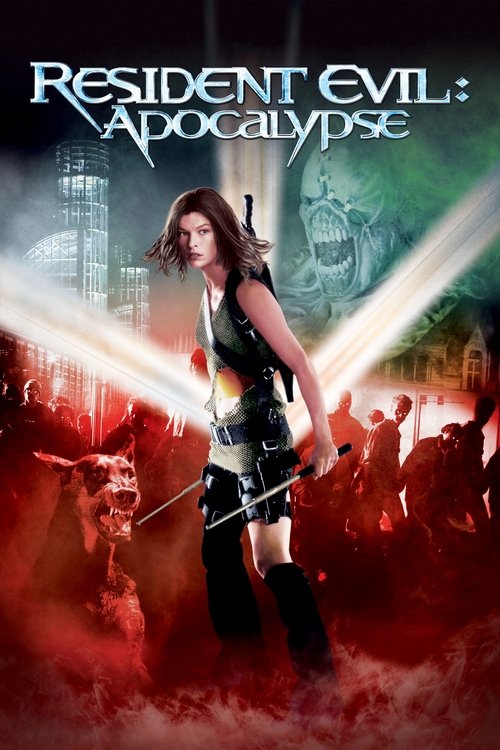
Resident Evil: Apocalypse
As the city is locked down under quarantine, Alice finds out that the people that died from the previous incident at the Umbrella Corporation have turned into zombies. She then joins a small band of elite soldiers, who are enlisted to rescue the missing daughter of the creator of the mutating T-virus. Once lack of luck and resources happen, they begin to wage an exhilarating battle to survive and escape before the Umbrella Corporation erases its experiment from the face of the earth.
Despite a respectable budget of $45.0M, Resident Evil: Apocalypse became a commercial success, earning $129.3M worldwide—a 187% return.
6 wins & 3 nominations


Plot Structure
Story beats plotted across runtime


Narrative Arc
Emotional journey through the story's key moments
Story Circle
Blueprint 15-beat structure
Arcplot Score Breakdown
Weighted: Precision (70%) + Arc (15%) + Theme (15%)
Resident Evil: Apocalypse (2004) demonstrates carefully calibrated narrative architecture, characteristic of Alexander Witt's storytelling approach. This structural analysis examines how the film's 15-point plot structure maps to proven narrative frameworks across 1 hour and 34 minutes. With an Arcplot score of 6.8, the film balances conventional beats with creative variation.
Characters
Cast & narrative archetypes

Alice
Jill Valentine
Carlos Olivera
Dr. Charles Ashford
L.J.
Major Timothy Cain
Angela Ashford
Nemesis
Main Cast & Characters
Alice
Played by Milla Jovovich
Former Umbrella security operative with superhuman abilities fighting to survive and expose the T-virus outbreak in Raccoon City.
Jill Valentine
Played by Sienna Guillory
Former S.T.A.R.S. operative and skilled combatant trying to evacuate Raccoon City before it's destroyed.
Carlos Olivera
Played by Oded Fehr
Umbrella soldier who defects to help civilians escape when he discovers the corporation's betrayal.
Dr. Charles Ashford
Played by Jared Harris
Umbrella scientist searching for his daughter Angela while trying to help survivors escape the city.
L.J.
Played by Mike Epps
Street-smart civilian survivor who uses humor and resourcefulness to stay alive during the outbreak.
Major Timothy Cain
Played by Thomas Kretschmann
Ruthless Umbrella officer overseeing the Raccoon City containment and Nemesis program.
Angela Ashford
Played by Sophie Vavasseur
Young daughter of Dr. Ashford trapped in Raccoon City during the zombie outbreak.
Nemesis
Played by Matthew Taylor
Bio-weapon created by Umbrella from Matt Addison, programmed to hunt and kill S.T.A.R.S. members.
Structural Analysis
The Status Quo at 1 minutes (1% through the runtime) establishes Umbrella Corporation scientists re-open the sealed Hive entrance to investigate what happened, unaware of the horror contained within. The corporate machinery operates with cold efficiency.. Notably, this early placement immediately immerses viewers in the story world.
The inciting incident occurs at 11 minutes when Umbrella seals all exits from Raccoon City, trapping everyone inside with the infected. The Raven's Gate Bridge evacuation route is closed, condemning thousands to death. The stakes become life or death survival.. At 12% through the film, this Disruption aligns precisely with traditional story structure. This beat shifts the emotional landscape, launching the protagonist into the central conflict.
The First Threshold at 24 minutes marks the transition into Act II, occurring at 25% of the runtime. This reveals the protagonist's commitment to Dr. Ashford contacts Alice, Jill, and the other survivors with a proposition: rescue his daughter Angela from her school, and he'll provide them a way out of the city before Umbrella's nuclear strike. Alice actively chooses to accept the mission., moving from reaction to action.
At 47 minutes, the Midpoint arrives at 50% of the runtime—precisely centered, creating perfect narrative symmetry. Significantly, this crucial beat Nemesis appears and massacres the S.T.A.R.S. Team members who were providing support. The group successfully rescues Angela, but the victory is hollow as they realize Umbrella has deployed their ultimate bioweapon specifically to hunt Alice. The hunter has become the hunted., fundamentally raising what's at risk. The emotional intensity shifts, dividing the narrative into clear before-and-after phases.
The Collapse moment at 71 minutes (75% through) represents the emotional nadir. Here, Major Cain captures the survivors and forces Alice to fight Nemesis in a gladiatorial duel, threatening to kill Angela if she refuses. Alice realizes Nemesis is actually Matt Addison, her ally from the Hive who was mutated by Umbrella. She must kill her friend or watch innocents die., indicates the protagonist at their lowest point. This beat's placement in the final quarter sets up the climactic reversal.
The Second Threshold at 75 minutes initiates the final act resolution at 80% of the runtime. Nemesis turns against Umbrella, recognizing Alice and choosing to protect the survivors. Alice realizes that humanity can overcome the virus - both in herself and others. She and the redeemed Nemesis unite to fight their common enemy: Umbrella Corporation., demonstrating the transformation achieved throughout the journey.
Emotional Journey
Resident Evil: Apocalypse's emotional architecture traces a deliberate progression across 15 carefully calibrated beats.
Narrative Framework
This structural analysis employs systematic plot point analysis that identifies crucial turning points. By mapping Resident Evil: Apocalypse against these established plot points, we can identify how Alexander Witt utilizes or subverts traditional narrative conventions. The plot point approach reveals not only adherence to structural principles but also creative choices that distinguish Resident Evil: Apocalypse within the horror genre.
Comparative Analysis
Additional horror films include Thinner, A Nightmare on Elm Street and Mary Reilly.
Plot Points by Act
Act I
SetupStatus Quo
Umbrella Corporation scientists re-open the sealed Hive entrance to investigate what happened, unaware of the horror contained within. The corporate machinery operates with cold efficiency.
Theme
Dr. Charles Ashford warns Umbrella executives about the danger of reopening the Hive: "You don't know what you're dealing with." The theme of corporate hubris versus humanity is established.
Worldbuilding
Raccoon City descends into chaos as the T-virus spreads through the population. We meet key characters: Jill Valentine (suspended cop), L.J. (street-smart civilian), and the S.T.A.R.S. team. Umbrella establishes a quarantine perimeter.
Disruption
Umbrella seals all exits from Raccoon City, trapping everyone inside with the infected. The Raven's Gate Bridge evacuation route is closed, condemning thousands to death. The stakes become life or death survival.
Resistance
Alice awakens in a hospital, enhanced by Umbrella's experiments. Jill Valentine fights through the city with survivors. L.J. joins a group of civilians. Dr. Ashford searches desperately for his missing daughter Angela. Multiple survivor groups navigate the zombie-infested streets.
Act II
ConfrontationFirst Threshold
Dr. Ashford contacts Alice, Jill, and the other survivors with a proposition: rescue his daughter Angela from her school, and he'll provide them a way out of the city before Umbrella's nuclear strike. Alice actively chooses to accept the mission.
Mirror World
Alice encounters Angela Ashford, a young girl who carries the T-virus but is controlled by medication - mirroring Alice's own bond with the virus. Angela represents innocence worth saving and reflects what Alice could become: someone who uses the infection for good.
Premise
Alice and the survivors battle through zombie hordes, infected dogs, and Lickers while racing to find Angela. Alice demonstrates her superhuman abilities. The team dynamic forms as Jill, Carlos, L.J., and others join forces. They navigate the school, church, and city streets in a series of intense action sequences.
Midpoint
Nemesis appears and massacres the S.T.A.R.S. team members who were providing support. The group successfully rescues Angela, but the victory is hollow as they realize Umbrella has deployed their ultimate bioweapon specifically to hunt Alice. The hunter has become the hunted.
Opposition
Nemesis relentlessly pursues the group through Raccoon City. Major Cain reveals Umbrella's true plan: use Alice and Nemesis as combat data for their bioweapons program. Carlos is bitten and infected. Team members are killed one by one. The escape helicopter is destroyed, and Umbrella's noose tightens around the survivors.
Collapse
Major Cain captures the survivors and forces Alice to fight Nemesis in a gladiatorial duel, threatening to kill Angela if she refuses. Alice realizes Nemesis is actually Matt Addison, her ally from the Hive who was mutated by Umbrella. She must kill her friend or watch innocents die.
Crisis
Alice refuses to kill Nemesis, choosing humanity over survival. She appeals to Matt's remaining consciousness within the monster. The moment represents her rejection of becoming Umbrella's weapon and her faith that humanity can survive even within the infected.
Act III
ResolutionSecond Threshold
Nemesis turns against Umbrella, recognizing Alice and choosing to protect the survivors. Alice realizes that humanity can overcome the virus - both in herself and others. She and the redeemed Nemesis unite to fight their common enemy: Umbrella Corporation.
Synthesis
Alice, Nemesis, and the survivors battle Umbrella's forces. Nemesis sacrifices himself to save Alice from a crashing helicopter. Alice defeats Major Cain by throwing him to the zombies. Dr. Ashford provides helicopter coordinates for escape. The nuclear missile launches, and the survivors barely escape as Raccoon City is destroyed.
Transformation
Alice is recovered from the crash by Umbrella and subjected to further experimentation. She awakens in an Umbrella facility with enhanced powers and escapes with help from her allies posing as Umbrella personnel. The final image shows Alice's eyes flickering with Umbrella's satellite uplink - she is free but forever changed, a weapon who now controls herself.