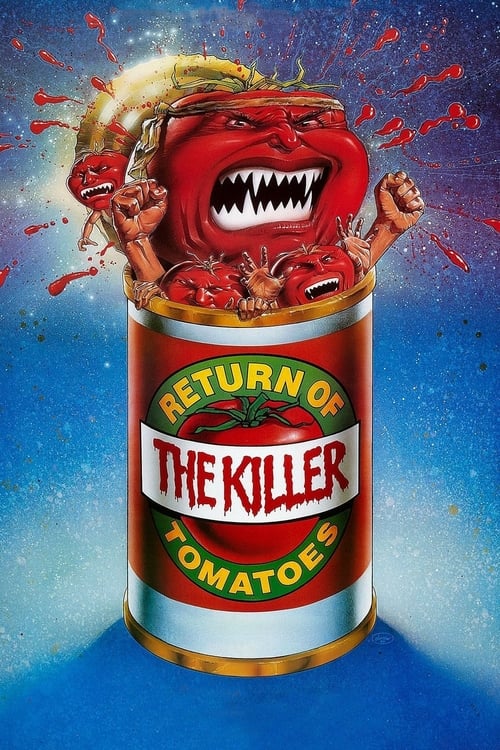
Return of the Killer Tomatoes!
Crazy old Professor Gangreen has developed a way to make tomatoes look human for a second invasion.
Despite its limited budget of $1.0M, Return of the Killer Tomatoes! became a financial success, earning $5.0M worldwide—a 400% return. The film's fresh perspective found its audience, illustrating how strong storytelling can transcend budget limitations.


Plot Structure
Story beats plotted across runtime


Narrative Arc
Emotional journey through the story's key moments
Story Circle
Blueprint 15-beat structure
Arcplot Score Breakdown
Weighted: Precision (70%) + Arc (15%) + Theme (15%)
Return of the Killer Tomatoes! (1988) showcases precise story structure, characteristic of John De Bello's storytelling approach. This structural analysis examines how the film's 15-point plot structure maps to proven narrative frameworks across 1 hour and 38 minutes. With an Arcplot score of 7.5, the film showcases strong structural fundamentals.
Characters
Cast & narrative archetypes

Chad Finletter
Tara Boumdeay
Dr. Gangreen
Matt Stevens
Igor
Professor Mortimer Gangreen
Main Cast & Characters
Chad Finletter
Played by Anthony Starke
A pizza delivery man who becomes an unlikely hero in the fight against killer tomatoes and an evil scientist's plot.
Tara Boumdeay
Played by Karen Mistal
A beautiful woman created from a tomato by Dr. Gangreen who falls in love with Chad and must discover her humanity.
Dr. Gangreen
Played by John Astin
A mad scientist villain who transforms tomatoes into killer mutants and people into tomatoes as part of his world domination scheme.
Matt Stevens
Played by Steve Lundquist
Chad's best friend and sidekick who helps him battle the killer tomatoes with enthusiasm and loyalty.
Igor
Played by Steve Crandall
Dr. Gangreen's bumbling assistant who provides comic relief while helping execute various evil schemes.
Professor Mortimer Gangreen
Played by George Clooney
Dr. Gangreen's uncle and fellow mad scientist who assists in the tomato transformation experiments.
Structural Analysis
The Status Quo at 1 minutes (1% through the runtime) establishes Tomatoes are banned worldwide after the Great Tomato War. Chad Finletter works as a pizza delivery man in a world where tomatoes are outlawed and feared.. The analysis reveals that this early placement immediately immerses viewers in the story world.
The inciting incident occurs at 11 minutes when Chad encounters Tara, a beautiful woman who is actually a tomato transformed into human form by Dr. Gangreen. He's immediately smitten, disrupting his ordinary existence.. At 11% through the film, this Disruption aligns precisely with traditional story structure. This beat shifts the emotional landscape, launching the protagonist into the central conflict.
The First Threshold at 24 minutes marks the transition into Act II, occurring at 24% of the runtime. This reveals the protagonist's commitment to Chad decides to actively pursue a relationship with Tara despite the strange circumstances, choosing love over safety and entering the dangerous world of Dr. Gangreen's schemes., moving from reaction to action.
At 48 minutes, the Midpoint arrives at 49% of the runtime—precisely centered, creating perfect narrative symmetry. Notably, this crucial beat Chad discovers the truth: Tara is actually a tomato. This false defeat shatters his perception of reality and raises the stakes for both his relationship and the larger threat to humanity., fundamentally raising what's at risk. The emotional intensity shifts, dividing the narrative into clear before-and-after phases.
The Collapse moment at 72 minutes (73% through) represents the emotional nadir. Here, Tara is captured by Dr. Gangreen and threatened with being turned back into a tomato. Chad's hope of being with her and stopping the villain seems lost. The whiff of death: losing Tara means losing both love and humanity's chance., shows the protagonist at their lowest point. This beat's placement in the final quarter sets up the climactic reversal.
The Second Threshold at 78 minutes initiates the final act resolution at 80% of the runtime. Chad realizes that love transcends species and appearance. He synthesizes his ordinary-guy resourcefulness with his newfound understanding that identity is about character, not origin. He commits to saving Tara and stopping Gangreen., demonstrating the transformation achieved throughout the journey.
Emotional Journey
Return of the Killer Tomatoes!'s emotional architecture traces a deliberate progression across 15 carefully calibrated beats.
Narrative Framework
This structural analysis employs structural analysis methodology used to understand storytelling architecture. By mapping Return of the Killer Tomatoes! against these established plot points, we can identify how John De Bello utilizes or subverts traditional narrative conventions. The plot point approach reveals not only adherence to structural principles but also creative choices that distinguish Return of the Killer Tomatoes! within the comedy genre.
Comparative Analysis
Additional comedy films include The Bad Guys, Ella Enchanted and The Evening Star.
Plot Points by Act
Act I
SetupStatus Quo
Tomatoes are banned worldwide after the Great Tomato War. Chad Finletter works as a pizza delivery man in a world where tomatoes are outlawed and feared.
Theme
A character mentions that things aren't always what they seem, hinting at the film's exploration of identity and transformation.
Worldbuilding
Introduction to the post-Tomato War world. Dr. Gangreen secretly continues his experiments to transform tomatoes into humans. Chad's mundane life and his friendship with Matt are established.
Disruption
Chad encounters Tara, a beautiful woman who is actually a tomato transformed into human form by Dr. Gangreen. He's immediately smitten, disrupting his ordinary existence.
Resistance
Chad pursues Tara while trying to understand his feelings. Matt warns him about getting involved. Dr. Gangreen's plot to use tomato-humans to take over the world becomes clearer.
Act II
ConfrontationFirst Threshold
Chad decides to actively pursue a relationship with Tara despite the strange circumstances, choosing love over safety and entering the dangerous world of Dr. Gangreen's schemes.
Mirror World
Chad's deepening relationship with Tara represents the thematic heart: true identity versus appearance. Their romance subplot carries the theme of looking beyond surface to find authenticity.
Premise
The fun and games of the premise: Chad and Tara's romance develops while Dr. Gangreen's tomato army grows. Comedy ensues with various tomato-human hybrids. Chad tries to balance his normal life with this bizarre new reality.
Midpoint
Chad discovers the truth: Tara is actually a tomato. This false defeat shatters his perception of reality and raises the stakes for both his relationship and the larger threat to humanity.
Opposition
Dr. Gangreen's forces close in. Chad struggles with accepting Tara's true nature. The tomato army grows stronger. Chad and his friends are pursued and must evade capture while dealing with internal conflict.
Collapse
Tara is captured by Dr. Gangreen and threatened with being turned back into a tomato. Chad's hope of being with her and stopping the villain seems lost. The whiff of death: losing Tara means losing both love and humanity's chance.
Crisis
Chad's dark night facing the possibility of losing Tara forever. He must decide if he loves her for who she truly is, not what she appears to be. Processing loss and finding resolve.
Act III
ResolutionSecond Threshold
Chad realizes that love transcends species and appearance. He synthesizes his ordinary-guy resourcefulness with his newfound understanding that identity is about character, not origin. He commits to saving Tara and stopping Gangreen.
Synthesis
The finale confrontation with Dr. Gangreen. Chad and his friends infiltrate the lair, battle the tomato army, rescue Tara, and defeat the mad scientist's plan for world domination through creative comedy action.
Transformation
Chad and Tara together, having accepted each other fully. The world is saved, and Chad has transformed from an ordinary pizza guy into someone who fought for love and learned that what matters is who you are inside, not what you are.