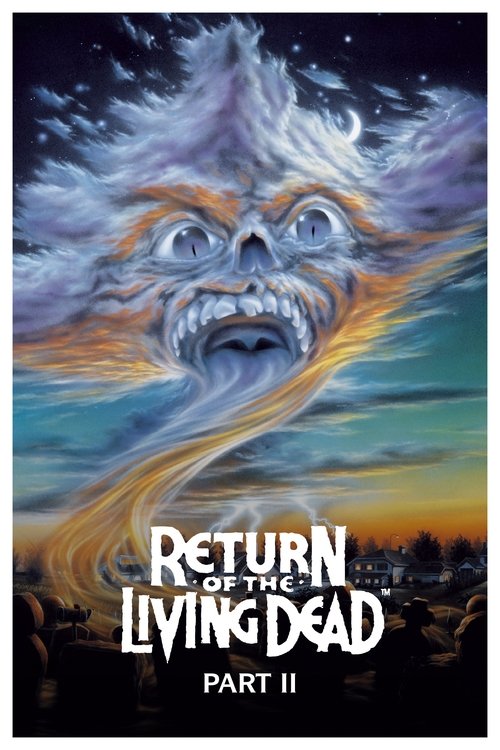
Return of the Living Dead Part II
A group of kids discover one of the drums containing a rotting corpse and release the 2-4-5 Trioxin gas into the air, causing the dead to once again rise from the grave and seek out brains.
Working with a modest budget of $6.0M, the film achieved a respectable showing with $9.2M in global revenue (+53% profit margin).


Plot Structure
Story beats plotted across runtime


Narrative Arc
Emotional journey through the story's key moments
Story Circle
Blueprint 15-beat structure
Arcplot Score Breakdown
Weighted: Precision (70%) + Arc (15%) + Theme (15%)
Return of the Living Dead Part II (1988) exhibits strategically placed narrative design, characteristic of Ken Wiederhorn's storytelling approach. This structural analysis examines how the film's 15-point plot structure maps to proven narrative frameworks across 1 hour and 29 minutes. With an Arcplot score of 7.5, the film showcases strong structural fundamentals.
Characters
Cast & narrative archetypes

Jesse Wilson
Joey
Lucy Wilson
Tom Essex
Brenda
Ed
Doc Mandel
Main Cast & Characters
Jesse Wilson
Played by Michael Kenworthy
A resourceful cable installer who becomes the unlikely hero fighting the zombie outbreak with his girlfriend.
Joey
Played by Thor Van Lingen
A young boy who accidentally releases the toxic gas that reanimates the dead, becoming central to the survival effort.
Lucy Wilson
Played by Marsha Dietlein
Jesse's sister who helps protect Joey and fight the zombie invasion.
Tom Essex
Played by Dana Ashbrook
A grave robber who helps release the zombies and must fight for survival after his greed backfires.
Brenda
Played by Suzanne Snyder
Jesse's girlfriend, a pragmatic woman who fights alongside him against the zombie horde.
Ed
Played by Thom Mathews
Tom's partner in grave robbing who becomes zombie fodder early in the outbreak.
Doc Mandel
Played by James Karen
An eccentric doctor who provides medical knowledge and comic relief during the crisis.
Structural Analysis
The Status Quo at 1 minutes (1% through the runtime) establishes Small town peace. Young Jesse Wilson is bullied by older boys, establishing his need for courage and his status as an outsider in his own neighborhood.. Of particular interest, this early placement immediately immerses viewers in the story world.
The inciting incident occurs at 11 minutes when The bullies discover the fallen Trioxin barrel near the cemetery and open it, releasing toxic gas. The gas knocks them unconscious and begins reanimating corpses in the nearby graveyard.. At 12% through the film, this Disruption aligns precisely with traditional story structure. This beat shifts the emotional landscape, launching the protagonist into the central conflict.
The First Threshold at 22 minutes marks the transition into Act II, occurring at 25% of the runtime. This demonstrates the protagonist's commitment to The group (Jesse, Lucy, Tom, Ed, Joey, and Brenda) actively chooses to band together for survival and takes refuge in a nearby house, committing to fight the zombie outbreak rather than flee., moving from reaction to action.
At 45 minutes, the Midpoint arrives at 50% of the runtime—precisely centered, creating perfect narrative symmetry. Significantly, this crucial beat False defeat: Major zombie assault overwhelms their defenses. Someone is bitten/infected, raising personal stakes. They realize hiding isn't enough - they must find and neutralize the source barrel. Stakes and urgency escalate dramatically., fundamentally raising what's at risk. The emotional intensity shifts, dividing the narrative into clear before-and-after phases.
The Collapse moment at 67 minutes (75% through) represents the emotional nadir. Here, All is lost: Ed fully transforms into a zombie and must be destroyed by his friends. Multiple group members killed or infected. Zombies overrun the town. The whiff of death - literal as Ed dies and metaphorical as hope evaporates., indicates the protagonist at their lowest point. This beat's placement in the final quarter sets up the climactic reversal.
The Second Threshold at 71 minutes initiates the final act resolution at 80% of the runtime. Synthesis and revelation: The survivors discover how to neutralize the Trioxin barrel (likely through electrification or containment). Jesse steps up as a leader, combining courage learned from Tom with his own resourcefulness. New plan formed for final push., demonstrating the transformation achieved throughout the journey.
Emotional Journey
Return of the Living Dead Part II's emotional architecture traces a deliberate progression across 15 carefully calibrated beats.
Narrative Framework
This structural analysis employs proven narrative structure principles that track dramatic progression. By mapping Return of the Living Dead Part II against these established plot points, we can identify how Ken Wiederhorn utilizes or subverts traditional narrative conventions. The plot point approach reveals not only adherence to structural principles but also creative choices that distinguish Return of the Living Dead Part II within the horror genre.
Comparative Analysis
Additional horror films include Thinner, A Nightmare on Elm Street and Mary Reilly.
Plot Points by Act
Act I
SetupStatus Quo
Small town peace. Young Jesse Wilson is bullied by older boys, establishing his need for courage and his status as an outsider in his own neighborhood.
Theme
Theme of facing fears stated - likely through dialogue between characters about standing up for yourself or growing up, foreshadowing Jesse's transformation from scared child to hero.
Worldbuilding
Introduction of all main characters: Jesse and sister Lucy, cable installer Tom Essex, grave robbers Ed and Joey, and the three delinquent boys. Military convoy transports Trioxin barrels through rural area.
Disruption
The bullies discover the fallen Trioxin barrel near the cemetery and open it, releasing toxic gas. The gas knocks them unconscious and begins reanimating corpses in the nearby graveyard.
Resistance
Jesse witnesses the barrel but is chased away. Zombies begin rising from graves. Ed and Joey encounter undead while grave robbing. Characters initially don't believe the threat, debate what's happening, and gradually come together.
Act II
ConfrontationFirst Threshold
The group (Jesse, Lucy, Tom, Ed, Joey, and Brenda) actively chooses to band together for survival and takes refuge in a nearby house, committing to fight the zombie outbreak rather than flee.
Mirror World
Tom and Lucy's romance develops as the B-story, representing the theme of connection and courage. Jesse finds mentorship in Tom, seeing what bravery looks like in the face of terror.
Premise
Classic zombie siege scenario - the promised fun. Group fortifies the house, zombies attack seeking brains, dark comedy ensues. They capture and interrogate a zombie, learning the undead feel constant pain that only brains can ease.
Midpoint
False defeat: Major zombie assault overwhelms their defenses. Someone is bitten/infected, raising personal stakes. They realize hiding isn't enough - they must find and neutralize the source barrel. Stakes and urgency escalate dramatically.
Opposition
The group ventures out to locate the barrel. Zombie encounters intensify. Ed shows infection symptoms. Military establishes containment perimeter. Zombies become more organized and dangerous. Cemetery battle sequence with mounting casualties.
Collapse
All is lost: Ed fully transforms into a zombie and must be destroyed by his friends. Multiple group members killed or infected. Zombies overrun the town. The whiff of death - literal as Ed dies and metaphorical as hope evaporates.
Crisis
Dark night of the soul. Survivors process Ed's death and other losses. Jesse, Tom, and remaining characters face despair. The mission seems impossible. They nearly give up as the military considers extreme measures.
Act III
ResolutionSecond Threshold
Synthesis and revelation: The survivors discover how to neutralize the Trioxin barrel (likely through electrification or containment). Jesse steps up as a leader, combining courage learned from Tom with his own resourcefulness. New plan formed for final push.
Synthesis
The finale: Survivors execute desperate plan to seal/destroy the barrel. Final battle through zombie hordes. Tom and Jesse lead the mission. Military intervention arrives at critical moment. Barrel is neutralized, stopping new resurrections.
Transformation
Final image: Jesse has transformed from bullied child to hero who saved the town. Survivors are safe. However, ambiguous ending suggests lingering threat - possibly another barrel or final zombie scare, maintaining genre conventions.