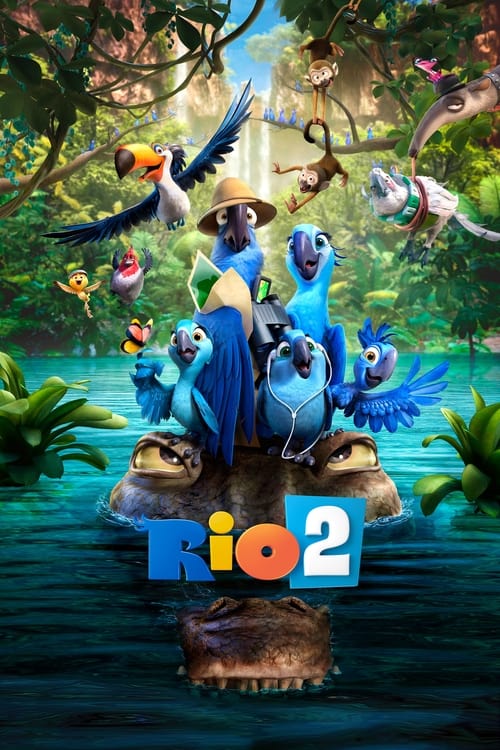
Rio 2
It's a jungle out there for Blu, Jewel, and their three kids after they're hurtled from Rio de Janeiro to the wilds of the Amazon. As Blu tries to fit in, he goes beak-to-beak with the vengeful Nigel and meets his father-in-law.
Despite a substantial budget of $103.0M, Rio 2 became a solid performer, earning $498.8M worldwide—a 384% return.
Nominated for 1 BAFTA Award2 wins & 24 nominations


Plot Structure
Story beats plotted across runtime


Narrative Arc
Emotional journey through the story's key moments
Story Circle
Blueprint 15-beat structure
Characters
Cast & narrative archetypes

Blu
Jewel
Nigel
Eduardo
Rafael
Nico
Pedro
Gabi
Roberto
Main Cast & Characters
Blu
Played by Jesse Eisenberg
A domesticated Spix's macaw who must adapt to life in the Amazon rainforest while protecting his family from threats.
Jewel
Played by Anne Hathaway
Blu's strong-willed wife who wants to raise their children in the wild Amazon, reconnecting with her roots.
Nigel
Played by Jemaine Clement
A vengeful cockatoo seeking revenge against Blu for his past humiliation and loss of fame.
Eduardo
Played by Andy Garcia
Jewel's protective father and leader of the Spix's macaw tribe in the Amazon, initially disapproving of Blu.
Rafael
Played by George Lopez
A romantic Toco toucan who serves as Blu's friend and advisor, encouraging him to embrace adventure.
Nico
Played by Jamie Foxx
A charismatic yellow canary who loves music and performs with his best friend Pedro.
Pedro
Played by will.i.am
A fun-loving red-crested cardinal and Nico's musical partner, providing comic relief.
Gabi
Played by Kristin Chenoweth
A poison dart frog with an obsessive, unrequited love for Nigel, helping him in his revenge plot.
Roberto
Played by Bruno Mars
Jewel's childhood friend and a skilled, confident macaw who makes Blu feel insecure.
Structural Analysis
The Status Quo at 1 minutes (1% through the runtime) establishes Blu and Jewel's happy domesticated life in Rio with their three kids. Blu is comfortable in his human-influenced world with Linda and Tulio.. Notably, this early placement immediately immerses viewers in the story world.
The inciting incident occurs at 12 minutes when Tulio discovers blue Spix's Macaws in the Amazon rainforest on TV - more of their species exist! This changes everything Blu and Jewel thought about being the last of their kind.. At 11% through the film, this Disruption aligns precisely with traditional story structure. This beat shifts the emotional landscape, launching the protagonist into the central conflict.
The First Threshold at 23 minutes marks the transition into Act II, occurring at 23% of the runtime. This reveals the protagonist's commitment to The family arrives in the Amazon rainforest. Blu makes the active choice to venture into the wild, leaving his comfort zone behind to support Jewel's dream., moving from reaction to action.
At 51 minutes, the Midpoint arrives at 50% of the runtime—precisely centered, creating perfect narrative symmetry. The analysis reveals that this crucial beat Jewel tells Blu she wants to stay in the Amazon permanently. This false defeat reveals the true stakes - Blu could lose his family if he can't become a "real bird." The fun and games are over., fundamentally raising what's at risk. The emotional intensity shifts, dividing the narrative into clear before-and-after phases.
The Collapse moment at 74 minutes (73% through) represents the emotional nadir. Here, Blu's attempt to defend the tribe using fireworks backfires catastrophically, nearly destroying their home and endangering everyone. Eduardo banishes Blu. Jewel sides with her father. Blu loses his family - metaphorical death of his identity and belonging., illustrates the protagonist at their lowest point. This beat's placement in the final quarter sets up the climactic reversal.
The Second Threshold at 79 minutes initiates the final act resolution at 78% of the runtime. Blu realizes he can save the tribe by being himself - using his unique "human" knowledge and skills combined with his love for his family. He doesn't need to be a wild bird; he needs to be true to who he is., demonstrating the transformation achieved throughout the journey.
Emotional Journey
Rio 2's emotional architecture traces a deliberate progression across 15 carefully calibrated beats.
Narrative Framework
This structural analysis employs structural analysis methodology used to understand storytelling architecture. By mapping Rio 2 against these established plot points, we can identify how Carlos Saldanha utilizes or subverts traditional narrative conventions. The plot point approach reveals not only adherence to structural principles but also creative choices that distinguish Rio 2 within the animation genre.
Carlos Saldanha's Structural Approach
Among the 6 Carlos Saldanha films analyzed on Arcplot, the average structural score is 7.2, reflecting strong command of classical structure. Rio 2 exemplifies the director's characteristic narrative technique. For comparative analysis, explore the complete Carlos Saldanha filmography.
Comparative Analysis
Additional animation films include The Bad Guys, Puss in Boots and Violet Evergarden: Eternity and the Auto Memory Doll. For more Carlos Saldanha analyses, see Ice Age: The Meltdown, Rio and Ferdinand.
Plot Points by Act
Act I
SetupStatus Quo
Blu and Jewel's happy domesticated life in Rio with their three kids. Blu is comfortable in his human-influenced world with Linda and Tulio.
Theme
Jewel expresses desire for their children to learn to "live like real birds" - establishing the theme of nature vs. domestication and finding one's true identity.
Worldbuilding
Establishes Blu's comfortable domesticated lifestyle, his role as father, his relationship with Jewel and the kids, and the contrast between Blu's human-influenced habits and Jewel's wild bird instincts.
Disruption
Tulio discovers blue Spix's Macaws in the Amazon rainforest on TV - more of their species exist! This changes everything Blu and Jewel thought about being the last of their kind.
Resistance
Jewel insists they go to the Amazon. Blu resists, preferring their safe Rio life. Debate about what's best for the family. Blu reluctantly agrees but brings his fanny pack and GPS.
Act II
ConfrontationFirst Threshold
The family arrives in the Amazon rainforest. Blu makes the active choice to venture into the wild, leaving his comfort zone behind to support Jewel's dream.
Mirror World
Introduction of Eduardo, Jewel's father, and her childhood friend Roberto. They represent the "wild bird" life and values that contrast with Blu's domesticated nature, carrying the film's central thematic conflict.
Premise
Blu struggles to fit in with the wild macaws. Eduardo tests and dismisses Blu's "civilized" skills. Roberto impresses everyone with natural bird abilities. Jewel thrives in her element. Comedy of Blu failing at jungle life while kids adapt easily.
Midpoint
Jewel tells Blu she wants to stay in the Amazon permanently. This false defeat reveals the true stakes - Blu could lose his family if he can't become a "real bird." The fun and games are over.
Opposition
Blu desperately tries to prove himself to Eduardo and win back Jewel's respect. Roberto seems perfect for Jewel. Logging threat to rainforest intensifies. Nigel plots revenge. Blu's failures mount and his family grows distant.
Collapse
Blu's attempt to defend the tribe using fireworks backfires catastrophically, nearly destroying their home and endangering everyone. Eduardo banishes Blu. Jewel sides with her father. Blu loses his family - metaphorical death of his identity and belonging.
Crisis
Blu at his lowest point, alone and rejected. He processes his failure and realizes he's been trying to be someone he's not. Dark night before finding clarity about who he really is.
Act III
ResolutionSecond Threshold
Blu realizes he can save the tribe by being himself - using his unique "human" knowledge and skills combined with his love for his family. He doesn't need to be a wild bird; he needs to be true to who he is.
Synthesis
Blu leads the macaws and jungle animals against the loggers using his knowledge of humans and technology. Final confrontation with Nigel. Blu proves his worth by being uniquely himself, saving the rainforest and his family.
Transformation
The family together in the Amazon, with Blu accepted for who he is - a unique blend of domesticated and wild. He doesn't have to choose between worlds; he can be both. Eduardo respects him. Mirror of opening but transformed.