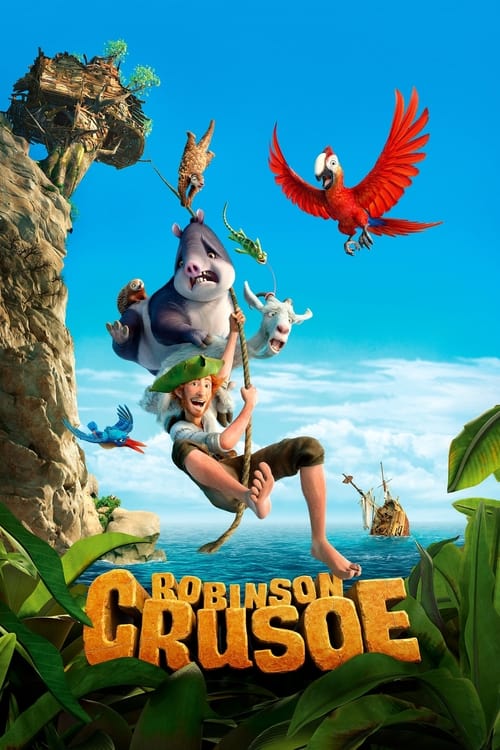
Robinson Crusoe
On a tiny exotic island, Tuesday, an outgoing parrot lives with his quirky animal friends in paradise. However, Tuesday can't stop dreaming about discovering the world. After a violent storm, Tuesday and his friends wake up to find a strange creature on the beach: Robinson Crusoe. Tuesday immediately views Crusoe as his ticket off the island to explore new lands. Likewise, Crusoe soon realizes that the key to surviving on the island is through the help of Tuesday and the other animals. It isn't always easy at first, as the animals don't speak "human." Slowly but surely, they all start living together in harmony, until one day, when their comfortable life is overturned by two savage cats, who wish to take control of the island. A battle ensues between the cats and the group of friends but Crusoe and the animals soon discover the true power of friendship up against all odds (even savage cats).
Despite its limited budget of $13.5M, Robinson Crusoe became a solid performer, earning $40.1M worldwide—a 197% return.


Plot Structure
Story beats plotted across runtime


Narrative Arc
Emotional journey through the story's key moments
Story Circle
Blueprint 15-beat structure
Arcplot Score Breakdown
Weighted: Precision (70%) + Arc (15%) + Theme (15%)
Robinson Crusoe (2016) exhibits meticulously timed dramatic framework, characteristic of Vincent Kesteloot's storytelling approach. This structural analysis examines how the film's 15-point plot structure maps to proven narrative frameworks across 1 hour and 30 minutes. With an Arcplot score of 7.4, the film balances conventional beats with creative variation.
Characters
Cast & narrative archetypes

Robinson Crusoe
Tuesday
Scrubby
Rosie
Carmello
Kiki
Main Cast & Characters
Robinson Crusoe
Played by Yuri Lowenthal
A shipwrecked human castaway who must survive on a deserted tropical island and learn to coexist with the native animals.
Tuesday
Played by David Howard
A resourceful and curious parrot who becomes Crusoe's closest companion and helps him adapt to island life.
Scrubby
Played by Ron Allen
A friendly goat who is one of the island's native inhabitants and assists Crusoe in his survival.
Rosie
Played by Laila Berzins
A cheerful tapir who lives on the island and helps the group with her strength and kindness.
Carmello
Played by Doug Stone
A chameleon with a sarcastic attitude who initially distrusts Crusoe but eventually becomes an ally.
Kiki
Played by Lindsay Torrance
A young kingfisher bird who is energetic and playful, adding comic relief to the group.
Structural Analysis
The Status Quo at 1 minutes (1% through the runtime) establishes The island animals live in paradise, with Mak the parrot ruling over his small kingdom of animals who have never seen humans or predators.. Notably, this early placement immediately immerses viewers in the story world.
The inciting incident occurs at 10 minutes when A violent storm hits the island and a shipwreck occurs. Crusoe washes ashore - the first human the animals have ever encountered, bringing danger and the unknown.. At 11% through the film, this Disruption aligns precisely with traditional story structure. This beat shifts the emotional landscape, launching the protagonist into the central conflict.
The First Threshold at 22 minutes marks the transition into Act II, occurring at 24% of the runtime. This demonstrates the protagonist's commitment to Mak decides to actively approach and interact with Crusoe, choosing curiosity over fear. This decision to engage with the human rather than hide marks the point of no return., moving from reaction to action.
At 44 minutes, the Midpoint arrives at 49% of the runtime—precisely centered, creating perfect narrative symmetry. Structural examination shows that this crucial beat Crusoe and the animals successfully work together to improve life on the island. False victory - everything seems perfect, but the arrival of cats (predators) foreshadows coming danger., fundamentally raising what's at risk. The emotional intensity shifts, dividing the narrative into clear before-and-after phases.
The Collapse moment at 66 minutes (73% through) represents the emotional nadir. Here, The cats launch a major attack. Several animals are captured or threatened with death. Mak's lies and cowardice are exposed, and his friends turn against him. All seems lost., shows the protagonist at their lowest point. This beat's placement in the final quarter sets up the climactic reversal.
The Second Threshold at 71 minutes initiates the final act resolution at 79% of the runtime. Mak realizes that true bravery isn't being fearless, but acting despite fear to help others. He rallies the animals and Crusoe with a plan to work together to defeat the cats., demonstrating the transformation achieved throughout the journey.
Emotional Journey
Robinson Crusoe's emotional architecture traces a deliberate progression across 15 carefully calibrated beats.
Narrative Framework
This structural analysis employs systematic plot point analysis that identifies crucial turning points. By mapping Robinson Crusoe against these established plot points, we can identify how Vincent Kesteloot utilizes or subverts traditional narrative conventions. The plot point approach reveals not only adherence to structural principles but also creative choices that distinguish Robinson Crusoe within the animation genre.
Comparative Analysis
Additional animation films include The Bad Guys, Puss in Boots and Violet Evergarden: Eternity and the Auto Memory Doll.
Plot Points by Act
Act I
SetupStatus Quo
The island animals live in paradise, with Mak the parrot ruling over his small kingdom of animals who have never seen humans or predators.
Theme
Rosie the tapir mentions that the island is safe because they stick together and help each other - foreshadowing the film's theme of cooperation and overcoming fear of the unknown.
Worldbuilding
Establishment of the island ecosystem, the animal characters and their relationships, Mak's exaggerated stories about his bravery, and the peaceful daily routine of island life.
Disruption
A violent storm hits the island and a shipwreck occurs. Crusoe washes ashore - the first human the animals have ever encountered, bringing danger and the unknown.
Resistance
The animals debate what to do about the strange creature (Crusoe). They observe him from a distance, argue about whether he's dangerous, and watch him struggle to survive.
Act II
ConfrontationFirst Threshold
Mak decides to actively approach and interact with Crusoe, choosing curiosity over fear. This decision to engage with the human rather than hide marks the point of no return.
Mirror World
Crusoe and Mak begin to form a tentative friendship, with Tuesday the dog serving as a bridge between species. This relationship will teach both about trust and cooperation.
Premise
The fun of watching animals and human learn to coexist. Comic misunderstandings, Crusoe building shelter, animals secretly helping him, and the development of mutual understanding and friendship.
Midpoint
Crusoe and the animals successfully work together to improve life on the island. False victory - everything seems perfect, but the arrival of cats (predators) foreshadows coming danger.
Opposition
The cats prove to be dangerous hunters, threatening the animals. Tensions rise as Crusoe's presence has brought change and danger. The animals' unity begins to fracture under pressure.
Collapse
The cats launch a major attack. Several animals are captured or threatened with death. Mak's lies and cowardice are exposed, and his friends turn against him. All seems lost.
Crisis
Mak faces his cowardice and failures. The animals are scattered and afraid. Dark night as they contemplate abandoning the island or surrendering to the cats.
Act III
ResolutionSecond Threshold
Mak realizes that true bravery isn't being fearless, but acting despite fear to help others. He rallies the animals and Crusoe with a plan to work together to defeat the cats.
Synthesis
The finale battle against the cats using teamwork. Animals and Crusoe combine their unique abilities in clever ways. They execute the plan, save the captured animals, and drive off the cats.
Transformation
Mak is now genuinely brave and honest. The island is at peace with animals and Crusoe living in true harmony. When a ship arrives, Crusoe chooses to stay, showing the island has become home for all.