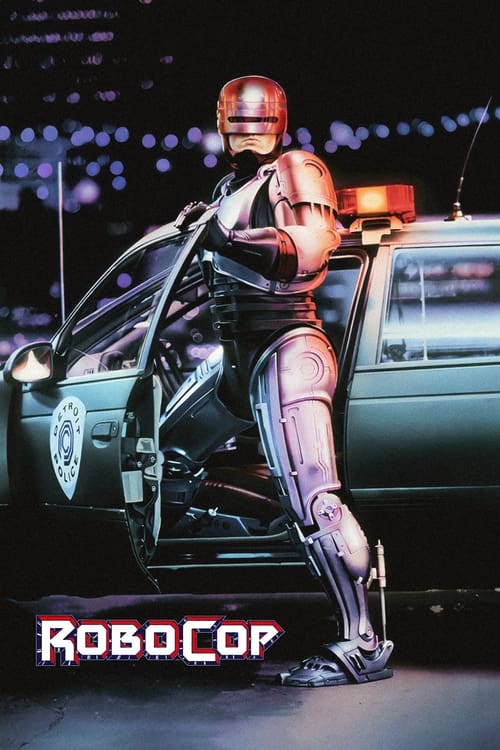
RoboCop
In a violent, near-apocalyptic Detroit, evil corporation Omni Consumer Products wins a contract from the city government to privatize the police force. To test their crime-eradicating cyborgs, the company leads street cop Alex Murphy into an armed confrontation with crime lord Boddicker so they can use his body to support their untested RoboCop prototype. But when RoboCop learns of the company's nefarious plans, he turns on his masters.
Despite its tight budget of $13.0M, RoboCop became a box office success, earning $53.4M worldwide—a 311% return. The film's fresh perspective found its audience, proving that strong storytelling can transcend budget limitations.
Nominated for 2 Oscars. 11 wins & 13 nominations


Plot Structure
Story beats plotted across runtime


Narrative Arc
Emotional journey through the story's key moments
Story Circle
Blueprint 15-beat structure
Arcplot Score Breakdown
Weighted: Precision (70%) + Arc (15%) + Theme (15%)
RoboCop (1987) reveals precise narrative architecture, characteristic of Paul Verhoeven's storytelling approach. This structural analysis examines how the film's 15-point plot structure maps to proven narrative frameworks across 1 hour and 42 minutes. With an Arcplot score of 6.8, the film balances conventional beats with creative variation.
Characters
Cast & narrative archetypes

Alex Murphy / RoboCop
Dick Jones
Anne Lewis
Clarence Boddicker
Bob Morton
The Old Man (Chairman)
Main Cast & Characters
Alex Murphy / RoboCop
Played by Peter Weller
Detroit police officer brutally murdered and resurrected as a cyborg law enforcement officer who struggles to reclaim his humanity.
Dick Jones
Played by Ronny Cox
Senior Vice President of OCP who orchestrates corruption and violence to protect his own projects and power.
Anne Lewis
Played by Nancy Allen
Murphy's loyal partner who recognizes his humanity beneath the machine and supports him throughout his transformation.
Clarence Boddicker
Played by Kurtwood Smith
Sadistic crime lord and drug dealer who murdered Murphy and works as Jones's enforcer.
Bob Morton
Played by Miguel Ferrer
Ambitious OCP executive who created the RoboCop program to advance his career and rivalry with Jones.
The Old Man (Chairman)
Played by Dan O'Herlihy
CEO of OCP who ultimately values results and ethics over corporate politics.
Structural Analysis
The Status Quo at 1 minutes (1% through the runtime) establishes News broadcasts establish Detroit as a dystopian corporate warzone. OCP corporation announces plans for Delta City. Officer Alex Murphy transfers to Metro West, kissing his wife and son goodbye - the last moment of his human life.. The analysis reveals that this early placement immediately immerses viewers in the story world.
The inciting incident occurs at 12 minutes when Murphy and Lewis pursue Clarence Boddicker's gang to the steel mill. Murphy is separated from Lewis, ambushed, and brutally executed by Boddicker's gang - shot dozens of times and his hand blown off.. At 12% through the film, this Disruption aligns precisely with traditional story structure. This beat shifts the emotional landscape, launching the protagonist into the central conflict.
The First Threshold at 26 minutes marks the transition into Act II, occurring at 26% of the runtime. This demonstrates the protagonist's commitment to RoboCop's first deployment on the streets of Detroit. He is no longer Murphy - he is OCP's law enforcement product. He enters the world as a machine, not a man., moving from reaction to action.
At 51 minutes, the Midpoint arrives at 50% of the runtime—precisely centered, creating perfect narrative symmetry. Notably, this crucial beat RoboCop fully remembers his murder and identifies Clarence Boddicker as his killer. This false victory (he knows who killed him) becomes a false defeat - he discovers Boddicker works for Dick Jones, an OCP senior executive. Directive 4 prevents him from arresting Jones., fundamentally raising what's at risk. The emotional intensity shifts, dividing the narrative into clear before-and-after phases.
The Collapse moment at 77 minutes (76% through) represents the emotional nadir. Here, RoboCop is nearly destroyed by police gunfire, blown apart and deactivated. Lewis drags his broken body away. The machine dies - only Murphy can survive. His system crashes with "whiff of death" - total system failure., demonstrates the protagonist at their lowest point. This beat's placement in the final quarter sets up the climactic reversal.
The Second Threshold at 82 minutes initiates the final act resolution at 81% of the runtime. RoboCop synthesizes his dual nature: Murphy's humanity with RoboCop's capabilities. He removes the tracking device, freeing himself from OCP control. He chooses to fight not as a machine following directives, but as Murphy seeking justice., demonstrating the transformation achieved throughout the journey.
Emotional Journey
RoboCop's emotional architecture traces a deliberate progression across 15 carefully calibrated beats.
Narrative Framework
This structural analysis employs proven narrative structure principles that track dramatic progression. By mapping RoboCop against these established plot points, we can identify how Paul Verhoeven utilizes or subverts traditional narrative conventions. The plot point approach reveals not only adherence to structural principles but also creative choices that distinguish RoboCop within the action genre.
Paul Verhoeven's Structural Approach
Among the 6 Paul Verhoeven films analyzed on Arcplot, the average structural score is 7.0, demonstrating varied approaches to story architecture. RoboCop takes a more unconventional approach compared to the director's typical style. For comparative analysis, explore the complete Paul Verhoeven filmography.
Comparative Analysis
Additional action films include The Bad Guys, Puss in Boots and Venom: The Last Dance. For more Paul Verhoeven analyses, see Total Recall, Starship Troopers and Showgirls.
Plot Points by Act
Act I
SetupStatus Quo
News broadcasts establish Detroit as a dystopian corporate warzone. OCP corporation announces plans for Delta City. Officer Alex Murphy transfers to Metro West, kissing his wife and son goodbye - the last moment of his human life.
Theme
Bob Morton pitches RoboCop to the Old Man: "We can't let sentiment stand in the way of progress." The film's central question: What makes us human - our bodies or our souls?
Worldbuilding
Introduction to dystopian Detroit, the police strike threat, OCP's corporate control, ED-209 malfunction demonstration, Dick Jones vs Bob Morton corporate rivalry, and Murphy partnering with Lewis on patrol.
Disruption
Murphy and Lewis pursue Clarence Boddicker's gang to the steel mill. Murphy is separated from Lewis, ambushed, and brutally executed by Boddicker's gang - shot dozens of times and his hand blown off.
Resistance
Murphy's death provides OCP with their prime candidate. Bob Morton oversees the RoboCop project. Murphy is transformed into a cyborg, stripped of memory and identity, programmed with Prime Directives. Initial tests and deployment preparation.
Act II
ConfrontationFirst Threshold
RoboCop's first deployment on the streets of Detroit. He is no longer Murphy - he is OCP's law enforcement product. He enters the world as a machine, not a man.
Mirror World
Lewis recognizes Murphy in RoboCop. She represents his connection to humanity and his past identity. Her persistence in seeing the man inside the machine becomes the emotional B-story that will redeem him.
Premise
RoboCop as efficient crimefighter: saving women from sexual assault, arresting criminals with precision, becoming a media sensation. Bob Morton celebrates success. RoboCop begins having fragmented dreams of Murphy's death. He visits his former home, triggering memories.
Midpoint
RoboCop fully remembers his murder and identifies Clarence Boddicker as his killer. This false victory (he knows who killed him) becomes a false defeat - he discovers Boddicker works for Dick Jones, an OCP senior executive. Directive 4 prevents him from arresting Jones.
Opposition
Dick Jones orders ED-209 and police forces to destroy RoboCop. The entire system turns against him. RoboCop is hunted through the steel mill by cops and SWAT. Lewis helps him escape. The corrupt corporate power structure closes in.
Collapse
RoboCop is nearly destroyed by police gunfire, blown apart and deactivated. Lewis drags his broken body away. The machine dies - only Murphy can survive. His system crashes with "whiff of death" - total system failure.
Crisis
In the abandoned steel mill, Lewis repairs RoboCop. In his darkest moment, he removes his helmet, revealing Murphy's face. He tells Lewis "Murphy had a wife and son. I can remember them" - accepting both identities, machine and man.
Act III
ResolutionSecond Threshold
RoboCop synthesizes his dual nature: Murphy's humanity with RoboCop's capabilities. He removes the tracking device, freeing himself from OCP control. He chooses to fight not as a machine following directives, but as Murphy seeking justice.
Synthesis
RoboCop raids the drug factory, defeats Boddicker's gang in explosive battle, kills Clarence. He storms OCP tower, exposes Dick Jones' corruption to the Old Man. Jones takes the Old Man hostage, but is fired - releasing Directive 4. RoboCop shoots Jones through the window.
Transformation
The Old Man asks "What's your name?" RoboCop smiles slightly and replies "Murphy." He has reclaimed his identity - no longer just a machine or just a man, but both. The integration is complete.