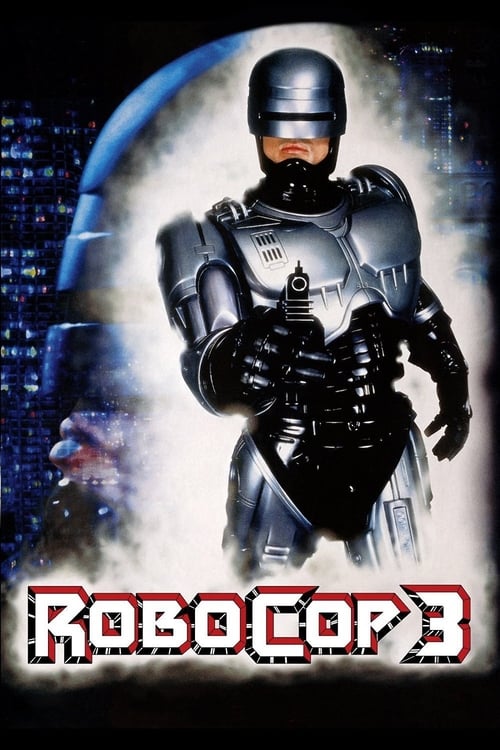
RoboCop 3
The mega corporation Omni Consumer Products is still bent on creating their pet project, Delta City, to replace the rotting city of Detroit. Unfortunately, the inhabitants of the area have no intention of abandoning their homes simply for desires of the company. To this end, OCP have decided to force them to leave by employing a ruthless mercenary army to attack and harass them. An underground resistance begins and in this fight, RoboCop must decide where his loyalties lie.
The film box office disappointment against its respectable budget of $22.0M, earning $10.7M globally (-51% loss). While initial box office returns were modest, the film has gained appreciation for its bold vision within the action genre.


Plot Structure
Story beats plotted across runtime


Narrative Arc
Emotional journey through the story's key moments
Story Circle
Blueprint 15-beat structure
Arcplot Score Breakdown
Weighted: Precision (70%) + Arc (15%) + Theme (15%)
RoboCop 3 (1993) exhibits deliberately positioned story structure, characteristic of Fred Dekker's storytelling approach. This structural analysis examines how the film's 15-point plot structure maps to proven narrative frameworks across 1 hour and 45 minutes. With an Arcplot score of 6.8, the film balances conventional beats with creative variation.
Characters
Cast & narrative archetypes

RoboCop / Alex Murphy
Nikko Halloran
Bertha Washington
Paul McDaggett
Sergeant Warren Reed
Dr. Marie Lazarus
Otomo
Main Cast & Characters
RoboCop / Alex Murphy
Played by Robert John Burke
A cyborg police officer who protects Detroit's citizens from corporate greed and crime.
Nikko Halloran
Played by Remy Ryan
A brilliant young hacker who aids the resistance against OCP's takeover of Detroit.
Bertha Washington
Played by CCH Pounder
A tough community leader organizing resistance against OCP's forced relocation program.
Paul McDaggett
Played by John Castle
A ruthless mercenary commander leading OCP's Rehab unit in clearing out Detroit neighborhoods.
Sergeant Warren Reed
Played by Robert DoQui
A loyal police sergeant and ally to RoboCop in the fight against OCP corruption.
Dr. Marie Lazarus
Played by Jill Hennessy
OCP scientist who helps repair and upgrade RoboCop while questioning corporate ethics.
Otomo
Played by Bruce Locke
A highly skilled ninja android built by a Japanese corporation to eliminate RoboCop.
Structural Analysis
The Status Quo at 1 minutes (1% through the runtime) establishes Detroit in ruins as OCP's Rehab forces violently evict residents from Cadillac Heights to make way for Delta City. RoboCop patrols a city torn between corporate power and desperate citizens.. The analysis reveals that this early placement immediately immerses viewers in the story world.
The inciting incident occurs at 13 minutes when RoboCop witnesses police brutality against civilians during an eviction. A family is killed by Rehabs, and he encounters the resistance fighters who are labeled terrorists but are protecting their homes.. At 12% through the film, this Disruption aligns precisely with traditional story structure. This beat shifts the emotional landscape, launching the protagonist into the central conflict.
The First Threshold at 26 minutes marks the transition into Act II, occurring at 25% of the runtime. This indicates the protagonist's commitment to RoboCop makes the active choice to defy OCP and join the resistance. He removes his tracking device and commits to protecting Cadillac Heights residents, becoming a fugitive from his own department., moving from reaction to action.
At 53 minutes, the Midpoint arrives at 50% of the runtime—precisely centered, creating perfect narrative symmetry. Significantly, this crucial beat RoboCop is severely damaged in battle with Otomo, the ninja android. His systems are failing and OCP has cut off all support. The resistance seems outgunned, and it appears they cannot win against corporate military power., fundamentally raising what's at risk. The emotional intensity shifts, dividing the narrative into clear before-and-after phases.
The Collapse moment at 79 minutes (75% through) represents the emotional nadir. Here, Lewis is critically wounded, nearly dying. The resistance base is discovered and attacked. RoboCop faces destruction of everything he's fighting for. The community seems doomed, and his partner may be lost—a metaphorical death of hope., illustrates the protagonist at their lowest point. This beat's placement in the final quarter sets up the climactic reversal.
The Second Threshold at 84 minutes initiates the final act resolution at 80% of the runtime. RoboCop gains new resolve: he will use his remaining capabilities and the jetpack technology to lead a final coordinated assault. He synthesizes his police training, cyborg abilities, and newfound humanity. The resistance unites for one last stand., demonstrating the transformation achieved throughout the journey.
Emotional Journey
RoboCop 3's emotional architecture traces a deliberate progression across 15 carefully calibrated beats.
Narrative Framework
This structural analysis employs a 15-point narrative structure framework that maps key story moments. By mapping RoboCop 3 against these established plot points, we can identify how Fred Dekker utilizes or subverts traditional narrative conventions. The plot point approach reveals not only adherence to structural principles but also creative choices that distinguish RoboCop 3 within the action genre.
Comparative Analysis
Additional action films include The Bad Guys, Puss in Boots and Venom: The Last Dance.
Plot Points by Act
Act I
SetupStatus Quo
Detroit in ruins as OCP's Rehab forces violently evict residents from Cadillac Heights to make way for Delta City. RoboCop patrols a city torn between corporate power and desperate citizens.
Theme
Nikko, a young girl, speaks about people needing to stand together against those who take everything. The theme of community resistance versus corporate oppression is established.
Worldbuilding
OCP's brutal forced relocation program is shown. The resistance movement forms in Cadillac Heights. RoboCop operates under orders but witnesses the injustice. Lewis is his partner, and Dr. Marie Lazarus works on new cyborg projects.
Disruption
RoboCop witnesses police brutality against civilians during an eviction. A family is killed by Rehabs, and he encounters the resistance fighters who are labeled terrorists but are protecting their homes.
Resistance
RoboCop struggles with his directives versus his conscience. He meets resistance leaders including Bertha and the orphaned Nikko. Lewis is wounded. RoboCop debates whether to follow OCP orders or protect the innocent.
Act II
ConfrontationFirst Threshold
RoboCop makes the active choice to defy OCP and join the resistance. He removes his tracking device and commits to protecting Cadillac Heights residents, becoming a fugitive from his own department.
Mirror World
RoboCop bonds with Nikko, the young hacker who lost her parents. She represents pure humanity and community. Their relationship teaches him about choice, family, and what it means to be human beyond programming.
Premise
RoboCop fights alongside the resistance, using his abilities to protect civilians. He battles Rehabs and OCP forces. The resistance fortifies Cadillac Heights. OCP deploys new weapon: the ninja android Otomo and upgraded cyborg enforcers.
Midpoint
RoboCop is severely damaged in battle with Otomo, the ninja android. His systems are failing and OCP has cut off all support. The resistance seems outgunned, and it appears they cannot win against corporate military power.
Opposition
RoboCop is repaired by the resistance using salvaged parts. OCP escalates with urban pacification weapons. The resistance suffers losses. McDaggett's Rehabs close in. RoboCop's humanity is tested as violence intensifies and innocent people die.
Collapse
Lewis is critically wounded, nearly dying. The resistance base is discovered and attacked. RoboCop faces destruction of everything he's fighting for. The community seems doomed, and his partner may be lost—a metaphorical death of hope.
Crisis
RoboCop processes the weight of loss and failure. He contemplates whether one cyborg cop can make a difference against corporate power. The resistance mourns their losses. Dark night before the final stand.
Act III
ResolutionSecond Threshold
RoboCop gains new resolve: he will use his remaining capabilities and the jetpack technology to lead a final coordinated assault. He synthesizes his police training, cyborg abilities, and newfound humanity. The resistance unites for one last stand.
Synthesis
Final battle for Cadillac Heights. RoboCop uses the jetpack in aerial combat against OCP forces. He defeats Otomo. The resistance fights back the Rehabs. McDaggett is killed. OCP's plans collapse as the community prevails through unity.
Transformation
RoboCop stands with the saved community and Nikko. No longer just a corporate tool or programmed machine, he has become a true protector who chose humanity over directives. The people have their homes; he has his purpose.