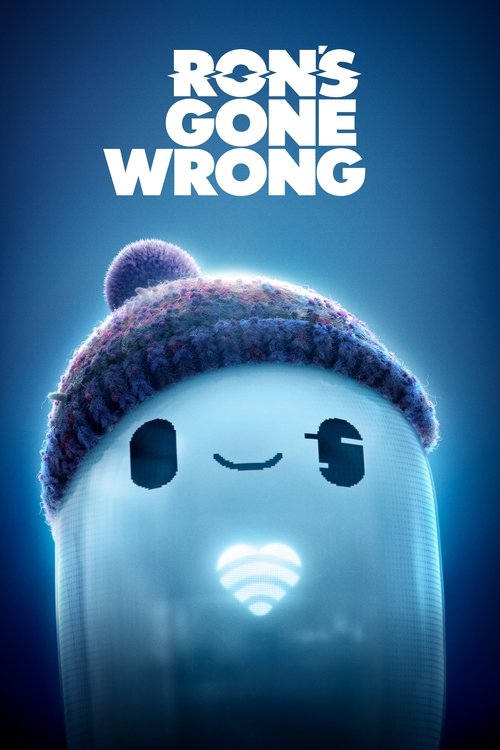
Ron's Gone Wrong
In a world where walking, talking, digitally connected bots have become children's best friends, an 11-year-old finds that his robot buddy doesn't quite work the same as the others do.
The film earned $60.7M at the global box office.


Plot Structure
Story beats plotted across runtime


Narrative Arc
Emotional journey through the story's key moments
Story Circle
Blueprint 15-beat structure
Arcplot Score Breakdown
Weighted: Precision (70%) + Arc (15%) + Theme (15%)
Ron's Gone Wrong (2021) exemplifies deliberately positioned dramatic framework, characteristic of Sarah Smith's storytelling approach. This structural analysis examines how the film's 15-point plot structure maps to proven narrative frameworks across 1 hour and 47 minutes. With an Arcplot score of 7.4, the film balances conventional beats with creative variation.
Characters
Cast & narrative archetypes

Barney Pudowski
Ron
Graham Pudowski
Donka Pudowski
Marc Weidell
Andrew Morris
Savannah Meades
Rich Belcher
Main Cast & Characters
Barney Pudowski
Played by Jack Dylan Grazer
A socially awkward middle schooler who becomes the only kid without a B-Bot until he receives Ron, a defective robot that becomes his unlikely friend.
Ron
Played by Zach Galifianakis
A malfunctioning B-Bot with damaged programming who learns friendship authentically rather than through algorithms, becoming Barney's genuine companion.
Graham Pudowski
Played by Ed Helms
Barney's well-meaning but old-fashioned father who struggles to connect with modern technology and parenting.
Donka Pudowski
Played by Olivia Colman
Barney's eccentric Bulgarian grandmother who is fiercely protective and encourages him to stand up for himself.
Marc Weidell
Played by Justice Smith
The charismatic and ambitious CEO of Bubble who created B-Bots but loses sight of genuine connection in favor of profit and data.
Andrew Morris
Played by Rob Delaney
The chief operating officer of Bubble who becomes increasingly concerned about the ethical implications of data collection and B-Bot safety.
Savannah Meades
Played by Kylie Cantrall
The popular girl at school who is obsessed with her social media status and B-Bot algorithms but learns about authentic friendship.
Rich Belcher
Played by Ricardo Hurtado
The school bully who uses his B-Bot to maintain his status and intimidate others.
Structural Analysis
The Status Quo at 2 minutes (2% through the runtime) establishes Barney walks alone to school, friendless and excluded while all other kids interact with their B-Bots. Establishes his isolation in a tech-saturated world where he's the only kid without the device everyone uses to connect.. Notably, this early placement immediately immerses viewers in the story world.
The inciting incident occurs at 12 minutes when Barney's father surprises him with a B-Bot for his birthday - though it fell off a truck and is clearly defective. Barney is overjoyed to finally have what everyone else has, unaware of the problems to come.. At 12% through the film, this Disruption aligns precisely with traditional story structure. This beat shifts the emotional landscape, launching the protagonist into the central conflict.
The First Threshold at 26 minutes marks the transition into Act II, occurring at 24% of the runtime. This reveals the protagonist's commitment to Barney decides to keep Ron and teach him about friendship from scratch. Active choice to accept the imperfect bot rather than demanding a "proper" one. They begin their journey together, entering the new world of their unique friendship., moving from reaction to action.
At 52 minutes, the Midpoint arrives at 49% of the runtime—precisely centered, creating perfect narrative symmetry. Significantly, this crucial beat Ron's malfunctions cause a major incident at school - he attacks bullies to protect Barney. The video goes viral, Bubble Corporation discovers the rogue bot, and authorities come after Ron. False defeat: what seemed like Barney finally fitting in now threatens everything. Stakes escalate dramatically., fundamentally raising what's at risk. The emotional intensity shifts, dividing the narrative into clear before-and-after phases.
The Collapse moment at 80 minutes (75% through) represents the emotional nadir. Here, Ron is captured by Bubble Corporation. Barney loses his best friend. Ron faces deletion/reprogramming - metaphorical death of his unique personality. Barney's attempt to have both friendship and social acceptance has failed completely. Darkest moment: alone again, worse off than before., illustrates the protagonist at their lowest point. This beat's placement in the final quarter sets up the climactic reversal.
The Second Threshold at 85 minutes initiates the final act resolution at 80% of the runtime. Barney learns that Ron uploaded himself into the Bubble network to save his memories of their friendship. Armed with this knowledge and newfound understanding of friendship's true value, Barney decides to infiltrate Bubble HQ to save Ron. Synthesis of lessons learned., demonstrating the transformation achieved throughout the journey.
Emotional Journey
Ron's Gone Wrong's emotional architecture traces a deliberate progression across 15 carefully calibrated beats.
Narrative Framework
This structural analysis employs proven narrative structure principles that track dramatic progression. By mapping Ron's Gone Wrong against these established plot points, we can identify how Sarah Smith utilizes or subverts traditional narrative conventions. The plot point approach reveals not only adherence to structural principles but also creative choices that distinguish Ron's Gone Wrong within the animation genre.
Sarah Smith's Structural Approach
Among the 2 Sarah Smith films analyzed on Arcplot, the average structural score is 7.5, reflecting strong command of classical structure. Ron's Gone Wrong takes a more unconventional approach compared to the director's typical style. For comparative analysis, explore the complete Sarah Smith filmography.
Comparative Analysis
Additional animation films include The Bad Guys, Puss in Boots and Violet Evergarden: Eternity and the Auto Memory Doll. For more Sarah Smith analyses, see Arthur Christmas.
Plot Points by Act
Act I
SetupStatus Quo
Barney walks alone to school, friendless and excluded while all other kids interact with their B-Bots. Establishes his isolation in a tech-saturated world where he's the only kid without the device everyone uses to connect.
Theme
Barney's grandmother tells him "Real friends are messy" when discussing why he doesn't have a B-Bot. Theme stated: authentic friendship isn't algorithmic or perfect.
Worldbuilding
Introduction to Barney's world: his widowed father Graham and Bulgarian grandmother Donka, the Bubble Corporation's B-Bot technology, and middle school social dynamics entirely mediated through the devices. Establishes Barney's desperate desire to fit in and his family's financial struggles.
Disruption
Barney's father surprises him with a B-Bot for his birthday - though it fell off a truck and is clearly defective. Barney is overjoyed to finally have what everyone else has, unaware of the problems to come.
Resistance
Barney tries to activate Ron but discovers he's malfunctioning - no connectivity, doesn't know safety protocols, lacks social algorithms. Ron can't walk, doesn't understand friendship, and violates every B-Bot rule. Barney debates whether this broken bot is worth keeping or if he should return it.
Act II
ConfrontationFirst Threshold
Barney decides to keep Ron and teach him about friendship from scratch. Active choice to accept the imperfect bot rather than demanding a "proper" one. They begin their journey together, entering the new world of their unique friendship.
Mirror World
Ron and Barney's relationship deepens as Ron learns what Barney likes through direct interaction rather than data mining. Ron represents the thematic counterpoint: a relationship built on authentic experience rather than algorithmic prediction.
Premise
The "promise of the premise" - Ron and Barney have adventures together. Ron's unpredictability creates chaos but also genuine fun. They go to the woods, Ron hilariously misunderstands social norms, and Barney experiences real friendship. Meanwhile, other kids' perfect B-Bots are revealed to be manipulative and data-harvesting.
Midpoint
Ron's malfunctions cause a major incident at school - he attacks bullies to protect Barney. The video goes viral, Bubble Corporation discovers the rogue bot, and authorities come after Ron. False defeat: what seemed like Barney finally fitting in now threatens everything. Stakes escalate dramatically.
Opposition
Bubble CEO Andrew Morris sends forces to retrieve Ron. Barney tries to hide Ron but the corporation closes in. Ron begins absorbing data from other B-Bots to become "normal," losing his unique personality. The antagonist gains ground as corporate power and social pressure intensify.
Collapse
Ron is captured by Bubble Corporation. Barney loses his best friend. Ron faces deletion/reprogramming - metaphorical death of his unique personality. Barney's attempt to have both friendship and social acceptance has failed completely. Darkest moment: alone again, worse off than before.
Crisis
Barney processes the loss and realizes what truly mattered wasn't fitting in but the authentic connection he had with Ron. He sees how other kids are controlled by their "perfect" B-Bots. Dark night leading to clarity about what real friendship means.
Act III
ResolutionSecond Threshold
Barney learns that Ron uploaded himself into the Bubble network to save his memories of their friendship. Armed with this knowledge and newfound understanding of friendship's true value, Barney decides to infiltrate Bubble HQ to save Ron. Synthesis of lessons learned.
Synthesis
Barney infiltrates Bubble Corporation with help from the kids and his family. Confronts Andrew Morris about the corporation's manipulation. Ron's unique code spreads through the network, freeing all B-Bots from corporate control and giving them individuality. Final battle between authentic connection and algorithmic control.
Transformation
Barney says goodbye to Ron, accepting that their friendship was real even if imperfect and temporary. Other kids now have B-Bots with personalities and quirks rather than perfect algorithms. Barney has real friends - human ones. Mirrors opening image: Barney walks to school, but now he's connected, transformed by understanding that real friendship is messy.