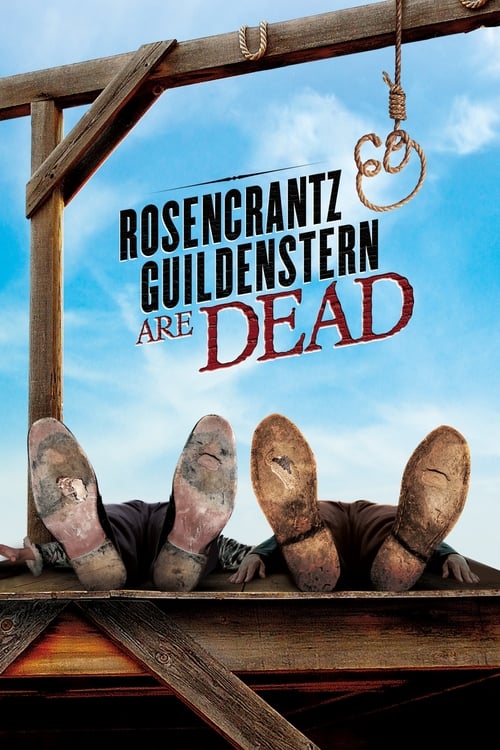
Rosencrantz & Guildenstern Are Dead
Rosencrantz and Guildensterm, minor characters from the play 'Hamlet', find themselves on the road to Elsinore Castle at the behest of the King of Denmark. The duo encounter a band of players before arriving to find that they are needed to try to discern what troubles the prince Hamlet. Meanwhile, they ponder the meaning of their existence.
The film financial setback against its small-scale budget of $2.5M, earning $805K globally (-68% loss). While initial box office returns were modest, the film has gained appreciation for its distinctive approach within the comedy genre.


Plot Structure
Story beats plotted across runtime


Narrative Arc
Emotional journey through the story's key moments
Story Circle
Blueprint 15-beat structure
Arcplot Score Breakdown
Weighted: Precision (70%) + Arc (15%) + Theme (15%)
Rosencrantz & Guildenstern Are Dead (1991) showcases carefully calibrated narrative design, characteristic of Tom Stoppard's storytelling approach. This structural analysis examines how the film's 15-point plot structure maps to proven narrative frameworks across 1 hour and 57 minutes. With an Arcplot score of 7.3, the film balances conventional beats with creative variation.
Characters
Cast & narrative archetypes

Rosencrantz
Guildenstern
The Player
Hamlet
Main Cast & Characters
Rosencrantz
Played by Gary Oldman
A confused courtier caught in events beyond his understanding, constantly questioning reality and his own existence.
Guildenstern
Played by Tim Roth
The slightly more logical half of the duo, attempting to make sense of their inexplicable situation through reason.
The Player
Played by Richard Dreyfuss
The cynical leader of a traveling theater troupe who understands the theatrical nature of reality itself.
Hamlet
Played by Iain Glen
The melancholy Prince of Denmark, whose larger story our protagonists are unwittingly caught within.
Structural Analysis
The Status Quo at 1 minutes (1% through the runtime) establishes Rosencrantz and Guildenstern on a road, flipping coins that land heads 92 consecutive times. They are minor characters in a world they don't understand, passive and confused, discussing probability while trapped in patterns beyond their control.. Of particular interest, this early placement immediately immerses viewers in the story world.
The inciting incident occurs at 13 minutes when Rosencrantz and Guildenstern arrive at Elsinore Castle, summoned by Claudius and Gertrude to spy on Hamlet. They are pulled into the Danish court's deadly intrigue without understanding why or what's happening.. At 11% through the film, this Disruption aligns precisely with traditional story structure. This beat shifts the emotional landscape, launching the protagonist into the central conflict.
The First Threshold at 28 minutes marks the transition into Act II, occurring at 24% of the runtime. This shows the protagonist's commitment to First encounter with Hamlet, who toys with them intellectually and clearly sees through their mission. They choose to continue trying to fulfill their unclear mandate despite realizing they're outmatched and manipulated., moving from reaction to action.
At 58 minutes, the Midpoint arrives at 50% of the runtime—precisely centered, creating perfect narrative symmetry. Significantly, this crucial beat The Players perform "The Murder of Gonzago" which mirrors the actual murder of Hamlet's father. The play-within-a-play-within-a-play reveals that they are all trapped in a predetermined script. Hamlet's violent reaction to the play raises the stakes for everyone., fundamentally raising what's at risk. The emotional intensity shifts, dividing the narrative into clear before-and-after phases.
The Collapse moment at 87 minutes (75% through) represents the emotional nadir. Here, Guildenstern opens the letter and discovers it contains orders for Hamlet's execution in England - and realizes they are the executioners. The "whiff of death" is literal: they understand they are murderers in a plot they didn't author and cannot escape., shows the protagonist at their lowest point. This beat's placement in the final quarter sets up the climactic reversal.
The Second Threshold at 94 minutes initiates the final act resolution at 80% of the runtime. Discovery that Hamlet has switched the letters - now Rosencrantz and Guildenstern are marked for death in England, not Hamlet. They realize they cannot escape their fate. The synthesis: they finally understand they are characters whose deaths are already written., demonstrating the transformation achieved throughout the journey.
Emotional Journey
Rosencrantz & Guildenstern Are Dead's emotional architecture traces a deliberate progression across 15 carefully calibrated beats.
Narrative Framework
This structural analysis employs proven narrative structure principles that track dramatic progression. By mapping Rosencrantz & Guildenstern Are Dead against these established plot points, we can identify how Tom Stoppard utilizes or subverts traditional narrative conventions. The plot point approach reveals not only adherence to structural principles but also creative choices that distinguish Rosencrantz & Guildenstern Are Dead within the comedy genre.
Comparative Analysis
Additional comedy films include The Bad Guys, Ella Enchanted and The Evening Star.
Plot Points by Act
Act I
SetupStatus Quo
Rosencrantz and Guildenstern on a road, flipping coins that land heads 92 consecutive times. They are minor characters in a world they don't understand, passive and confused, discussing probability while trapped in patterns beyond their control.
Theme
Guildenstern muses about mortality and inevitability: "The only beginning is birth and the only end is death - if you can't count on that, what can you count on?" The theme of predetermined fate versus free will is established.
Worldbuilding
The two discuss their confusion about being summoned, struggle to remember which is which, and encounter the Players - a theatrical troupe led by the enigmatic Player. Establishes their existential confusion and the theatrical nature of reality.
Disruption
Rosencrantz and Guildenstern arrive at Elsinore Castle, summoned by Claudius and Gertrude to spy on Hamlet. They are pulled into the Danish court's deadly intrigue without understanding why or what's happening.
Resistance
The pair debate what to do, receive vague instructions from Claudius and Gertrude, and struggle to understand their mission. They practice interrogating each other, preparing to question Hamlet while grappling with their confusion about their role.
Act II
ConfrontationFirst Threshold
First encounter with Hamlet, who toys with them intellectually and clearly sees through their mission. They choose to continue trying to fulfill their unclear mandate despite realizing they're outmatched and manipulated.
Mirror World
The Player and his troupe arrive at Elsinore to perform. The Player represents theatrical certainty and embrace of one's role - a thematic contrast to Ros and Guil's resistance to their scripted fate. He understands that they are all merely actors.
Premise
The promise of the premise: watching Hamlet from the outside while Ros and Guil debate free will, death, and meaning. They witness fragmented scenes from Hamlet, discuss philosophical paradoxes, and attempt various experiments to understand their reality.
Midpoint
The Players perform "The Murder of Gonzago" which mirrors the actual murder of Hamlet's father. The play-within-a-play-within-a-play reveals that they are all trapped in a predetermined script. Hamlet's violent reaction to the play raises the stakes for everyone.
Opposition
Pressure intensifies as Ros and Guil are commanded to escort Hamlet to England, carrying sealed letters. They increasingly sense danger but cannot escape their roles. The Player warns them about their fate. Their confusion deepens as events spiral beyond their control.
Collapse
Guildenstern opens the letter and discovers it contains orders for Hamlet's execution in England - and realizes they are the executioners. The "whiff of death" is literal: they understand they are murderers in a plot they didn't author and cannot escape.
Crisis
Dark night on the boat to England. Ros and Guil process their horror at being instruments of death. They rage against their helplessness, debate changing the letter, and confront the meaninglessness of their existence. Guildenstern's despair reaches its peak.
Act III
ResolutionSecond Threshold
Discovery that Hamlet has switched the letters - now Rosencrantz and Guildenstern are marked for death in England, not Hamlet. They realize they cannot escape their fate. The synthesis: they finally understand they are characters whose deaths are already written.
Synthesis
The finale unfolds aboard ship and then returns to Denmark's bloodbath. The Players act out Ros and Guil's deaths. The pair face their inevitable end with resignation. Hamlet's story concludes with the massacre at Elsinore while Ros and Guil simply disappear, fulfilling Shakespeare's script.
Transformation
Rosencrantz and Guildenstern vanish into darkness, having achieved a final understanding: they were always minor characters in someone else's story, unable to change their fate. The closing mirrors the opening's absurdity, but now they comprehend their powerlessness. They exit without audience or consequence.