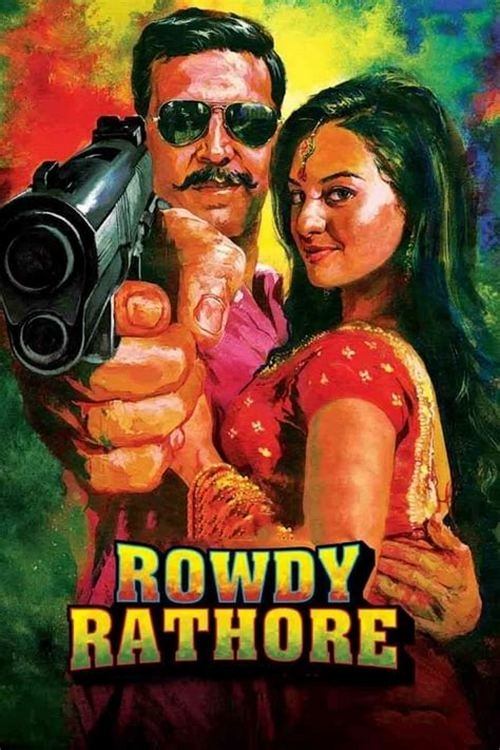
Rowdy Rathore
A small-time thug comes across a young girl who claims him to be her father, following which he realizes he has a lookalike who's being hunted by goons.
Despite its modest budget of $6.7M, Rowdy Rathore became a solid performer, earning $31.0M worldwide—a 363% return. The film's unconventional structure found its audience, confirming that strong storytelling can transcend budget limitations.
Plot Structure
Story beats plotted across runtime


Narrative Arc
Emotional journey through the story's key moments
Story Circle
Blueprint 15-beat structure
Arcplot Score Breakdown
Weighted: Precision (70%) + Arc (15%) + Theme (15%)
Rowdy Rathore (2012) showcases precise dramatic framework, characteristic of Prabhu Deva's storytelling approach. This structural analysis examines how the film's 15-point plot structure maps to proven narrative frameworks across 2 hours and 23 minutes. With an Arcplot score of 7.5, the film showcases strong structural fundamentals.
Structural Analysis
The Status Quo at 2 minutes (1% through the runtime) establishes Shiva is introduced as a small-time conman in Mumbai, running elaborate scams with his partner. He's charming, quick-witted, but morally bankrupt, motivated only by money and living a carefree, selfish life.. The analysis reveals that this early placement immediately immerses viewers in the story world.
The inciting incident occurs at 18 minutes when Shiva learns about the village of Devgarh and its terrorization by the criminal Baapji. Paro's connection to the village and her desperation draw Shiva into a situation beyond his usual petty crimes.. At 12% through the film, this Disruption aligns precisely with traditional story structure. This beat shifts the emotional landscape, launching the protagonist into the central conflict.
The First Threshold at 35 minutes marks the transition into Act II, occurring at 25% of the runtime. This demonstrates the protagonist's commitment to Shiva arrives in Devgarh and is mistaken for Vikram Rathore, the fearless police officer. Whether by accident or scheme, he makes the choice to play along with the mistaken identity, crossing into a dangerous new world., moving from reaction to action.
At 72 minutes, the Midpoint arrives at 50% of the runtime—precisely centered, creating perfect narrative symmetry. The analysis reveals that this crucial beat False victory: Shiva successfully pulls off a major confrontation while posing as Vikram, winning the village's trust and Paro's affection. However, Baapji grows suspicious and the stakes are raised. The revelation about Vikram's true condition (alive but incapacitated) may occur here., fundamentally raising what's at risk. The emotional intensity shifts, dividing the narrative into clear before-and-after phases.
The Collapse moment at 106 minutes (74% through) represents the emotional nadir. Here, Shiva's true identity as an imposter is exposed to Baapji or the village. The deception collapses. The village loses hope. Baapji gains the upper hand. A whiff of death: either Vikram's life is threatened, villagers are killed, or Shiva faces his own potential death, revealing his cowardice., reveals the protagonist at their lowest point. This beat's placement in the final quarter sets up the climactic reversal.
The Second Threshold at 115 minutes initiates the final act resolution at 80% of the runtime. Shiva experiences a revelation or synthesis: inspired by Vikram's sacrifice, Paro's faith, or the village's suffering, he chooses to truly become the hero rather than just play one. He integrates Vikram's courage with his own street-smart resourcefulness. The transformation is complete internally., demonstrating the transformation achieved throughout the journey.
Emotional Journey
Rowdy Rathore's emotional architecture traces a deliberate progression across 15 carefully calibrated beats.
Narrative Framework
This structural analysis employs a 15-point narrative structure framework that maps key story moments. By mapping Rowdy Rathore against these established plot points, we can identify how Prabhu Deva utilizes or subverts traditional narrative conventions. The plot point approach reveals not only adherence to structural principles but also creative choices that distinguish Rowdy Rathore within the action genre.
Comparative Analysis
Additional action films include The Ministry of Ungentlemanly Warfare, The Bad Guys and Lake Placid.
Plot Points by Act
Act I
SetupStatus Quo
Shiva is introduced as a small-time conman in Mumbai, running elaborate scams with his partner. He's charming, quick-witted, but morally bankrupt, motivated only by money and living a carefree, selfish life.
Theme
A character mentions or demonstrates the idea that true courage means standing up for others even when you're afraid, contrasting real heroism with Shiva's cowardly opportunism.
Worldbuilding
Establishment of Shiva's world in Mumbai: his cons, his partnership, his philosophy of life. Introduction of Paro, the innocent village girl who comes to Mumbai. Shiva's comedic attempts to woo her while running various scams.
Disruption
Shiva learns about the village of Devgarh and its terrorization by the criminal Baapji. Paro's connection to the village and her desperation draw Shiva into a situation beyond his usual petty crimes.
Resistance
Shiva resists getting involved with the dangerous village situation, wanting only to pursue Paro romantically. Internal debate about whether to help or flee. Paro and others inadvertently push him toward Devgarh while he schemes to avoid real danger.
Act II
ConfrontationFirst Threshold
Shiva arrives in Devgarh and is mistaken for Vikram Rathore, the fearless police officer. Whether by accident or scheme, he makes the choice to play along with the mistaken identity, crossing into a dangerous new world.
Mirror World
Through flashbacks, we meet the real Vikram Rathore and see his relationship with Paro and the village. This B-story introduces the thematic mirror: Vikram represents the hero Shiva could become, embodying courage, sacrifice, and justice.
Premise
The "fun and games" of Shiva pretending to be Vikram Rathore. Fish-out-of-water comedy as the cowardly conman tries to maintain the facade of being a fearless cop. Early confrontations with Baapji's henchmen where Shiva barely survives through luck and deception.
Midpoint
False victory: Shiva successfully pulls off a major confrontation while posing as Vikram, winning the village's trust and Paro's affection. However, Baapji grows suspicious and the stakes are raised. The revelation about Vikram's true condition (alive but incapacitated) may occur here.
Opposition
Baapji intensifies his attacks and investigation into "Vikram's" identity. Shiva's deception becomes harder to maintain. Internal pressure as he witnesses the village's suffering and Vikram's legacy. External pressure as Baapji's men close in. Shiva's cowardice threatens to surface.
Collapse
Shiva's true identity as an imposter is exposed to Baapji or the village. The deception collapses. The village loses hope. Baapji gains the upper hand. A whiff of death: either Vikram's life is threatened, villagers are killed, or Shiva faces his own potential death, revealing his cowardice.
Crisis
Shiva's dark night of the soul. He contemplates fleeing back to his old life in Mumbai. The weight of failure, shame, and the village's suffering press down on him. He must confront who he really is versus who he could be.
Act III
ResolutionSecond Threshold
Shiva experiences a revelation or synthesis: inspired by Vikram's sacrifice, Paro's faith, or the village's suffering, he chooses to truly become the hero rather than just play one. He integrates Vikram's courage with his own street-smart resourcefulness. The transformation is complete internally.
Synthesis
The finale: Shiva launches his assault on Baapji's criminal empire. Massive action sequences as he fights through henchmen. Final confrontation with Baapji where Shiva proves he's become a genuine hero. Liberation of Devgarh. Justice is served.
Transformation
Final image shows Shiva as a transformed man: no longer a selfish conman but a protector of the innocent. The village is free and celebrating. Shiva with Paro, having earned her love through genuine heroism rather than deception. The mirror of the opening shows complete transformation.