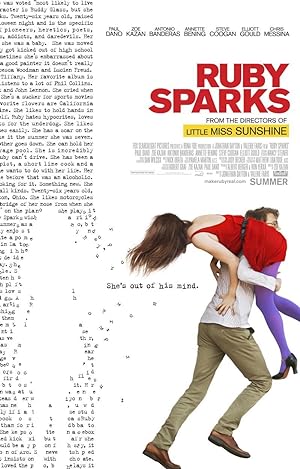
Ruby Sparks
Calvin is a genius novelist who begins to type a new novel on his manual typewriter about Ruby, his dream girl. He can't believe his eyes, because the next day, Ruby becomes a real person, and they begin to have a beautiful relationship together. If the relationship isn't perfect, all Calvin has to do is simply type the words on the page and Ruby's actions change to what he needs.
Working with a tight budget of $8.0M, the film achieved a steady performer with $9.4M in global revenue (+17% profit margin).
1 win & 11 nominations


Plot Structure
Story beats plotted across runtime


Narrative Arc
Emotional journey through the story's key moments
Story Circle
Blueprint 15-beat structure
Arcplot Score Breakdown
Weighted: Precision (70%) + Arc (15%) + Theme (15%)
Ruby Sparks (2012) exhibits strategically placed narrative architecture, characteristic of Jonathan Dayton's storytelling approach. This structural analysis examines how the film's 15-point plot structure maps to proven narrative frameworks across 1 hour and 44 minutes. With an Arcplot score of 7.6, the film showcases strong structural fundamentals.
Characters
Cast & narrative archetypes

Calvin Weir-Fields
Ruby Sparks
Harry Weir-Fields
Dr. Rosenthal
Gertrude
Mort
Main Cast & Characters
Calvin Weir-Fields
Played by Paul Dano
A young, reclusive novelist suffering from writer's block who writes his dream girl into existence.
Ruby Sparks
Played by Zoe Kazan
A free-spirited woman who manifests from Calvin's typewriter, initially perfect but struggling for autonomy.
Harry Weir-Fields
Played by Chris Messina
Calvin's older brother, a grounded family man who serves as a reality check.
Dr. Rosenthal
Played by Elliott Gould
Calvin's psychiatrist who encourages him to explore his creativity and emotions.
Gertrude
Played by Annette Bening
Calvin's eccentric, bohemian mother who embraces unconventional spirituality.
Mort
Played by Antonio Banderas
Gertrude's much younger boyfriend, a laid-back surfer type.
Structural Analysis
The Status Quo at 1 minutes (1% through the runtime) establishes Calvin, a young novelist suffering from writer's block and crippling loneliness, walks his dog alone. His isolated life and creative paralysis are established through his awkward therapy sessions and empty routine.. Of particular interest, this early placement immediately immerses viewers in the story world.
The inciting incident occurs at 12 minutes when Calvin begins writing about Ruby Sparks, the girl from his dreams. The words flow effortlessly - his writer's block is broken. He becomes consumed with writing about this perfect woman who loves him unconditionally.. At 12% through the film, this Disruption aligns precisely with traditional story structure. This beat shifts the emotional landscape, launching the protagonist into the central conflict.
The First Threshold at 25 minutes marks the transition into Act II, occurring at 24% of the runtime. This illustrates the protagonist's commitment to Ruby appears in Calvin's kitchen - she is real. Calvin must decide whether to embrace this impossible situation or question his sanity. He chooses to accept her presence and enter into a relationship with his creation., moving from reaction to action.
At 50 minutes, the Midpoint arrives at 48% of the runtime—precisely centered, creating perfect narrative symmetry. Structural examination shows that this crucial beat Ruby begins to develop independence and complexity beyond Calvin's original writing. She wants friends, her own life, and shows signs of unhappiness. Calvin realizes he cannot keep her in the perfect bubble he created. False victory becomes false defeat., fundamentally raising what's at risk. The emotional intensity shifts, dividing the narrative into clear before-and-after phases.
The Collapse moment at 76 minutes (73% through) represents the emotional nadir. Here, At his mother's house, Calvin's control spirals out of control. In a devastating scene, he writes increasingly manipulative commands forcing Ruby to perform emotions: speak French, strip, laugh, cry. The death of their authentic relationship., demonstrates the protagonist at their lowest point. This beat's placement in the final quarter sets up the climactic reversal.
The Second Threshold at 83 minutes initiates the final act resolution at 80% of the runtime. Calvin realizes what he must do: write Ruby free. He understands that real love means letting go, even if it means losing her forever. He chooses her autonomy over his happiness - the synthesis of his journey., demonstrating the transformation achieved throughout the journey.
Emotional Journey
Ruby Sparks's emotional architecture traces a deliberate progression across 15 carefully calibrated beats.
Narrative Framework
This structural analysis employs systematic plot point analysis that identifies crucial turning points. By mapping Ruby Sparks against these established plot points, we can identify how Jonathan Dayton utilizes or subverts traditional narrative conventions. The plot point approach reveals not only adherence to structural principles but also creative choices that distinguish Ruby Sparks within the comedy genre.
Comparative Analysis
Additional comedy films include The Bad Guys, Ella Enchanted and The Evening Star.
Plot Points by Act
Act I
SetupStatus Quo
Calvin, a young novelist suffering from writer's block and crippling loneliness, walks his dog alone. His isolated life and creative paralysis are established through his awkward therapy sessions and empty routine.
Theme
Calvin's therapist discusses his fear of relationships and inability to accept people as they are. The theme is stated: "You can't control other people. You have to accept them as they are."
Worldbuilding
We see Calvin's world: his past success as a teenage novelist, his current creative block, his overbearing brother Harry, and his dysfunctional family. He dreams of a mysterious girl in a red dress - the Manic Pixie Dream Girl he has created.
Disruption
Calvin begins writing about Ruby Sparks, the girl from his dreams. The words flow effortlessly - his writer's block is broken. He becomes consumed with writing about this perfect woman who loves him unconditionally.
Resistance
Calvin writes obsessively about Ruby. His therapist and brother are concerned but supportive. Calvin debates whether he's going crazy. He shares his pages with Harry, who is both impressed and worried about Calvin's fantasy.
Act II
ConfrontationFirst Threshold
Ruby appears in Calvin's kitchen - she is real. Calvin must decide whether to embrace this impossible situation or question his sanity. He chooses to accept her presence and enter into a relationship with his creation.
Mirror World
Calvin introduces Ruby to Harry, who is shocked she's real. Harry becomes the voice of reason and morality, questioning the ethics of Calvin's control. Ruby represents the thematic test: can Calvin love someone real or only his fantasy?
Premise
The "fun and games" of having a magical girlfriend. Calvin and Ruby fall in love, go on dates, and live the perfect romance. Calvin carefully avoids writing about her, terrified she'll disappear. Their relationship seems idyllic.
Midpoint
Ruby begins to develop independence and complexity beyond Calvin's original writing. She wants friends, her own life, and shows signs of unhappiness. Calvin realizes he cannot keep her in the perfect bubble he created. False victory becomes false defeat.
Opposition
Ruby becomes increasingly independent and unpredictable. Calvin's insecurity grows. When she seems distant, he writes small adjustments to fix her mood. He begins using his power to control her, justifying it as helping their relationship.
Collapse
At his mother's house, Calvin's control spirals out of control. In a devastating scene, he writes increasingly manipulative commands forcing Ruby to perform emotions: speak French, strip, laugh, cry. The death of their authentic relationship.
Crisis
Ruby escapes. Calvin is consumed with guilt and despair, realizing he has become the controlling monster he feared. He confronts the darkness of his actions - treating Ruby as an object, not a person. He must decide what to do.
Act III
ResolutionSecond Threshold
Calvin realizes what he must do: write Ruby free. He understands that real love means letting go, even if it means losing her forever. He chooses her autonomy over his happiness - the synthesis of his journey.
Synthesis
Calvin writes Ruby her own life, agency, and freedom from him. He releases her from his control. In a bittersweet finale, Ruby leaves with no memory of him. Calvin accepts the loss, finally understanding authentic love.
Transformation
Months later, Calvin encounters Ruby in a bookstore. She doesn't know him, but there's a spark of connection. The mirror of the opening: Calvin is no longer controlling and desperate, but open and genuine. A chance at real love begins.