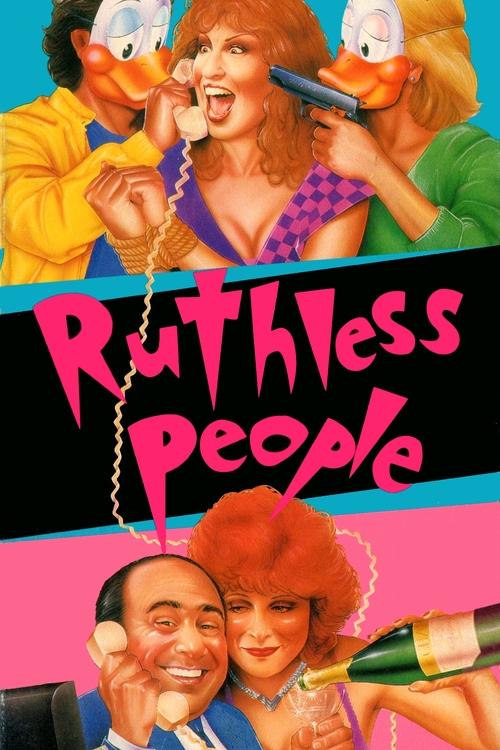
Ruthless People
Sam Stone hates his wife Barbara so much that he wants her dead. He's ecstatic when she's taken by a duo of kidnappers who want $500,000 ransom in exchange for her life. Fully intending to ignore every one of the kidnappers' demands in the hopes that they do him a favor and murder her for him, the two confused kidnappers have to figure out how they're going get their money, and what they're going to do with the overbearing Barbara.
Despite its limited budget of $11.0M, Ruthless People became a massive hit, earning $71.6M worldwide—a remarkable 551% return. The film's unique voice resonated with audiences, proving that strong storytelling can transcend budget limitations.
1 win & 3 nominations


Plot Structure
Story beats plotted across runtime


Narrative Arc
Emotional journey through the story's key moments
Story Circle
Blueprint 15-beat structure
Arcplot Score Breakdown
Weighted: Precision (70%) + Arc (15%) + Theme (15%)
Ruthless People (1986) reveals deliberately positioned dramatic framework, characteristic of Jim Abrahams's storytelling approach. This structural analysis examines how the film's 15-point plot structure maps to proven narrative frameworks across 1 hour and 33 minutes. With an Arcplot score of 6.7, the film balances conventional beats with creative variation.
Characters
Cast & narrative archetypes

Barbara Stone
Sam Stone
Ken Kessler
Sandy Kessler
Carol
Earl Mott
Main Cast & Characters
Barbara Stone
Played by Bette Midler
Shrewish, materialistic wife kidnapped by amateurs who discovers freedom and self-worth during her captivity.
Sam Stone
Played by Danny DeVito
Ruthless businessman who refuses to pay ransom for his hated wife, plotting to let her die and frame the kidnappers.
Ken Kessler
Played by Judge Reinhold
Mild-mannered inventor turned kidnapper seeking revenge after Sam Stone stole his designs.
Sandy Kessler
Played by Helen Slater
Ken's devoted wife and reluctant accomplice in the kidnapping scheme.
Carol
Played by Anita Morris
Sam's mistress who becomes increasingly frustrated with his refusal to pay the ransom.
Earl Mott
Played by Bill Pullman
Barbara's dimwitted boyfriend who plots to capitalize on her kidnapping.
Structural Analysis
The Status Quo at 1 minutes (1% through the runtime) establishes Sam Stone plots to murder his wife Barbara to inherit her fortune and run off with his mistress Carol. He's established as completely ruthless and selfish.. Notably, this early placement immediately immerses viewers in the story world.
The inciting incident occurs at 11 minutes when Barbara is kidnapped by Ken and Sandy. What they don't know is this is exactly what Sam wanted - he refuses to pay ransom, seeing this as his perfect opportunity.. At 12% through the film, this Disruption aligns precisely with traditional story structure. This beat shifts the emotional landscape, launching the protagonist into the central conflict.
The First Threshold at 24 minutes marks the transition into Act II, occurring at 26% of the runtime. This demonstrates the protagonist's commitment to Sam actively chooses to play along with the kidnapping charade to the police while secretly hoping Barbara gets killed. He fully commits to exploiting the situation for his benefit., moving from reaction to action.
At 47 minutes, the Midpoint arrives at 50% of the runtime—precisely centered, creating perfect narrative symmetry. Of particular interest, this crucial beat Ken and Sandy lower the ransom demand out of desperation, but Sam still refuses to pay anything. The kidnappers realize they're in over their heads with a victim who's thriving and a mark who won't cooperate. Stakes intensify., fundamentally raising what's at risk. The emotional intensity shifts, dividing the narrative into clear before-and-after phases.
The Collapse moment at 70 minutes (75% through) represents the emotional nadir. Here, Sam discovers Carol is trying to kill him and frame him for Barbara's murder. His entire scheme collapses - he's lost control of everything. The ruthless manipulator has been out-manipulated., shows the protagonist at their lowest point. This beat's placement in the final quarter sets up the climactic reversal.
The Second Threshold at 74 minutes initiates the final act resolution at 80% of the runtime. Sam realizes he needs Barbara alive to save himself from Carol's murder frame. The kidnappers and victim unite against their common enemies. Former adversaries synthesize into allies., demonstrating the transformation achieved throughout the journey.
Emotional Journey
Ruthless People's emotional architecture traces a deliberate progression across 15 carefully calibrated beats.
Narrative Framework
This structural analysis employs structural analysis methodology used to understand storytelling architecture. By mapping Ruthless People against these established plot points, we can identify how Jim Abrahams utilizes or subverts traditional narrative conventions. The plot point approach reveals not only adherence to structural principles but also creative choices that distinguish Ruthless People within the comedy genre.
Jim Abrahams's Structural Approach
Among the 5 Jim Abrahams films analyzed on Arcplot, the average structural score is 7.1, reflecting strong command of classical structure. Ruthless People takes a more unconventional approach compared to the director's typical style. For comparative analysis, explore the complete Jim Abrahams filmography.
Comparative Analysis
Additional comedy films include The Bad Guys, Ella Enchanted and The Evening Star. For more Jim Abrahams analyses, see Airplane!, Hot Shots! and Jane Austen's Mafia!.
Plot Points by Act
Act I
SetupStatus Quo
Sam Stone plots to murder his wife Barbara to inherit her fortune and run off with his mistress Carol. He's established as completely ruthless and selfish.
Theme
Ken tells Sandy about how Sam Stone stole his design and ruined them: "He's ruthless." The film's core theme about ruthlessness and revenge is established.
Worldbuilding
We meet all key players: Sam planning Barbara's murder, Ken and Sandy planning kidnapping revenge, Barbara shopping obliviously, and Carol as Sam's scheming mistress. The web of ruthless plots is set up.
Disruption
Barbara is kidnapped by Ken and Sandy. What they don't know is this is exactly what Sam wanted - he refuses to pay ransom, seeing this as his perfect opportunity.
Resistance
Ken and Sandy struggle with their amateur kidnapping while Sam gleefully ignores ransom demands. Barbara begins asserting herself in captivity. The police get involved, adding complications no one planned for.
Act II
ConfrontationFirst Threshold
Sam actively chooses to play along with the kidnapping charade to the police while secretly hoping Barbara gets killed. He fully commits to exploiting the situation for his benefit.
Mirror World
Barbara begins bonding with her captors, particularly Sandy. This unlikely relationship will teach all parties about human decency versus ruthlessness - the film's thematic mirror.
Premise
The fun premise plays out: kidnappers trying to get ransom from a man who won't pay, Barbara transforming in captivity (losing weight, gaining confidence), Carol and Earl plotting to frame Sam, and escalating comic complications.
Midpoint
Ken and Sandy lower the ransom demand out of desperation, but Sam still refuses to pay anything. The kidnappers realize they're in over their heads with a victim who's thriving and a mark who won't cooperate. Stakes intensify.
Opposition
Multiple plots converge and complicate: Carol's murder scheme with Earl escalates, Barbara becomes increasingly empowered and difficult to control, the police close in, and Sam's ruthlessness starts backfiring as everyone turns against him.
Collapse
Sam discovers Carol is trying to kill him and frame him for Barbara's murder. His entire scheme collapses - he's lost control of everything. The ruthless manipulator has been out-manipulated.
Crisis
Sam processes that everyone has betrayed him. Ken and Sandy realize Barbara is now their ally. All parties face the consequences of their schemes as the bedroom tape (evidence of Carol's plot) becomes the key to everything.
Act III
ResolutionSecond Threshold
Sam realizes he needs Barbara alive to save himself from Carol's murder frame. The kidnappers and victim unite against their common enemies. Former adversaries synthesize into allies.
Synthesis
The finale brings poetic justice: Carol and Earl are arrested for their murder plot, Sam is arrested for his crimes, Barbara gets her freedom and fortune, and Ken and Sandy get their revenge and financial compensation. Everyone gets what they deserve.
Transformation
Barbara, transformed from mousy wife to empowered woman, walks away triumphant and free. The ruthless people have been defeated by their own ruthlessness, while the innocent victims prevail. Perfect karmic reversal from the opening.